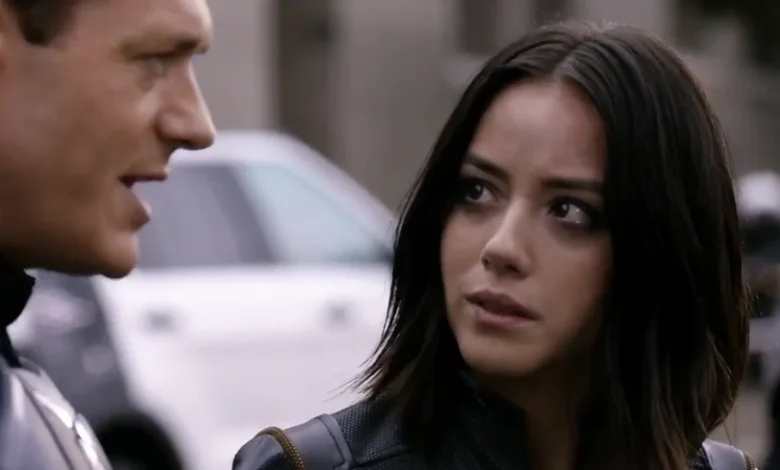
The ongoing debate surrounding the official continuity of Marvel’s television catalog has once again taken center stage, driven by the candid remarks of franchise alumni. More than six years after ABC’s Agents of SHIELD concluded its seven-season, 136-episode run, the question of whether Phil Coulson, Daisy Johnson, and the rest of the strategic homeland intervention division belong to the Sacred Timeline remains a sore subject for both the fanbase and the actors who brought the characters to life. Chloe Bennet, who portrayed the Inhuman hacker-turned-hero Daisy Johnson (also known as Quake) throughout the show’s entire broadcast history, recently voiced her lingering frustrations regarding Marvel Studios’ persistent refusal to fully integrate the pioneering series into the official Marvel Cinematic Universe (MCU) master continuity.
While Marvel Studios has increasingly embraced past television iterations—most notably by folding Netflix’s street-level Defenders saga, including Daredevil and Jessica Jones, into official MCU canon, and pulling James D’Arcy’s Edwin Jarvis from the ABC prequel series Agent Carter into the feature film Avengers: Endgame—Agents of SHIELD continues to occupy a nebulous, ambiguous space. This selective recognition has left the architects and stars of the network procedural feeling sidelined, even as the franchise leans heavily into multiversal storytelling and nostalgic callbacks.
The Evolution of a Pioneering Marvel Television Experiment
To understand the current friction surrounding Agents of SHIELD, one must examine the television landscape of 2013. When the series premiered on ABC following the monumental success of Joss Whedon’s The Avengers (2012), it was designed not merely as a spin-off, but as a vital, breathing extension of the cinematic universe. Clark Gregg reprised his beloved role as Agent Phil Coulson, whose apparent death in the 2012 blockbuster was revealed to have been reversed using Kree biological technology.
During its formative years, the series operated in direct tandem with Marvel Studios’ theatrical slate. Most famously, the trajectory of the show’s first season was profoundly altered by the events of Captain America: The Winter Soldier (2014). The catastrophic reveal that S.H.I.E.L.D. had been thoroughly compromised by Hydra from within was integrated directly into the television series, forcing Coulson’s clandestine team to go rogue and rebuild the organization from the ashes. Subsequent seasons also incorporated fallout from Thor: The Dark World and Avengers: Age of Ultron, creating an illusion of seamless cross-medium cohesion.
However, as Marvel Studios underwent corporate restructuring—separating Marvel Entertainment’s television division from Kevin Feige’s feature film wing—the creative synchronization began to fracture. Later seasons of Agents of SHIELD abandoned direct crossovers with the films, leaning instead into high-concept science fiction tropes, including time travel, space exploration, dimensional alternate realities, and the introduction of the Inhumans. By the time the series wrapped up its narrative arc in August 2020, its events had diverged so drastically from the terrestrial status quo of the broader MCU that reconciling the timeline became a logistical nightmare for continuity purists.
Chloe Bennet Speaks Out on Canon Ambiguity
While doing press for the fourth season of HBO’s critically acclaimed anthology series The White Lotus, Chloe Bennet opened up about her enduring connection to the character that catapulted her to international recognition. Speaking candidly with entertainment journalists, the actress expressed a mixture of deep affection for Daisy Johnson and lingering resentment over how Marvel Studios treats the legacy of the network show.
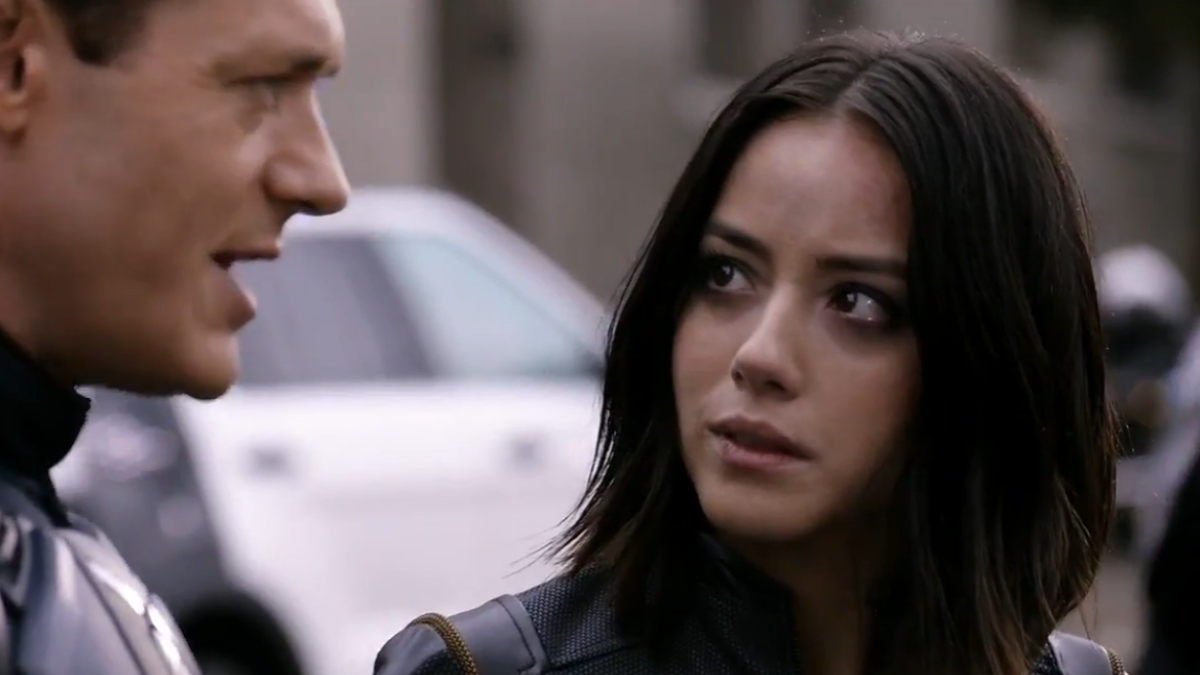
"I’m obsessed with Daisy," Bennet admitted during the interview. "I feel like I am Daisy. I would be so protective of her. I’m still low-key angry that they don’t fully acknowledge this as canon—the real followers will understand that. We were the first MCU TV show, and we did 130-something hour-long episodes. We spent a lot of time in people’s homes, and I spent a lot of my life playing this character and this young woman growing into her power. There’s a lot of symbolism in that, especially looking back now. I would love to play her with the growth that I’ve had since I’ve had a break from the role."
Bennet’s remarks echo similar sentiments expressed by her co-star Clark Gregg. Gregg, whose character Phil Coulson served as the emotional anchor of Phase 1 of the MCU before headlining the television series, has previously used blunt language to dismiss pedants who gatekeep official continuity. For the actors who dedicated years of their lives to anchoring Marvel’s first major small-screen endeavor, the reluctance of the current studio hierarchy to validate their contributions feels increasingly dismissive.
The Multiversal Dilemma and Future Implications
The debate over canon arrives at a critical juncture for the Marvel Cinematic Universe. As Kevin Feige and his team steer the franchise through the closing chapters of the Multiverse Saga, the barrier between disparate cinematic and television universes has grown porous. Upcoming tentpoles like Avengers: Secret Wars have been heavily teased as a grand finale for legacy characters, with Feige promising "characters we know and love in pinch-me moments."
This sweeping multiversal canvas theoretically provides a frictionless narrative mechanism to reintroduce characters from Agents of SHIELD without requiring Marvel Studios to untangle seven seasons of complex television lore. Under the rules of the multiverse, Daisy Johnson, Melinda May (Ming-Na Wen), Fitz (Iain De Caestecker), Simmons (Elizabeth Henstridge), and Yo-Yo Rodriguez (Natalia Cordova-Buckley) could easily be imported from an alternate timeline or reality, neatly sidestepping any contradictions with the Sacred Timeline.
Yet, despite the conceptual ease of such a crossover, studio leadership has shown little public appetite for revisiting the ABC property. Where characters from defunct franchises—such as the Fox X-Men universe or Sony’s Spider-Man iterations—have been welcomed back with celebratory fanfare, television properties produced under the older Marvel Entertainment banner often find themselves kept at arm’s length.
A Closed Chapter for a Dedicated Fanbase
For the passionate core audience that followed Agents of SHIELD through its numerous stylistic reinventions, the lack of official validation remains a persistent frustration. The series finale, which aired in August 2020, provided a definitive conclusion for the team, utilizing time-jump mechanics to scatter the agents to the winds while leaving their legacy secure within their own corner of the fictional universe.
Whether Marvel Studios will ever officially stamp the series into the sacred annals of MCU history remains to be seen. As the franchise marches toward the cinematic reset promised by Secret Wars, the window for legacy cameos is rapidly narrowing. Until then, fans and actors alike are left to treat the series as its own self-contained epic—a foundational experiment that laid much of the groundwork for the modern superhero television boom, even if its creators in the executive suites prefer to leave it lost in time.