Honoring the G-Funk Era: Kalan.FrFr Headlines Historic Live Performance at Long Beach World Famous VIP Records Presented by FX

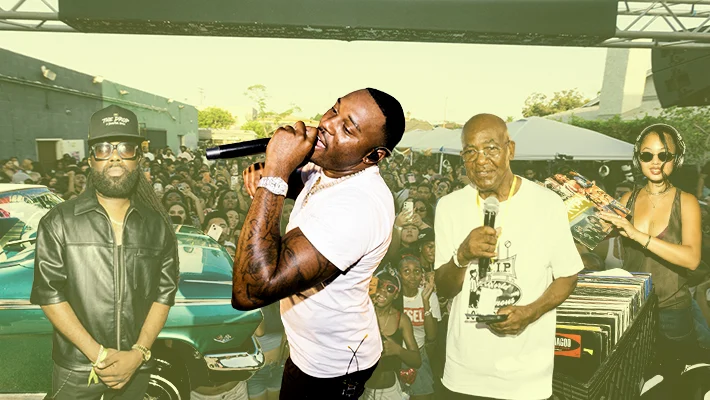
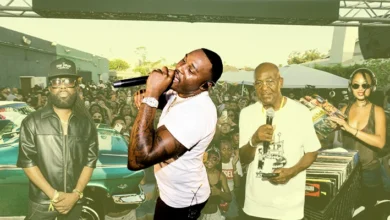
The intersection of television promotion and musical heritage created a momentous afternoon in Southern California this past weekend as contemporary West Coast hip-hop artist Kalan.FrFr delivered a high-profile headlining performance at the historic World Famous VIP Records in Long Beach. Presented in conjunction with FX to promote The Drop: A Snowfall Saga, the event functioned simultaneously as a modern concert, a historical exhibition, and a community reunion. Hundreds of local residents, hip-hop historians, and culture enthusiasts gathered at the iconic intersection of Martin Luther King Jr. Boulevard and Pacific Coast Highway to celebrate an institution that helped shape the global trajectory of rap music.
The gathering drew heavily on the deep-rooted cultural significance of its venue. For decades, independent record stores have served as the intellectual and commercial hubs of urban American music communities, but few establishments carry the mythological weight of VIP Records. Long before digital streaming algorithms dictated regional breakouts, physical storefronts acted as grassroots laboratories where raw talent met commercial enterprise. This specific location in Long Beach became a legendary incubator during the golden era of West Coast gangsta rap and G-Funk, housing the aspirations of youth who would eventually redefine popular culture on an international scale.
Historical Context and the Legacy of VIP Records
To understand the cultural resonance of the event, one must examine the foundational history of World Famous VIP Records. Founded by Kelvin Anderson, the storefront operated as a commercial retail outlet for vinyl records and cassettes, but its true historical value lay in its backroom. During the late 1980s and early 1990s, Anderson transformed this rear annex into an impromptu recording studio and community safe haven.
At a time when systemic socio-economic challenges and heightened gang violence plagued many neighborhoods across Los Angeles County, Anderson provided local youth with an alternative space focused on creative expression. The studio operated with rudimentary equipment by modern standards, yet it possessed an intangible atmosphere of encouragement and ambition. It was within these humble four walls that a young Calvin Broadus (who would become Snoop Dogg), along with his cousins Ricardo "Kurupt" Brown, Nathan "Nate Dogg" Hale, and Stanley "Tray Deee" Cox, first coalesced musically.
Most notably, the foundational trio known as 213—consisting of Snoop Dogg, Nate Dogg, and Warren G—cut their very first professional demo tape in that backroom. The tapes recorded at VIP Records eventually circulated through local high schools, house parties, and car stereos, ultimately landing in the hands of Dr. Dre. This direct chain of custody from the backroom of a Long Beach record shop to the multi-platinum success of Death Row Records cemented VIP Records as sacred ground for G-Funk scholars. Consequently, hosting a major contemporary event at the venue represented a profound act of historical preservation and community validation.
Event Chronology and Atmosphere
Assembling a major public event at a historic, functioning urban intersection requires precise logistical coordination, and the production team successfully orchestrated a vibrant, immersive environment. Hours before Kalan.FrFr took the temporary stage, crowds began lining the surrounding sidewalks, with queues eventually stretching around the city block.
The aesthetic of the gathering was meticulously curated to evoke the golden era of early 1990s West Coast hip-hop. Along the curbs, a curated collection of pristine, candy-painted classic lowriders—complete with hydraulic suspension systems and wire-wheel rims—paid homage to the visual iconography of the genre. Inside and along the exterior walls of the building, a retrospective exhibition featured vintage photographic prints by renowned documentary and music photographer Mike Miller, whose lens famously captured the nascent careers of Tupac Shakur, Snoop Dogg, and Ice Cube during their formative years.
To reinforce the community-centric nature of the celebration, organizers partnered with iconic local culinary staples. South Los Angeles and Long Beach institutions Woody’s BBQ and Glizzy Street Dogs provided complimentary catering, feeding the steady stream of attendees who braved the afternoon heat to participate in the festivities.
Musical programming commenced with sets curated to honor the lineage of West Coast DJ culture. Legendary turntable artist DJ Hed commanded the sound system, seamlessly blending classic anthems from the 1990s with contemporary regional hits to maintain a high-energy atmosphere. The afternoon reached an early crescendo when Andre Troutman, creative director for Kanye West, took the stage. Troutman captivated the audience with a virtuosic display of talk box mastery, manipulating analog audio signals to deliver a stirring live cover of Tupac Shakur and Dr. Dre’s enduring 1995 anthem, "California Love."
The Headlining Performance
When Kalan.FrFr finally stepped onto the stage, the crowd response was immediate and overwhelming. Recognized as one of the standard-bearers for the modern iteration of West Coast hip-hop, the artist delivered a set that deliberately bridged the generational divide between the architects of G-Funk and the contemporary soundscape of Los Angeles rap.
Kalan.FrFr’s performance did not merely showcase his current commercial catalog; it functioned as a living tribute to the continuum of regional music history. By performing at VIP Records, he explicitly acknowledged the foundational groundwork laid by artists three decades prior. Industry analysts note that contemporary West Coast artists face the unique challenge of honoring a monumental past while carving out distinct, modern sonic identities. Kalan.FrFr’s stage presence effectively navigated this tension, utilizing the historical weight of the venue to elevate his own narrative as an artist committed to regional storytelling.
Corporate Partnership and Media Context
The event was produced under the promotional umbrella of FX, utilizing the platform to generate grassroots awareness for The Drop: A Snowfall Saga. By aligning a gritty, critically acclaimed television narrative deeply rooted in the historical socio-economic realities of 1980s and 1990s Los Angeles with a live musical celebration at VIP Records, the network executed a targeted experiential marketing campaign.
Experiential marketing campaigns of this scale rely on authenticity to resonate with cynical urban demographics. Rather than relying solely on traditional billboard advertising or digital media buys, FX invested in physical community engagement. By supporting the physical preservation and celebration of a historic cultural landmark, the network aligned its brand identity with the authentic heritage of Los Angeles hip-hop culture.
This event also ties directly into broader transmedia documentary efforts by cultural platforms documenting the evolution of West Coast sound. Kalan.FrFr recently fronted a comprehensive documentary titled How LA Found Its Sound, which explores the complex socio-political and economic factors that birthed the distinct sonic identity of Los Angeles rap music across different decades. The documentary, paired with streaming availability on platforms such as Hulu, provides a formalized academic and historical framework for the music being celebrated live on the streets of Long Beach.
Broader Economic and Cultural Implications
The successful execution of the event highlights the ongoing economic and cultural viability of preserving hip-hop historical sites. Historically, gentrification and urban redevelopment initiatives have threatened or erased critical infrastructure associated with African-American musical history. Urban music spaces, particularly independent record stores that double as recording incubators, often struggle against shifting retail economics, rising commercial rents, and neighborhood displacement.
The involvement of corporate entities like FX in supporting localized cultural activations points toward a growing model of public-private cultural preservation. When major entertainment companies invest capital into grassroots historic sites, it can provide much-needed visibility and financial stabilization to community institutions fighting to keep their doors open. Kelvin Anderson’s perseverance in maintaining VIP Records through decades of economic shifts serves as a testament to the resilience of independent Black-owned retail businesses in urban centers.
Furthermore, the event underscores the enduring global export value of West Coast hip-hop culture. Decades after its commercial explosion in the mainstream consciousness, the stylistic markers of the culture—lowriders, G-Funk synthesizer melodies, khakis, oversized apparel, and independent vinyl culture—continue to command immense cultural authority worldwide. By bringing a contemporary torchbearer like Kalan.FrFr back to the physical birthplace of modern Long Beach rap, the event reinforced the idea that West Coast hip-hop is not a static museum piece, but a living, evolving art form with a continuous lineage.
As media fragmentation accelerates and digital consumption dominates the music industry, physical community touchpoints like World Famous VIP Records remain irreplaceable. The weekend’s celebration demonstrated that when corporate resources are directed toward authentic community spaces with genuine historical credentials, the resulting cultural impact resonates deeply with artists, residents, and fans alike. The recap of the event, alongside related multimedia projects currently streaming on Hulu, ensures that the historical lessons of the Long Beach pavement will continue to educate and inspire future generations of hip-hop artists.
Related posts: