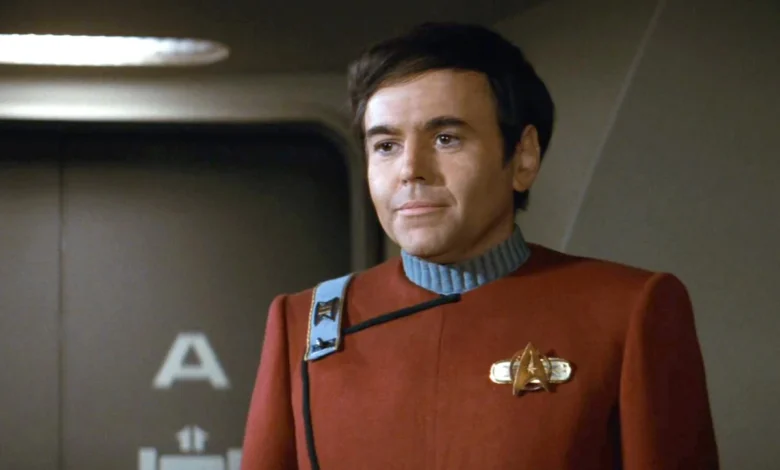
The international entertainment community is mourning the loss of Walter Koenig, the accomplished actor and writer best known for his portrayal of Ensign and later Commander Pavel Chekov in the enduring Star Trek franchise. Koenig passed away at the age of 90, leaving behind a professional legacy that spans more than six decades across television, film, theatre, and literature. While his career encompassed celebrated work in science fiction staples such as Babylon 5 and the feature film Moontrap, Koenig’s indelible mark on popular culture remains his tenure aboard the USS Enterprise. His introduction to Gene Roddenberry’s universe during its second season in 1967 did more than merely round out a television ensemble; it established a thematic and casting precedent that would guide the trajectory of one of science fiction’s most successful intellectual properties for generations.
Main Facts of the Career and Legacy
Koenig’s association with Star Trek began in 1967 when he joined the cast of Star Trek: The Original Series for its sophomore outing. Cast as the youthful, mop-topped Russian navigator Pavel Chekov, Koenig brought a distinct energy to a bridge crew otherwise characterized by the classical theatricality of William Shatner’s Captain James T. Kirk, the stoic logic of Leonard Nimoy’s Spock, and the seasoned grit of DeForest Kelley’s Dr. Leonard McCoy.
Beyond the television series, Koenig reprised his role in seven feature films starting with Star Trek: The Motion Picture (1979) through Star Trek Generations (1994). His cultural footprint extended well beyond traditional media appearances, encompassing voice acting for animated adaptations, roles in video games, and comic book writing. In a nod to his enduring significance to the mythos, Koenig returned to the franchise decades later, appearing in the third and final season of Star Trek: Picard (2023) as President Anton Chekov, a descendant of his original character. Outside of the Star Trek universe, Koenig found substantial success in other speculative fiction projects, most notably portraying Alfred Bester, the chillingly charismatic telepathic antagonist in the syndicated sci-fi epic Babylon 5 throughout the 1990s.
Chronology of a Cultural Milestone
The integration of Pavel Chekov into the USS Enterprise crew was a calculated creative decision rather than a spontaneous narrative choice. An examination of the franchise’s production history reveals a deliberate effort by creator Gene Roddenberry to adapt to a shifting cultural landscape during the late 1960s.
In 1966, Star Trek: The Original Series debuted to modest ratings, appealing primarily to adult viewers of traditional science fiction and drama. By 1967, as the counterculture movement and youth demographic gained unprecedented commercial and cultural influence, production leadership recognized the necessity of modernizing the bridge crew. Roddenberry explicitly sought to introduce a character who could resonate with the burgeoning teenage audience, modeling the requested persona after the youthful, irreverent British invasion music acts of the era, most notably The Beatles.
Simultaneously, the casting choice carried significant geopolitical weight. Airing at the height of the Cold War between the United States and the Soviet Union, the inclusion of a prominent, patriotic Soviet citizen as a heroic Starfleet officer was a radical creative choice. While adversaries such as the Klingons and Romulans occasionally mirrored real-world geopolitical tensions, the presence of Chekov served as a living manifestation of Roddenberry’s core thesis: that humanity had successfully evolved beyond terrestrial prejudices, nationalism, and ideological divisions.
Supporting Data and Contextual Analysis
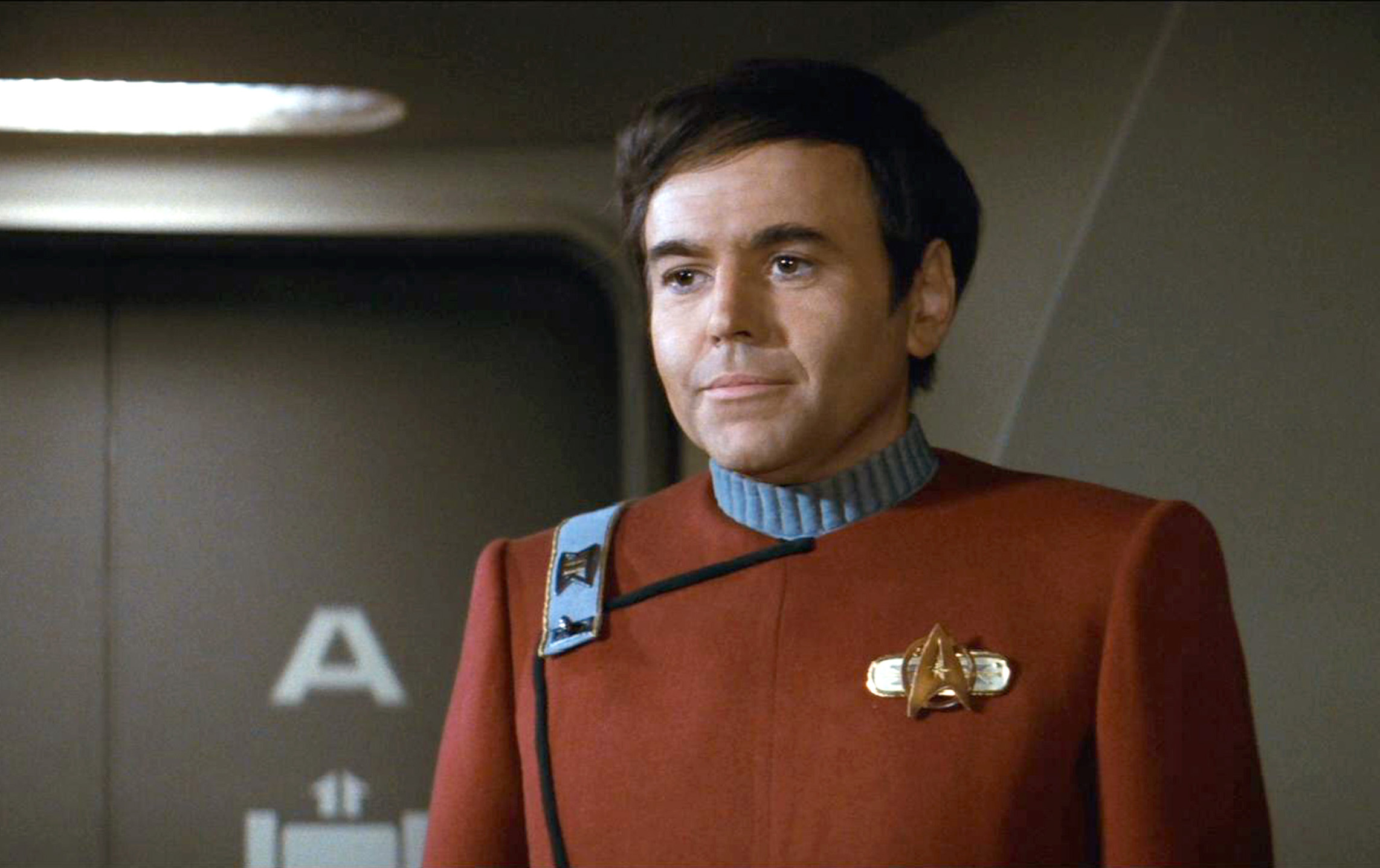
Chekov’s character arc walked a delicate narrative line between acknowledging his terrestrial heritage and subordinating it to a unified interplanetary federation. Throughout the second and third seasons of the original series, writers frequently utilized Chekov for comedic relief, establishing a running gag wherein the navigator would claim that various foundational human achievements and modern inventions originated in Russia—culminating in iconic moments such as his insistence in the episode "The Apple" that the Garden of Eden was located near Moscow.
However, these humorous nationalist displays were consistently contextualized by absolute loyalty to Starfleet values and his fellow officers, famously demonstrated when he defended Captain Kirk’s honor against hostile Klingons in "The Trouble With Tribbles." Koenig’s ability to transition the character from a superficial youthful archetype into a nuanced, humorous, and deeply endearing member of the ensemble secured his place in television history. This evolution reached its comedic zenith in the 1986 feature film Star Trek IV: The Voyage Home, where Koenig’s deadpan delivery of inquiries regarding "nuclear wessels" in 20th-century San Francisco became one of the most widely recognized and quoted moments in science fiction cinema.
Industry Reactions and Statements
Following news of Koenig’s passing, tributes poured in from across the entertainment industry, particularly from colleagues within the science fiction community and subsequent generations of Star Trek actors.
Current and former producers, writers, and cast members highlighted Koenig’s kindness, intelligence, and professional dedication. Representatives from CBS and Paramount Global released statements acknowledging his foundational contribution to the bedrock of the franchise. Fellow Star Trek alumni took to public platforms to praise his sharp intellect, noting that Koenig was an accomplished writer, director, and educator outside of his acting pursuits, having penned several comic book series, plays, and screenplays, as well as teaching acting at various institutions. Colleagues from Babylon 5 likewise remembered him as a consummate professional capable of portraying both the ultimate heroic idealism and the most complex villainy with equal precision.
Broader Impact and Implications for Modern Franchises
The true measure of Walter Koenig’s impact on Star Trek extends far beyond his individual performances; it resides in the structural blueprint he established for the entire franchise. The imperative to include a youthful, contemporary character designed to bridge the generational gap between the core narrative and younger viewers became a foundational trope for nearly every subsequent iteration of the property.
During the expansion of the franchise in the 1990s, producers continuously attempted to replicate the Chekov formula by introducing younger characters intended to capture the youth demographic. While figures such as Wesley Crusher in Star Trek: The Next Generation, Jake Sisko in Star Trek: Deep Space Nine, and Tom Paris in Star Trek: Voyager met with varying degrees of critical and audience reception, the underlying creative motivation remained identical to Roddenberry’s 1967 mandate.
In the modern era of streaming television, this tradition has continued to evolve. Contemporary additions to the franchise—ranging from the animated comedy and postmodern self-awareness of Star Trek: Lower Decks and Star Trek: Prodigy, to the serialized character-driven dramas of Star Trek: Discovery and the upcoming youth-centric focus of Star Trek: Starfleet Academy—demonstrate a continuous cycle of reinvention.
Whether modern audiences embrace postmodern narrative devices or express skepticism toward contemporary cultural references within futuristic settings, these creative choices are not radical departures from tradition. Rather, they represent the direct continuation of a forward-thinking pathway carved out nearly sixty years ago. Walter Koenig’s Pavel Chekov proved that science fiction television could successfully speak the language of the contemporary youth while simultaneously casting a hopeful vision of humanity’s future—a dual mandate that continues to define the enduring legacy of the Star Trek universe.