The Nvidia Dgx Spark A New Dawn For Localized Ai Power
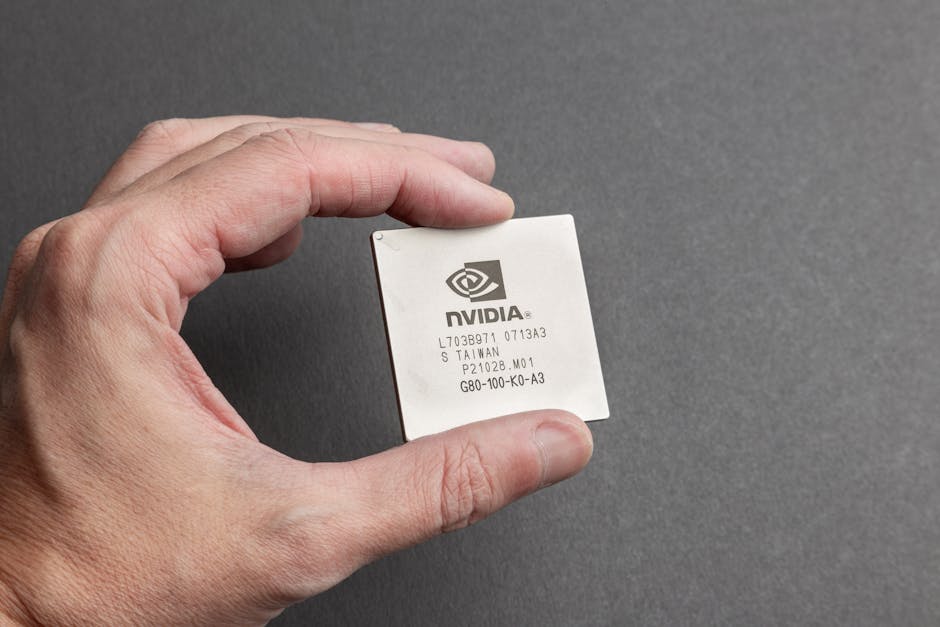
NVIDIA DGX Spark: A New Dawn for Localized AI Power
The integration of artificial intelligence into the enterprise workflow has historically been defined by a binary choice: rely on the opaque latency and data security risks of public cloud infrastructure, or commit to the massive capital expenditure and cooling requirements of hyperscale-grade data centers. The NVIDIA DGX Spark shatters this dichotomy. By bringing the high-performance computing (HPC) capabilities typically reserved for multi-million dollar server farms into a compact, localized form factor, the DGX Spark serves as the foundational bridge for decentralized AI execution. This hardware represents a fundamental shift in how organizations conceptualize AI sovereignty, enabling real-time training, fine-tuning, and inference on proprietary data without it ever leaving the physical perimeter of the organization.
The architecture of the DGX Spark is engineered for the modern industrial and enterprise environment where space is at a premium but computational demands are limitless. Unlike traditional DGX systems that occupy multiple racks and necessitate specialized facility modifications, the Spark is optimized for edge-adjacent deployment. It utilizes the latest Blackwell-architecture GPU accelerators, interconnected via high-speed NVLink technology to ensure that the memory bandwidth bottlenecks typically associated with smaller-scale AI deployments are completely eliminated. By concentrating this density of FLOPs into a localized unit, NVIDIA is signaling that the era of "AI everywhere" is contingent upon hardware that can reside on the factory floor, in the hospital server closet, or within the secure confines of a financial institution’s private office.
The Engineering Paradigm Shift: From Hyperscale to Localized Density
At the core of the NVIDIA DGX Spark’s value proposition is the concept of "localized density." In the past, scaling AI models required a linear expansion of physical infrastructure—more racks, more power, and more cooling. The DGX Spark abandons this approach in favor of vertical scaling through extreme silicon efficiency. By leveraging advanced chip-on-wafer-on-substrate (CoWoS) packaging and optimized thermal management systems, the Spark delivers performance-per-watt metrics that were previously unattainable outside of specialized supercomputing environments.
For sectors like autonomous manufacturing and medical diagnostics, the latency introduced by cloud-based AI is a non-starter. A robotic arm on a production line cannot wait 200 milliseconds for a round-trip to a cloud data center to identify a defect. The DGX Spark processes complex multimodal inputs—vision, telemetry, and audio—at the point of origin. This localized power allows for sub-millisecond inference, effectively transforming the hardware into a real-time brain for complex industrial processes. The DGX Spark ensures that even in disconnected or bandwidth-constrained environments, the intelligence of the model remains fully functional, robust, and autonomous.
Data Sovereignty and the Security Imperative
One of the most significant barriers to AI adoption in regulated industries, such as healthcare, defense, and legal services, is the apprehension surrounding data privacy. Sending proprietary datasets—be it patient genomic profiles or classified government intelligence—to third-party cloud providers introduces a massive attack surface and subjects the organization to the jurisdictional complexities of cloud storage. The DGX Spark solves this by design.
By keeping the data local, the Spark allows organizations to maintain absolute control over the entire lifecycle of their models. The "walled garden" approach of the DGX Spark means that sensitive datasets never traverse public networks, minimizing the risk of interception or unauthorized access. Furthermore, the localized architecture facilitates strict compliance with global data residency laws, such as GDPR or HIPAA, as the data never physically leaves the facility. This creates a trust-based AI environment where the technical integrity of the hardware acts as a primary security control, effectively turning the server room into a digital fortress for sensitive IP.
Accelerating the LLM Lifecycle: Training at the Edge
Large Language Models (LLMs) are no longer restricted to the domain of Big Tech. Modern enterprises are increasingly focused on fine-tuning foundational models on proprietary corpora to create domain-specific experts. The DGX Spark provides the necessary compute throughput to perform Parameter-Efficient Fine-Tuning (PEFT) and LoRA (Low-Rank Adaptation) training sessions locally.
This capability is transformative. Instead of uploading thousands of sensitive documents to an external API to tune a model, an organization can run these training loops on a DGX Spark unit. This process is not only more secure but significantly faster, as the system bypasses the throughput limitations of internet connectivity and avoids the queuing systems of shared public cloud resources. By controlling the training environment, developers can iterate on models in real-time, testing different hyperparameters and dataset weighting without incurring recurring cloud compute costs. The economic impact is equally compelling: once the capital cost of the Spark unit is amortized, the operational expense of training models drops precipitously compared to the variable-cost model of hyperscale cloud GPU rentals.
Integration within the NVIDIA AI Enterprise Ecosystem
Hardware is only as effective as the software stack that enables it. The DGX Spark is a first-class citizen in the NVIDIA AI Enterprise (NVAIE) ecosystem. It comes pre-optimized with the software libraries, frameworks, and management tools that define modern AI development, including CUDA, TensorRT, and various NeMo containers. This seamless integration ensures that developers do not spend cycles on infrastructure troubleshooting; they spend their time on model architecture and weights.
The DGX Spark also introduces new capabilities for fleet management. For organizations deploying multiple Spark units across various sites, NVIDIA’s remote management software allows for centralized orchestration. IT teams can push updates, monitor the health of the GPU clusters, and manage model distribution across distributed locations from a single dashboard. This represents a mature approach to edge infrastructure—the flexibility of localized power combined with the administrative ease of a centralized platform.
Sustainability and Environmental Efficiency
The energy-intensive nature of AI is a primary concern for modern ESG (Environmental, Social, and Governance) targets. Hyperscale data centers require massive amounts of electricity and water for cooling, often leading to significant carbon footprints. The DGX Spark offers a more sustainable path forward by optimizing energy consumption at the point of use.
By utilizing more efficient power conversion systems and sophisticated thermal management that reduces the need for heavy-duty external cooling, the DGX Spark allows companies to scale their AI operations without a corresponding explosion in their energy bill. Furthermore, the reduction in data transmission—avoiding the constant uplink and downlink of massive datasets to the cloud—reduces the energy required for networking hardware, further narrowing the carbon footprint of the AI workflow. This localized efficiency is the next frontier of green computing, enabling growth while adhering to sustainability mandates.
Future-Proofing the Enterprise with Modular AI
The industry is currently witnessing a transition toward specialized, smaller, and more efficient AI models—a trend toward "Small Language Models" (SLMs) and targeted machine learning. The DGX Spark is perfectly positioned for this paradigm. Its modular design allows it to adapt to changing AI trends, whether that is increased transformer model complexity or the rise of vision-language models (VLMs).
As the NVIDIA DGX Spark becomes a standard component in the enterprise server stack, we can anticipate a new era of decentralized innovation. Companies will move away from the "all-in" cloud reliance toward a hybrid or fully localized architecture where their most critical IP is protected, their most time-sensitive data is processed instantly, and their computational capabilities are directly proportional to their growth.
The NVIDIA DGX Spark is not merely a piece of hardware; it is the infrastructure for the next generation of industrial intelligence. By reclaiming the means of AI production, organizations are positioning themselves to leverage AI not as an external service to be rented, but as a core competency to be built. As the barrier to entry for powerful compute drops, the focus shifts from "who has access to the cloud" to "who has the best local strategy." The DGX Spark provides the definitive answer to that challenge, anchoring AI power firmly within the reach of those who innovate.
