Iea Warns Of Imminent Flight Cancellations As Europe Faces Dire Jet Fuel Shortage Amid Persian Gulf Conflict
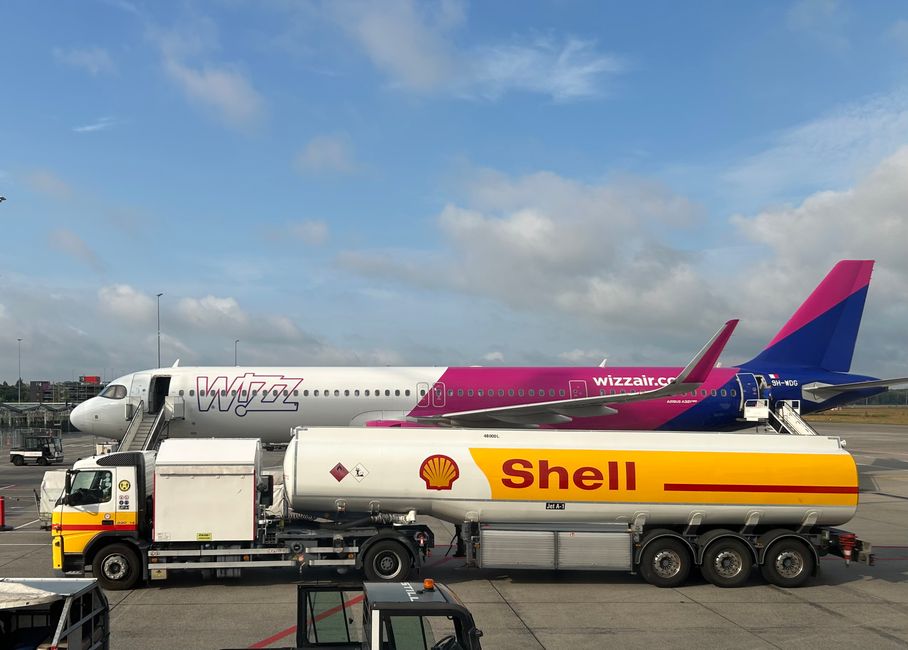
IEA Warns of Imminent Flight Cancellations as Europe Faces Dire Jet Fuel Shortage Amid Persian Gulf Conflict
The International Energy Agency (IEA) has issued a sobering alert to the global aviation sector, forecasting widespread flight cancellations and significant operational disruptions across Europe as the region grapples with an acute and worsening jet fuel shortage. This supply crisis, catalyzed by the escalating geopolitical volatility in the Persian Gulf, has exposed the extreme fragility of Europe’s downstream energy infrastructure. With critical maritime chokepoints threatened by regional hostilities, the flow of refined kerosene—the primary component of jet fuel—is facing unprecedented bottlenecks. For European carriers already operating on razor-thin margins, the combination of soaring spot prices and physical supply scarcity represents a structural threat that could ground thousands of flights during the upcoming peak travel season.
The Persian Gulf serves as the world’s primary refinery hub for high-grade aviation kerosene. A significant portion of Europe’s jet fuel imports originates from refineries in Saudi Arabia, the United Arab Emirates, and Kuwait. As tensions heighten in the Strait of Hormuz, the primary artery for energy exports from the Middle East, insurance premiums for tanker transit have skyrocketed, and shipping companies are increasingly diverting vessels around the Cape of Good Hope. This detour adds weeks to delivery schedules, creating a "delivery vacuum" that European storage facilities cannot bridge. IEA data indicates that European stocks of jet fuel have fallen to their lowest levels in a decade, leaving little room for error if maritime supply chains are further obstructed.
The Anatomy of the Supply Chain Breakdown
Europe has structurally under-invested in refining capacity for over a decade, shifting instead toward a reliance on imported finished products. This "just-in-time" supply chain model works efficiently during periods of geopolitical stability but collapses under systemic stress. Jet fuel is not a commodity that can be easily substituted; it requires specific hydro-processing capabilities that few European refineries currently utilize at scale. When the Persian Gulf supply is throttled, European refiners cannot simply "switch on" production to meet the gap. The capital-intensive nature of upgrading refineries to prioritize kerosene production means that the industry is effectively locked into current output levels.
The IEA’s warning highlights a critical divergence between diesel and jet fuel production. While European governments have prioritized diesel and heating oil reserves to prevent social instability during winter months, jet fuel has been relegated to a secondary priority. This policy oversight has left airports across major European hubs—including London Heathrow, Frankfurt, and Amsterdam Schiphol—vulnerable to rationing. If current supply trends continue, airport operators may be forced to implement "fuel uplift limits," effectively restricting the distance or frequency of flights departing from these locations. Such measures would not only disrupt travel but also cripple air freight logistics, which rely on the same fuel pools.
Economic Ripples and Inflationary Pressures
The surge in jet fuel prices is inherently inflationary. Aviation kerosene typically accounts for 20% to 30% of an airline’s total operating costs. As prices spike due to the Persian Gulf conflict, carriers are left with three undesirable options: absorb the cost and face insolvency, pass the cost onto consumers via ticket surcharges, or reduce capacity to manage fuel consumption. The IEA anticipates a hybrid of these strategies, with a particular focus on capacity reduction. By trimming flight schedules, airlines can theoretically maximize their fuel efficiency per seat, but the human cost involves massive cancellations and chaotic scenes at international airports.
Furthermore, the secondary economic impact on tourism-dependent nations in Southern Europe—such as Greece, Spain, and Italy—could be devastating. If flight connectivity is severed or scaled back, the hospitality and tourism sectors, which are only now recovering from the post-pandemic slump, will face an immediate revenue contraction. This chain reaction demonstrates how an energy security issue in the Middle East quickly transforms into a macroeconomic crisis in the European Union. Central banks, already struggling to manage persistent inflation, will likely face further pressure as energy-linked transport costs filter through the consumer price index.
The Geopolitical Trigger: Persian Gulf Instability
The Persian Gulf is the global energy heartbeat. The IEA has noted that any disruption in this region creates a ripple effect that is immediately felt in the price of "middle distillates." The current conflict has seen an increase in "shadow tanker" activity and a rise in drone-related threats to energy infrastructure. Even if a full-scale blockade of the Strait of Hormuz is avoided, the "risk premium" attached to the region is sufficient to keep prices elevated and supply vessels hesitant to commit to the route.
The European response has been marked by a lack of coordinated strategy. While the EU has been successful in diversifying natural gas supplies following the conflict in Ukraine, it has neglected its reliance on Middle Eastern refined products. Jet fuel, unlike natural gas, requires specialized tanker fleets and dedicated storage terminals. The infrastructure to store, test, and distribute aviation fuel is strictly regulated for safety, meaning that supply cannot be redirected easily from one port to another. This rigidity is the Achilles’ heel of the European aviation industry.
Mitigation Strategies and the Path Forward
In response to the IEA warning, some European carriers are exploring long-term fuel hedging and increased investment in Sustainable Aviation Fuels (SAF). However, SAF production remains in its infancy and cannot provide the scale required to mitigate a sudden, supply-side shock. The reality is that there is no short-term technical fix for the current kerosene shortage. The industry must rely on diplomatic de-escalation in the Persian Gulf and the potential release of government-held oil stocks, although such releases historically prioritize crude oil over refined middle distillates.
Airlines are also looking at operational optimizations, such as "tankering"—carrying extra fuel from regions where it is cheaper—but this is counterproductive in the current environment, as the extra weight increases fuel burn, thereby exacerbating the very shortage they are trying to navigate. The IEA’s call to action includes a plea for governments to incentivize fuel efficiency and, potentially, to prioritize aviation fuel in their national strategic reserves. Without such intervention, the flight cancellations warned of by the IEA appear increasingly inevitable.
The Future of Aviation Infrastructure
This crisis underscores the need for a fundamental rethink of European energy security. The dependence on long-distance maritime corridors for critical transport fuels is no longer a viable long-term strategy in a world characterized by geopolitical fracturing. Policymakers are being urged to consider "regionalization" of refining capacity, focusing on local, high-tech facilities that can process heavier crudes into specific aviation grades. While this would require significant government subsidies and regulatory reform, it is the only way to insulate the European aviation sector from the volatility of the Persian Gulf.
For the average traveler, the immediate future holds uncertainty. The IEA’s warning should serve as a signal for both leisure and business travelers to anticipate price volatility and potential schedule shifts. Airlines will likely move toward more flexible booking policies, but they will be unable to protect travelers from the reality of grounded fleets if the fuel supply doesn’t stabilize.
As the IEA continues to monitor the situation, the outlook remains grim. The conflict in the Persian Gulf is not merely a regional dispute; it is a direct intervention in the mechanical operation of the global economy. Jet fuel is the lifeblood of international commerce and mobility. Its scarcity, driven by the current geopolitical standoff, is a stark reminder that in an interconnected world, the stability of one region is the prerequisite for the mobility of all others. If Europe cannot secure its kerosene supply lines, the days of reliable, affordable air travel may face a long and painful period of contraction. The window for proactive policy management is closing rapidly, and the aviation industry must prepare for a reality where "fuel rationing" becomes a standard term in the lexicon of global logistics.
