For All Mankind Season 5: A Bold New Era Dawns with Ed Baldwin’s Poignant Departure

The acclaimed alternate history drama For All Mankind has consistently pushed the boundaries of science fiction storytelling, weaving intricate narratives of human ambition against the backdrop of a dramatically reshaped space race. Season 5, however, marks an unprecedented evolutionary leap for the series, delving deeper into the emotional landscapes of its characters while expanding its multi-planetary vision. As the show continues to explore the profound implications of humanity’s expansion beyond Earth, it grapples with themes of legacy, loss, and the very essence of becoming a truly interplanetary species.
WARNING: SPOILERS AHEAD FOR SEASON 5
A pivotal moment in this ambitious new season arrived with episode 3, titled "Home." This deeply affecting chapter saw the series bid a quiet yet monumental farewell to one of its most foundational figures: Ed Baldwin. This narrative decision, executed with remarkable intimacy and gravitas, underscores the show’s commitment to grounded, character-driven storytelling, even as its cosmic canvas expands.
Showrunners Matt Wolpert and Ben Nedivi sat down to discuss the genesis and execution of this pivotal episode, dissecting the difficult choice behind Ed Baldwin’s departure, the emotional resonance of his final scenes, and the strategic timing of this significant event within the season’s arc.
The Difficult Decision to Conclude Ed Baldwin’s Journey
The departure of Ed Baldwin, a character intrinsically linked to the show’s inception, was a decision fraught with emotional weight for the creative team. "It was one of the most difficult decisions I think we’ve had to make so far on this show," Ben Nedivi revealed. "We always knew it was coming, but we kept wanting to push it back because, one, we’ve grown so attached to this character, but also to the actor, Joel Kinnaman, who played him. He was one of the first actors who signed on to the show, so we developed a really beautiful partnership with him in making it."
However, the desire to honor the character’s arc ultimately superseded the reluctance to let go. Nedivi elaborated on the philosophical underpinnings of this choice: "I think even he recognized, in the end, that the way to do this wasn’t to go for the typical end-of-season heroic death. We wanted to capture the reality of this incredible character, this man who’s accomplished such amazing things, and show him dying the way most of us do: in a bed, of old age."

This commitment to realism presented a unique narrative challenge. "On some level, that was one of the most difficult writing challenges," Wolpert added. "How do we give him a heroic end, but also one that feels true to life? That’s the challenge of the show. We want to show heroism and space action, but also stay true to these characters and their reality."
The impact of Ed’s passing reverberates throughout the season, allowing his memory and legacy to inform the ongoing narrative. This strategic placement also provides crucial narrative space for the development of newer characters, particularly his daughter and grandson, offering them the runway to grow and forge their own paths. "Painful as it was, it felt like the right decision," Nedivi concluded.
Echoes of the Past: Crafting Ed Baldwin’s Final Moments
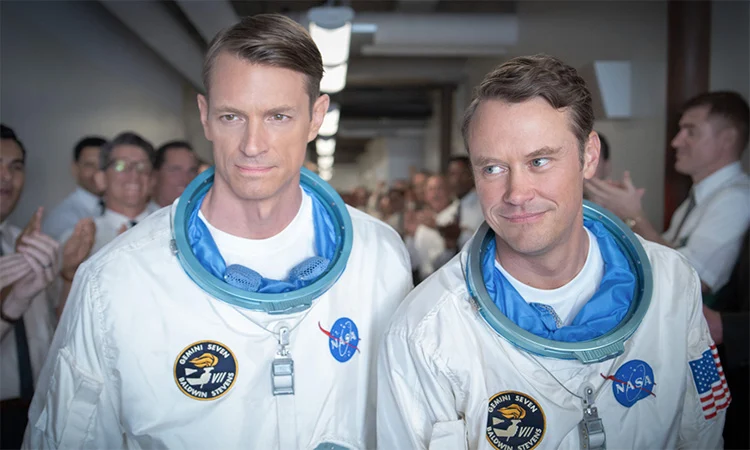
Episode 3, "Home," is particularly resonant due to its poignant callbacks to earlier seasons, most notably in its closing sequence. The scene, depicting Ed walking down a hallway towards the Gemini launch, accompanied by spectral figures of his lost loved ones – Gordo, his wife, and his son – was a carefully orchestrated emotional crescendo.
"Honestly, that ending sequence when he’s walking down the hallway to the Gemini launch, alongside Gordo, with his wife waiting and his son there… In our heads, it wasn’t really about him going to heaven, it was about that launch," Matt Wolpert explained. "But those were people he had lost."
The return of Michael Dorman (Gordo) and Chantel VanSanten (Karen) for this pivotal scene infused the moment with profound emotion. "Having Michael Dorman and Chantel VanSanten come back for that moment was incredibly emotional for everyone," Wolpert shared. "That was actually Joel’s last day; we shot it at the very end, and there wasn’t a dry eye on set!"
Despite the palpable grief, the atmosphere on set was also characterized by the camaraderie that has defined the show’s production. "At the same time, there was a lot of laughter, because our set is like a family. It made the whole experience really meaningful," Wolpert added. This blend of profound sadness and enduring connection encapsulates the spirit of For All Mankind.
The Evolving Landscape: For All Mankind Without Ed Baldwin
The absence of Ed Baldwin from the central narrative arc necessitates a significant shift in the show’s dynamics. Ben Nedivi acknowledged the strangeness of this transition: "It was very strange, because we’re so used to having crotchety Ed Baldwin in our world, so it was quite a pivot, but almost a necessary one."

For All Mankind has distinguished itself by its willingness to evolve its core cast over time, a rarity in long-running television series. "Most TV shows keep the same core cast throughout. What makes this show unique is that we’re constantly evolving the cast. By Season 5, we have almost nobody left from Season One, which is very rare," Nedivi observed.
This continuous reinvention requires a deliberate investment in new characters and their storylines. "For that to work, you have to invest in the new characters and give them room to grow and tell meaningful stories. This season, in particular, we’ve been able to do that," he stated.
Even in his absence, Ed’s influence remains palpable. "Even without Ed, his presence is still felt. As a grandfather and father, his influence carries on. That idea, that we’re shaped by those who came before us, is something we’ve always held onto," Nedivi elaborated.
A New Generation Takes Center Stage
Season 5 prominently features a younger generation, particularly individuals who have grown up with Mars as their home. This shift in perspective injects a fresh dynamism into the series. "It brings a really fun, fresh energy," Matt Wolpert commented. "We’re focusing on young people who see Mars as their home, their small town, and are trying to figure out who they are and what they want their world to look like."
The narrative spotlight shines brightly on characters like Alex, portrayed by Sean Kaufman, who grapples with the immense legacy of the Baldwin family. "For someone like Alex… there’s also the pressure of the Baldwin legacy. His family has achieved so much, how do you measure up to that?" Wolpert questioned. "Watching him find his voice is one of the main storylines this season."
Charting New Territories: The Challenges of Multi-Planetary Storytelling
With the narrative now spanning multiple planets and significantly reducing the time spent on Earth, For All Mankind faces new creative frontiers. "It’s fascinating. We didn’t even realise how little time we spend on Earth now. The show used to be 90% NASA and Houston, but this season, we’re barely there," Ben Nedivi noted.
The expansion to new celestial bodies presents both opportunities and challenges. "The multi-planet aspect is exciting, but also challenging. We want audiences to instantly know where they are without constantly spelling it out. Each location needs its own vibe and energy," Nedivi explained.

The production team has dedicated considerable effort to ensuring the authenticity of these extraterrestrial environments. "We also put a lot of effort into making each environment feel real, what it would actually be like to live there. Hopefully, if we ever do go, people will say: ‘For All Mankind got it right.’"
Reality Mirrors Fiction: The Renewed Space Race
The current resurgence of real-world space exploration, marked by missions like Artemis II and renewed international ambition, has seen the fictional narrative of For All Mankind increasingly echo contemporary developments. "Honestly, it’s incredibly gratifying," Matt Wolpert stated. "When we started the show, the US didn’t even have a rocket capable of launching astronauts; they had to rely on Soyuz missions. Now there are multiple countries and private companies launching missions, and there’s a renewed race to the Moon. It’s exciting to see elements of what we imagined starting to play out in real life."
This alignment between fiction and reality underscores the show’s prescience and its ability to tap into the zeitgeist of human endeavor.
Influences and Inspirations: Thematic Undercurrents of Season 5
Science fiction has long served as a mirror to contemporary societal concerns, and Season 5 of For All Mankind is no exception. The showrunners drew inspiration from a confluence of real-world events and enduring themes. "It’s interesting, with Season Five in particular, we always have certain touchpoints from that era that we like to play on, but not say, ‘Okay, we’re doing that,’ more like, what’s the For All Mankind spin on it?" Ben Nedivi elaborated.
A significant thematic thread woven through the season is the idea of challenging established power structures, reminiscent of movements like Occupy Wall Street and the broader sentiment of individuals pushing back against corporate or governmental authority. "A lot of what we were feeling from the 2010s was this idea of standing up to power, movements like Occupy Wall Street, that sense of people pushing back against corporations or authority," Nedivi explained.
Furthermore, the season explores themes of information dissemination and transparency, echoing the impact of platforms like WikiLeaks. "There’s also the influence of things like WikiLeaks, the idea of ‘what are they up to?’ and ‘we need to know,’" he continued.
Looking further back, the show draws parallels between the growing distance and shifting power dynamics between Earth and Mars and historical precedents. "And then we look further back, to something like the American Revolution, and the tension that comes from distance and shifting power. Interestingly, the distance between Earth and Mars in our show isn’t so different, conceptually, from England and the American colonies," Nedivi observed.

A Glimpse Towards the Finale and Beyond
As the season hurtles towards its conclusion, audiences can anticipate further narrative surprises and expansive storytelling. "What I’m really excited about is that Mars has taken up such a huge part of the story, but it was important to us that we go even further again," Matt Wolpert revealed. "There’s a new place that humans are going to set foot on this season, and I’m really excited for people to see that. It’s a fascinating setting, and the story we tell there is really interesting."
Ben Nedivi reinforced this sentiment, emphasizing the show’s commitment to unexpected twists: "We pride ourselves on having surprises, and nothing ever goes according to plan, and that is definitely the case this season as well. People who’ve come to expect spectacle, emotion, and shocks from our finales will be happy. We definitely pushed ourselves in terms of the scale and what happens."
The knowledge of an impending Season Six has allowed the creative team to craft a finale that not only delivers a powerful conclusion but also lays the groundwork for future narratives. "And knowing we have a Season Six meant we could not only deliver a powerful ending, but also set up what’s coming next. I’m dying for people to see it, but I want to keep that element of surprise…" Nedivi concluded, leaving fans eager for what lies ahead.
For All Mankind is currently streaming on Apple TV+.
Find more TV exclusive interviews, reviews, news, competitions and much much more at SciFiNow.