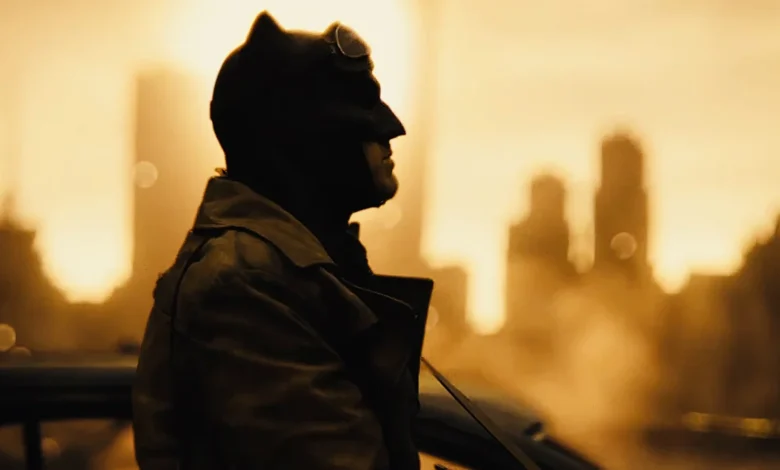
The intersection of Hollywood blockbusters and behind-the-scenes turmoil often yields unpredictable results for cinematic franchises. Over the last decade, Warner Bros. and DC Entertainment’s efforts to construct a cohesive cinematic universe experienced numerous creative shifts, casting changes, and directorial transitions. Among the most discussed chapters of this turbulent era remains the production of 2017’s Justice League and its subsequent cultural footprint. Recent comments from Academy Award-winning actor and filmmaker Ben Affleck regarding his tenure as the Dark Knight have reframed his contribution to the superhero genre. Rather than undermining his legacy, Affleck’s candid admission of discontent during the production of Justice League highlights how his authentic weariness aligned with the psychological profile of an aging, disillusioned Bruce Wayne.
Chronology of the DCEU Batman Era
The evolution of Ben Affleck’s portrayal of Gotham City’s protector unfolded across multiple high-budget releases, each marked by distinct production hurdles and critical reception.
In August 2013, Warner Bros. officially announced that Affleck would assume the mantle of Bruce Wayne in Zack Snyder’s upcoming sequel to Man of Steel. This casting choice introduced a veteran iteration of Batman—a character who had spent two decades fighting crime in Gotham and had grown cynical, battle-hardened, and morally compromised.
March 2016 marked the theatrical release of Batman v Superman: Dawn of Justice. The film presented a world-weary billionaire grappling with the existential threat posed by alien gods, culminating in a tragic narrative arc that led directly into the premise of a unifying superhero coalition.
November 2017 brought the theatrical release of Justice League. Following a family tragedy that forced original director Zack Snyder to step away during post-production, Warner Bros. brought in Joss Whedon to oversee extensive reshoots and tone alterations. The resulting film underperformed critically and commercially, failing to meet the financial expectations of the studio.
March 2021 saw the streaming release of Zack Snyder’s Justice League on HBO Max. This four-hour director’s cut restored Snyder’s original vision, offering a starkly different narrative tone and providing closure for fans advocating for the filmmaker’s intended creative direction.
June 2023 featured Affleck’s final recorded performance as Bruce Wayne in The Flash, serving as a concluding cameo for his iteration of the character within the DC Extended Universe.
Behind-the-Scenes Friction and Actor Discontent
The genesis of Affleck’s frustration was recently brought back into the spotlight following his appearance on the Happy Sad Confused podcast. Speaking candidly about his career trajectory, the actor described his time working on Justice League as a profound professional low point, attributing the negative experience to a combination of personal challenges and deep-seated creative conflicts between the studio executives and the filmmaking team.
Affleck noted that the environment on set exposed him to the pitfalls of a studio-driven production at odds with its director’s vision. According to the actor, witnessing the friction firsthand reaffirmed his desire to step away from blockbuster franchises and pivot toward projects where he maintained greater creative autonomy. This disillusionment, while detrimental to his enthusiasm for studio filmmaking, inadvertently mirrored the emotional state of the character he was portraying on screen.
A Character Defined by Melancholy and Exhaustion

In the traditional comic book canon, Batman is frequently depicted as a dedicated strategist and a committed leader of the Justice League. However, the cinematic incarnation portrayed by Affleck operated under a vastly different paradigm. Introduced in Batman v Superman, this version of Bruce Wayne is haunted by decades of loss, the destruction of Metropolis, and the realization that human effort is vastly outmatched by cosmic entities.
By the time the narrative transitions into Justice League—in both its theatrical and director’s cut formats—Batman is forced to reconcile his past paranoia with the urgent need to unite a team of extraordinary individuals. His internal conflict stems directly from his indirect role in the death of Superman and his skepticism regarding the resurrection of an unpredictable, god-like being.
This inherent weariness aligned seamlessly with Affleck’s off-screen sentiment. Film critics and analysts have frequently noted that Affleck’s strongest performances often lean into a specific brand of sorrow and exhaustion—traits he previously demonstrated in dramatic works such as The Way Back and Gone Baby Gone. By infusing his superhero performance with genuine reluctance and fatigue, Affleck portrayed a Bruce Wayne who viewed his vigilante responsibilities not as an empowering crusade, but as an exhausting, inescapable burden.
Comparative Analysis of Cinematic Dark Knights
To understand the unique positioning of Affleck’s performance, it is helpful to examine how previous actors approached the role within distinct cinematic universes.
Michael Keaton, under the direction of Tim Burton in the 1989 Batman and 1992 Batman Returns, played the character with a brooding, eccentric isolationism that fit the gothic aesthetic of the films. Christian Bale, starring in Christopher Nolan’s Dark Knight Trilogy between 2005 and 2012, delivered a grounded, hyper-realistic interpretation of a man overcoming physical and psychological trauma to serve as a symbol of hope and endurance for Gotham City.
In contrast, Affleck’s Bruce Wayne bypassed the origin story entirely, presenting a middle-aged veteran whose idealism had eroded long before the audience met him. While Bale’s Batman ultimately found a path toward resolution and peace, Affleck’s iteration remained trapped in a perpetual cycle of cynicism. This fundamental difference in character trajectory meant that Affleck’s real-world disillusionment with the blockbuster filmmaking process served as an organic substitute for traditional method acting.
Implications for the Superhero Genre
Affleck’s retrospective assessment of Justice League highlights a broader ongoing debate within the entertainment industry regarding studio interference versus director-driven visions. In the wake of the 2017 film’s troubled production, Warner Bros. underwent significant restructuring of its DC film division, eventually leading to the appointment of James Gunn and Peter Safran to helm DC Studios with a focus on cohesive, unified storytelling.
The acknowledgment by a leading star that a major tentpole production was fundamentally flawed due to executive-creative friction provides rare insight into the corporate mechanics of Hollywood blockbusters. Analysts suggest that such transparency from high-profile talent may influence how studios approach large-scale productions moving forward, emphasizing the necessity of clear creative alignment between producers and directors.
Conclusion
Ultimately, the friction that characterized the production of Justice League created an unintended synergy between actor and role. Ben Affleck’s overt dissatisfaction with the filmmaking process did not diminish his performance; rather, it provided the emotional authenticity required to bring a weary, cynical Dark Knight to life. While the cinematic universe in which he operated faced numerous structural challenges, Affleck’s portrayal of a reluctant hero burdened by the weight of the world remains one of the most distinctive interpretations of the character in modern cinema history.