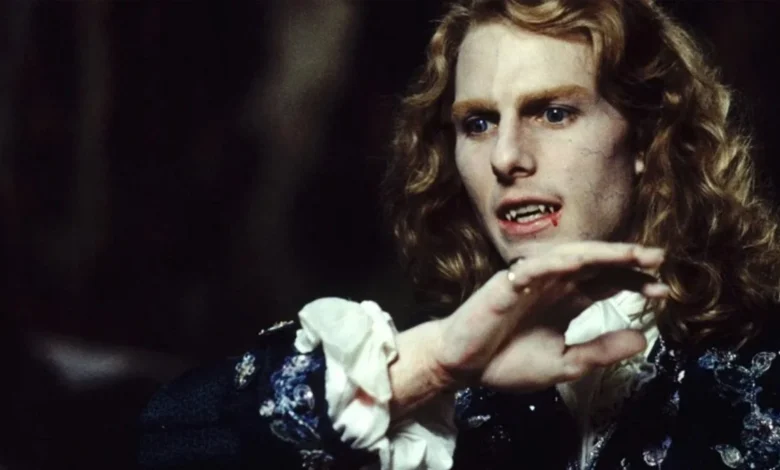
When the 1994 film adaptation of Anne Rice’s Interview with the Vampire premiered, it arrived under a cloud of intense skepticism. Despite a casting controversy involving Tom Cruise—who was initially considered "too mainstream" for the role of the predatory, aristocratic Lestat de Lioncourt—the film became a critical and commercial success, grossing over $223 million worldwide against a $60 million budget. The film’s legacy, bolstered by Kirsten Dunst’s haunting performance as the child vampire Claudia and Brad Pitt’s brooding turn as Louis de Pointe du Lac, established a high-water mark for gothic horror in 1990s cinema. Warner Bros. quickly sought to capitalize on this momentum by greenlighting a sequel based on Rice’s second novel, The Vampire Lestat. However, the project languished, and while details regarding the production’s collapse have been long debated, director Neil Jordan has recently shed new light on the script he developed—a vision that diverged significantly from the eventual direction taken by later adaptations.
The Development Timeline and Creative Divergence
Following the 1994 release, Warner Bros. executives were eager to maintain the momentum of the franchise. Anne Rice’s second novel, published in 1985, was a sprawling, epic narrative that shifted the focus from Louis’s introspective misery to Lestat’s flamboyant, centuries-long journey.
Neil Jordan, tasked with drafting the screenplay for this potential follow-up, approached the material with a specific creative lens. In recent disclosures, Jordan clarified that his interest was not in the aesthetic of the "rock star" vampire that defined the novel’s later chapters, but rather in the historical weight of the character’s origins. According to Jordan, the script he penned focused heavily on the 18th-century French experience of Lestat—his life in the Commedia dell’arte, his abduction by a mysterious mentor, and the primal terror of his initial transformation.
This approach represented a stark departure from the version eventually produced as the 2002 film Queen of the Damned, which leaned heavily into the modern rock star persona. Jordan’s script intended to ground the narrative in the period piece aesthetic that made the first film a visual triumph, utilizing a framing device that would have bridged the gap between the 1994 cliffhanger and the historical flashback.
The Missing Bridge: Analyzing the Proposed Narrative
The most compelling aspect of Jordan’s revealed script is the proposed framing device. The 1994 film concluded with an ambiguous and non-canonical scene in which a returned Lestat encounters the journalist Daniel Molloy (Christian Slater) in a convertible on the Golden Gate Bridge. In the film’s final moments, Lestat bites Molloy, implying a transformation. Jordan’s sequel script would have utilized this "undead road trip" as the primary vehicle for the story.

By having Lestat recount his 18th-century life to a captive, potentially newly turned Molloy during a cross-country drive, the film would have maintained continuity with the first movie’s specific aesthetic while exploring the deep lore of the Vampire Chronicles. This structural choice suggests that Jordan aimed to transform the sequel into a character-driven odyssey rather than a sprawling ensemble piece.
Contextualizing the Legacy of The Vampire Lestat
To understand why this specific script remains a point of interest, one must analyze the broader context of the Vampire Chronicles in film. The 2002 film Queen of the Damned, which attempted to condense the plot of both The Vampire Lestat and its successor, was met with critical derision. It stripped away the gothic atmosphere of the 1994 original, favoring a mid-2000s nu-metal aesthetic that many fans and critics felt betrayed the source material.
By contrast, the current AMC television series, which debuted in 2022, has adopted a different approach, modernizing the timeline while retaining the core emotional tension between Louis and Lestat. When viewed against these two poles, Jordan’s "lost" script represents a middle path—one that honored the period-accurate roots of the characters while utilizing the established cinematic universe of the 1994 film.
Statistical and Financial Implications
The failure to produce a direct sequel to the 1994 film resulted in a lost opportunity for Warner Bros. to establish a consistent, long-term franchise. Financial data from the mid-90s indicates that the "vampire craze" was at its peak; following the success of Interview with the Vampire, studios were aggressively seeking properties that could bridge the gap between horror and high-budget drama.
Had a sequel materialized with the original cast, the economic impact would have been significant. Tom Cruise, having solidified his status as an A-list star during this period, would have likely drawn massive audiences for a direct continuation. However, the internal pressures of studio casting, combined with the difficulty of adapting a book as complex as The Vampire Lestat, led to the project’s dissolution.
Broader Impact and Industry Analysis
The revelation of this script provides a case study in the evolution of intellectual property management in Hollywood. In the 1990s, sequels were often treated as immediate requirements for successful films, regardless of the availability of talent or the readiness of the script. Today, the landscape has shifted toward "legacy sequels" and expanded universes, where properties are often rebooted or re-imagined entirely.

From a production standpoint, Jordan’s approach to the script—prioritizing the historical narrative over the contemporary pop-culture elements—aligns with the current critical consensus that the most successful adaptations of Rice’s work are those that lean into the period-drama elements rather than the supernatural horror tropes.
Looking Forward: The Potential for a Legacy Sequel
While the possibility of a direct sequel featuring the 1994 cast is effectively non-existent due to the passage of time and the development of the AMC series, the structure of Jordan’s proposed film continues to offer a blueprint for future adaptations. The idea of a "legacy sequel" that acknowledges the events of the 1994 film while resetting the focus on the historical origins of the characters is a strategy that has proven successful in other franchises.
The industry’s continued interest in the Vampire Chronicles suggests that there is still a market for the specific tone Neil Jordan cultivated. As the rights to these characters continue to shift and evolve, the "undead road trip" script remains a compelling "what if" scenario. It highlights the importance of thematic consistency in adapting literary works, proving that even a script that never leaves the page can exert a lasting influence on how a franchise is perceived by both the public and future filmmakers.
In summary, the story of Neil Jordan’s The Vampire Lestat is more than just a footnote in film history; it is a clear example of the creative tension between studio expectations and directorial vision. While the fans were left with a cliffhanger that would remain unresolved for decades, the revelation of this script offers a definitive look at what could have been a milestone in the gothic cinematic genre. Whether or not this vision is ever realized, it serves as a testament to the enduring power of Anne Rice’s world and the intricate process of bringing such complex narratives to the screen.