The television landscape is currently experiencing a profound shift in how comic book adaptations are conceived, written, and executed. HBO’s breakout hit series Lanterns has successfully redefined the boundaries of the superhero genre, steering away from traditional cosmic CGI spectacles and deep-dive lore regarding the emotional spectrum of light. Instead, the series has anchored its narrative in gritty realism, functioning primarily as an intense, grounded character study of the individuals tasked with wielding the ring. Operating in the stylistic and structural shadow of HBO’s landmark crime drama True Detective, Lanterns has proven that superhero narratives can thrive when stripped of excessive fantasy and treated with the gravity of prestige procedural television.
As the series approaches its highly anticipated first-season finale, it carries the critical acclaim, viewership metrics, and cultural buzz required to easily secure a second season order. Rumors surrounding early pre-production updates and potential shifts within the creative team have circulated since the summer months, keeping fans actively engaged in the future of the DCU property. Regardless of which showrunners or directors ultimately steer the ship for subsequent outings, industry analysts and creative insiders suggest that the series must adopt the true anthology format pioneered by True Detective. By changing its lead characters, temporal settings, and regional backdrops with each new chapter, Lanterns can ensure its longevity, creative vitality, and continued relevance in an increasingly crowded streaming marketplace.
The Evolution of the Green Lantern Concept in Live-Action
The journey of bringing the Green Lantern mythos to live-action television has been notoriously long and arduous. For over a decade, Warner Bros. and DC Entertainment attempted various iterations of a Green Lantern property following the 2011 feature film starring Ryan Reynolds. Early development cycles for what would eventually become the current HBO series initially toyed with a grand, sprawling cosmic arc meant to encompass multiple eras simultaneously. However, under the leadership of DC Studios, the creative direction was fundamentally overhauled to favor a serialized detective procedural format.
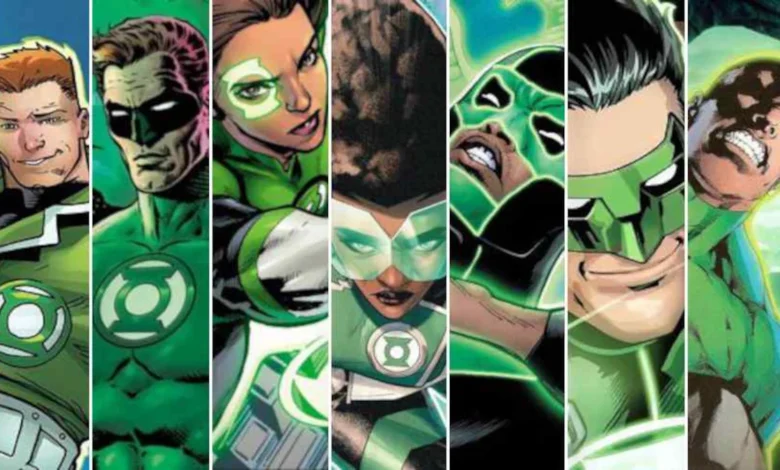
During these formative developmental phases, creative briefs indicated a distinct structural approach: individual seasons were conceptualized to spotlight different human figures who have historically worn the Green Lantern ring within DC Comics canon. This lineage spans from Alan Scott, the Golden Age pioneer of the 1940s, through the Silver Age icon Hal Jordan, up to modern stalwarts such as John Stewart, Kyle Rayner, Simon Baz, Jessica Cruz, and Sojourner Mullein. By choosing to pilot the series with a grounded investigative dynamic, the production team has successfully carved out a unique aesthetic space within the broader DC Universe. This foundational success now provides the creative license necessary to rotate protagonists and settings without alienating the core audience.
The Core Mechanics of the Procedural Anthology Structure

Implementing a strict anthology format within a major superhero franchise carries inherent risks, particularly regarding audience retention and narrative continuity. Viewers often form deep attachments to specific lead actors and character dynamics. However, the structural blueprint established by True Detective demonstrates that an anthology series can maintain high viewership if the thematic core remains consistent.
For Lanterns, the core formula revolves around pairing two or more Green Lanterns—or occasionally a Lantern alongside an earthly law enforcement counterpart—to investigate complex, multi-layered cases. These investigations are deliberately designed to unearth personal trauma, professional failures, and historical baggage unique to the participating characters. While a shift in cast and location between seasons might initially disorient viewers accustomed to traditional serialized storytelling, the long-term benefits heavily outweigh the temporary friction.
Expanding the Scope of the Green Lantern Corps
One of the primary advantages of transitioning to an anthology model is the organic opportunity it provides to flesh out the vast infrastructure of the Green Lantern Corps and its diverse human roster. In traditional comic book lore, humanity holds a distinct and vital reputation within the Corps precisely because multiple individuals from Earth have been chosen to wear the ring. Limiting a television series to a single duo indefinitely leaves a wealth of rich source material and narrative potential unexplored.
Every human who has held the mantle of the Green Lantern brings an entirely different thematic weight and historical context to the narrative. For instance, Alan Scott operates under an entirely different set of rules compared to his successors. His ring and lantern are historically disconnected from the Guardians of the Universe and the central Green Lantern Corps battery, drawing instead upon mystical or localized energies linked directly to the Justice Society of America. Given that the JSA has already been teased within the wider DC Universe via environmental clues such as murals in Superman, exploring Scott’s era offers a seamless bridge to preexisting cinematic world-building.
Mining Decades of Rich Comic Book Lore
Beyond the foundational historical figures, DC Comics boasts a deep bench of diverse, contemporary Green Lantern characters who have rarely, if ever, been featured in high-budget live-action adaptations. Characters such as Simon Baz and Jessica Cruz introduce modern anxieties, psychological depth, and representation that resonate strongly with contemporary audiences. Furthermore, critically acclaimed miniseries like Far Sector introduced Sojourner "Jo" Mullein, anchoring a sophisticated sci-fi murder mystery within a distant interstellar city—a setting that could easily be adapted into a self-contained seasonal arc.

The Green Lantern mantle is unique among superhero properties because it functions as an institutional office rather than a singular identity tied to one person. By refusing to limit the narrative to a single pairing, HBO and DC Studios position the series to continuously reinvent itself. This structural flexibility ensures that the property does not suffer from creative fatigue, a common pitfall in long-running television franchises.
Implications for the Broader DC Universe
The strategic decision to utilize a grounded, investigative format for Lanterns has significant implications for how the broader DC Universe expands under its current management. By treating cosmic and metahuman phenomena through the lens of terrestrial crime drama, the creative team has established a tone that contrasts sharply with more fantastical cinematic entries while still remaining firmly within the established continuity.
Industry analysts note that this approach allows Warner Bros. Discovery to appeal to prestige television audiences who might otherwise bypass superhero content. The success of the first season proves that there is a robust appetite for mature, character-driven storytelling set against a backdrop of comic book mythology. If future seasons embrace the True Detective anthology structure, the series can function as a rotating showcase for top-tier cinematic talent, attracting acclaimed directors, writers, and actors who prefer limited-run commitments over multi-year television contracts.
Looking Ahead to Season 2 and Beyond
As production discussions for the second season continue to develop behind closed doors, the creative path forward appears remarkably clear. The audience has demonstrated a clear willingness to embrace a slower-paced, atmospheric narrative style that prioritizes character introspection over relentless action sequences. By honoring the structural precedents set by its prestige television influences, Lanterns has transcended the traditional limitations of its source medium.
Whether the creative team chooses to pivot to a new historical epoch, explore a different sector of space, or introduce a fresh pairing of ring-slingers to tackle an intricate mystery, the foundational framework is firmly in place. Lanterns has successfully illuminated a new path for comic book adaptations, proving that the most compelling stories in the universe are often found in the complex internal lives of the people wearing the ring.
Related posts: