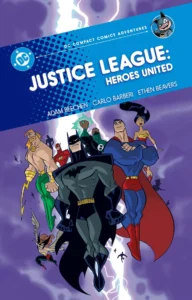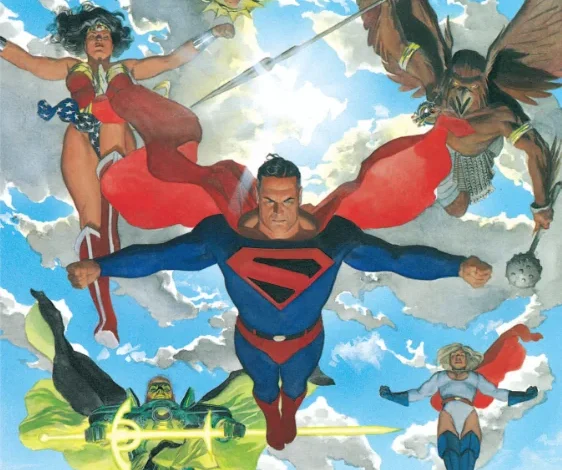
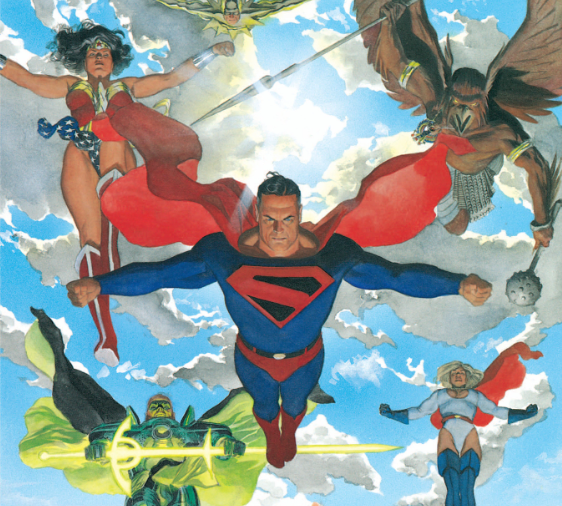
The recent resurgence of the Justice League, spearheaded by Superman, has fundamentally altered the global geopolitical landscape of Earth-22. Following years of self-imposed exile, the return of the world’s most powerful metahumans has not provided the stabilizing influence many hoped for; instead, it has accelerated a systemic crisis regarding the nature of authority, privacy, and the rule of law in an era dominated by super-powered individuals. As the League attempts to impose order on a chaotic, post-Magog global order, they have found themselves in direct opposition to a burgeoning technological surveillance state orchestrated by Bruce Wayne, while simultaneously facing opportunistic maneuvers from long-standing adversaries like Lex Luthor.
Chronology of the Current Escalation
The current instability can be traced back to the power vacuum left by Superman’s decade-long absence. The following timeline outlines the primary events precipitating the current state of emergency:
- Year 0: The Joker murders the staff of the Daily Planet, including Lois Lane. Magog executes the Joker in the streets of Metropolis. Despite public outcry, Superman insists on a legal trial for Magog.
- Year 0.5: Magog is acquitted by a jury of his peers. Public sentiment shifts heavily in favor of vigilante justice. Disillusioned by the rejection of his moral framework, Superman retreats from public life.
- Year 1–9: The "New Guard" of metahumans, characterized by extreme volatility and a disregard for collateral damage, dominates global conflicts.
- Year 10 (Current): The Kansas disaster occurs, resulting in the annihilation of the state’s agricultural core. This event serves as the catalyst for the Justice League’s return to active duty.
The Statue of Liberty Incident: A Case Study in Jurisdiction
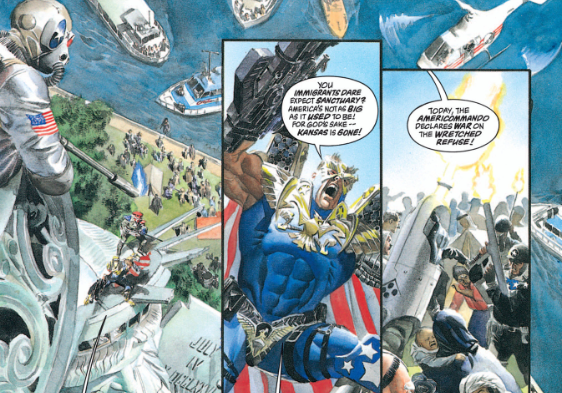
The League’s re-entry was signaled by their intervention at the Statue of Liberty, where a confrontation between the nationalist militia known as the "Minutemen" and a faction of robotic vigilantes threatened to result in mass civilian casualties. While the League’s intervention was technically effective in neutralizing the immediate threat, it raised significant questions regarding the lack of oversight. The Justice League acted as an extra-legal force, bypassing existing international and federal law enforcement protocols.
Data from the event indicates that the destruction was largely caused by competing metahuman factions claiming authority over national borders. By dismantling these factions, the League effectively established themselves as the sole arbiters of violence. This shift from state-sanctioned law enforcement to self-appointed meta-judicial intervention represents a departure from traditional democratic processes, as no electoral or legal body has authorized the League to act as the primary peacekeeping force of the United Nations.
The Wayne Doctrine: Surveillance vs. Metahuman Supremacy
Parallel to the League’s return, Bruce Wayne has consolidated power through an advanced, technology-driven security network. Wayne’s approach, primarily focused on Gotham City and Star City, centers on the deployment of automated, remotely controlled robotic units and pervasive digital surveillance.
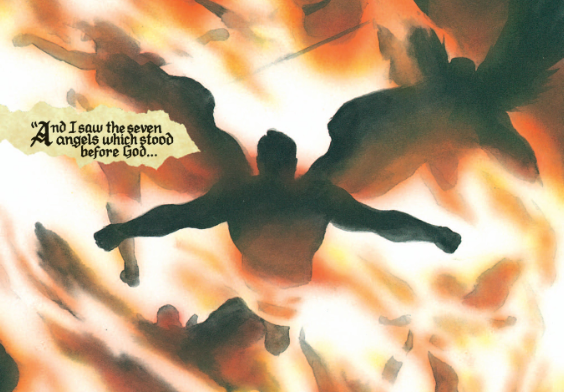
Wayne’s methodology presents a direct critique of the Justice League’s "power-first" approach. In private discourse, Wayne has characterized the League’s methods as "totalitarian," arguing that their reliance on raw force creates a culture of dependency and fear. However, critics of the Wayne Doctrine point to the inherent lack of transparency in his methods. Unlike the Justice League, which operates in the public eye, Wayne’s network functions in total opacity, stripping citizens of privacy under the guise of security. The conflict between these two ideologies—the League’s overt, god-like interventionism and Wayne’s covert, algorithm-driven control—has effectively split the world’s resistance against the rising metahuman threat into two competing, and equally problematic, camps.
Lex Luthor and the Mankind Liberation Front
While the primary conflict focuses on the League and Wayne, intelligence reports suggest that Lex Luthor is exploiting the current volatility through the "Mankind Liberation Front." This coalition, composed of former super-villains and political opportunists, has reportedly absorbed survivors from the destroyed Arkham, Belle Reve, and Blackgate facilities.
Luthor’s strategy is two-fold: providing localized relief to victims of the Kansas disaster to garner public support, and re-purposing displaced metahumans as "superheroes" under his command. These units are reportedly responsible for roughly 8% of recent vigilante activity, often acting to further erode public trust in meta-humanity. The objective is clear: to exacerbate the conflict between the public and super-powered beings to the point of total systemic collapse, creating an opening for a political regime change. Sources indicate that Luthor is currently leveraging Billy Batson as a centerpiece in his broader strategic maneuvers against the Justice League.
Ethical and Political Implications
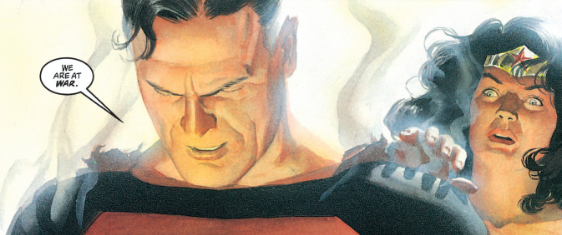
The primary concern for global governance is the erosion of the social contract. In a traditional democratic structure, power is derived from the consent of the governed and bounded by constitutional law. The Justice League, however, operates on a paradigm of "moral necessity." Superman’s recent assertion that the League will restore order, "if necessary, with force," signals a shift toward an authoritarian model of peace-keeping.
Furthermore, the recent construction of an off-world, high-security detention facility to hold rogue metahumans exacerbates the crisis. By creating a facility that sits outside of the jurisdiction of any sovereign nation, the League has solidified its status as an independent, untouchable power structure. This move has pushed Bruce Wayne to enter into an unlikely, and potentially catastrophic, alliance with Lex Luthor. This partnership suggests that the fear of a centralized metahuman authority has now outweighed the historical enmity between the Batman and his traditional antagonists.
Analysis of Future Stability
The tension between Wonder Woman and Superman regarding the use of lethal force and the "training" of new metahumans indicates that the League is not a monolith. Their internal disagreements reflect the wider societal anxiety: can order be maintained without the loss of individual autonomy?
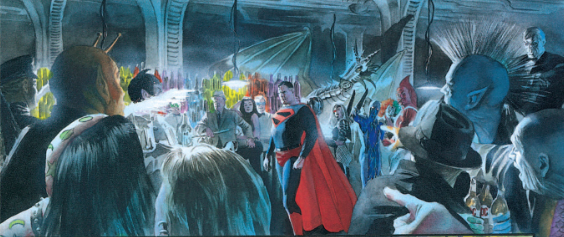
As the League pivots to address international conflicts and the resurgence of figures like Magog, the global community remains in a state of suspended animation. The reliance on super-powered individuals to solve problems that are, in many ways, the result of a reliance on super-powered individuals, has created a feedback loop. Without a return to institutional oversight and a clear definition of the limits of metahuman authority, the current "peace" enforced by the Justice League appears to be a temporary measure that leaves the underlying geopolitical instability—and the threat of total societal upheaval—firmly in place. The collaboration between the tech-centric surveillance state of Bruce Wayne and the political machinations of the Luthor-led Front ensures that the coming months will be defined by a tripartite struggle for control, with the ordinary citizen left as the ultimate variable in a conflict they have no power to influence.
Related posts: