The Lucas Museum of Narrative Art Opens in Los Angeles as a Landmark Institution for Visual Storytelling


The Lucas Museum of Narrative Art officially opens its doors to the public on September 22, 2026, in Los Angeles, California. Situated within the sprawling Exposition Park, the institution represents the culmination of a decade-long project spearheaded by filmmaker George Lucas and his wife, Mellody Hobson. Spanning 300,000 square feet across an 11-acre campus, the museum serves as a dedicated space for the study and appreciation of narrative art—a broad classification that encompasses everything from classical painting and photography to comic books, film production design, and digital illustration. By bridging the gap between high-art institutions and the artifacts of popular culture, the museum aims to redefine the parameters of what is considered worthy of preservation and scholarly analysis.

A Decade of Development and Relocation
The journey to the museum’s current location was characterized by significant logistical hurdles and geographic shifts. George Lucas initially proposed the museum for a site in San Francisco near the Presidio, but the plan faced stiff opposition from local advocacy groups and municipal planning committees. Following the abandonment of the San Francisco proposal, the project shifted focus to Chicago, with plans to locate the facility near the city’s lakefront. That effort was similarly derailed by legal challenges and public debate regarding the use of public parkland.
It was not until 2017 that the project found a permanent home in Los Angeles. The selection of Exposition Park—already home to the Natural History Museum of Los Angeles County and the California Science Center—placed the project in a cultural hub, though the construction timeline was subsequently extended due to the global COVID-19 pandemic. The resulting structure, designed by architect Ma Yansong of MAD Architects, is a curvilinear, futuristic edifice that stands as a deliberate architectural statement, housing both the massive collection and public amenities, including two state-of-the-art cinema theaters and the Skywalker Grill.

Defining Narrative Art: The Scope of the Collection
The core mission of the Lucas Museum is to explore the "narrative" in art—defined by Lucas as any visual medium that conveys a story or a sequence of events. This mandate allows for an eclectic, expansive collection that defies the categorization typically found in traditional fine art galleries. The museum’s five levels house a diverse array of works that span centuries, cultures, and mediums.
The first floor, titled "The History of Narrative Art: Heroes, Myths, and the Sacred," functions as a foundational primer for visitors. It utilizes high-resolution digital projections and large-scale reproductions to trace the history of visual storytelling, including significant religious and historical imagery from European, Asian, and African traditions. While these displays lean toward educational, large-format reproductions, they serve to establish the museum’s thesis: that art has served as a communication tool for human experience long before the advent of modern cinema.

The fourth floor represents the heart of the collection, where original works by some of the 20th century’s most influential artists are on display. This includes a robust selection of original pencil-and-ink illustrations from iconic comic books, featuring the work of industry giants such as Jack Kirby and Neal Adams. By positioning these pieces alongside works by Frida Kahlo, Andrew Wyeth, and Thomas Hart Benton, the museum makes a formal argument for the legitimacy of graphic sequential art as a significant contribution to the American artistic canon.
The Norman Rockwell Legacy
Perhaps the most notable component of the museum’s fine art collection is its extensive holding of works by Norman Rockwell. The museum hosts the largest collection of Rockwell’s art outside of the Norman Rockwell Museum in Stockbridge, Massachusetts. Rockwell, who was often dismissed by the art establishment during his career as a mere illustrator, is now treated with the reverence usually reserved for master painters.

Among the standout pieces is "The Problem We All Live With," which depicts Ruby Bridges and her integration of the New Orleans school system. The inclusion of such a high concentration of Rockwell’s work is a direct reflection of the founder’s personal philosophy regarding the "American mythos." The museum provides the necessary space to re-examine how Rockwell captured the social, political, and daily life of 20th-century America, offering a nuanced view of his technical prowess and his role as a visual historian of the middle class.
Cinema, Star Wars, and the Lucasfilm Archives
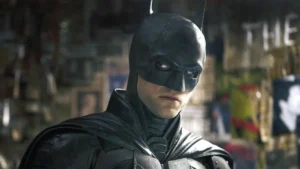
While the museum encompasses a vast history of visual art, it is inevitable that the public associates the institution with the legacy of Lucasfilm. The Cinema gallery provides a dedicated space for artifacts from film history. Although the collection features iconic items from various cinematic landmarks—such as a costume from The Wizard of Oz and props from The Dark Knight—the majority of the film-related artifacts are drawn from the Star Wars franchise.

These items, which include original costumes worn by Mark Hamill and Carrie Fisher, as well as the screen-used R2-D2 and C-3PO units, function as cultural relics for a global fanbase. Despite the prominent display of these items, museum curators have noted that the Star Wars collection accounts for roughly 7% of the total holdings. The presence of a Naboo N-1 starfighter in the lobby and outdoor statues depicting characters from the saga reinforces the museum’s identity as a product of Lucas’s own professional success, while simultaneously highlighting the transition from personal cinematic empire to public educational resource.
Architectural Significance and Research Facilities
The museum is not merely a display space but a research-oriented facility. It features a specialized research library designed in a Craftsman style, which contrasts sharply with the building’s otherwise sleek, modern aesthetic. This design choice is described as an intentional nod to the dual nature of George Lucas’s own creative trajectory: an obsession with the mechanical and futuristic, anchored by an appreciation for traditional craftsmanship and the history of the medium.

The inclusion of a scale model of the museum itself allows visitors to engage with the architecture on a tactile level, acknowledging the building as a centerpiece of the collection. The 11 acres of park space surrounding the facility have been meticulously landscaped to encourage public engagement, further solidifying the institution’s role as a "temple to the people’s art," as characterized by Lucas during the 2025 San Diego Comic-Con.
Economic and Cultural Implications
The opening of the Lucas Museum is expected to have a substantial impact on the cultural landscape of Los Angeles. As a private institution funded largely by the assets generated by the success of the Star Wars and Indiana Jones franchises, it represents a modern form of "gilded age" patronage. In an era where the divide between private wealth and public benefit is frequently scrutinized, the museum serves as a case study in how immense private capital can be deployed to create permanent public infrastructure.

Economically, the museum is projected to be a significant draw for tourism in the Southern California region, complementing the nearby Academy Museum of Motion Pictures. By creating a hub for narrative art, the museum provides a platform for genres—such as sci-fi, fantasy, and pulp illustration—that have traditionally been excluded from encyclopedic museum collections.
The institutionalization of these forms suggests a shift in how museums view their role in the 21st century: moving away from the rigid preservation of "fine art" toward a more inclusive, populist interpretation of visual culture. As visitors walk through the galleries, they are invited to view a comic book cover with the same analytical eye as a renaissance painting, a synthesis that underscores the museum’s ultimate goal: to validate the stories that have shaped modern popular consciousness.

Looking Ahead
The Lucas Museum of Narrative Art is now open to the public, with ticketing information available via their official website. The institution arrives at a time when the boundaries between digital, physical, and graphic media are increasingly blurred. By providing a permanent home to the diverse tapestry of storytelling, George Lucas has ensured that the artifacts of the last century—and the ones to come—are preserved within a space that honors their impact on the human experience. The museum stands not just as a monument to its founder, but as a comprehensive archive of the visual narratives that define modern history.
Related posts: