The integration of cross-over guest fighters has become a defining commercial and creative pillar for NetherRealm Studios’ critically acclaimed Mortal Kombat fighting game franchise. Ever since NetherRealm assumed development duties from Midway Games, the inclusion of pop-culture icons from outside the universe—particularly from the cinematic horror genre—has consistently generated massive engagement, driven pre-order sales, and captivated the fighting game community. While Mortal Kombat 11 temporarily pivoted toward 1980s and 1990s action movie stars such as The Terminator, RoboCop, and Rambo, the series has since returned to its macabre roots. With the recent inclusion of Scream‘s Ghostface in Mortal Kombat 1, alongside NetherRealm’s long-term commitments to the franchise’s ongoing support and eventual sequels, speculation has naturally turned toward which cinematic monsters deserve a spot on the roster next.
Examining the intersection of character design, gameplay balance, historical precedent, and tonal compatibility highlights five horror movie icons who are uniquely suited to step foot into the brutal arenas of Mortal Kombat.
A History of Horror: The Evolution of Guest Fighters in Mortal Kombat
To understand the potential inclusion of future horror icons, it is necessary to examine the historical trajectory of guest characters within the franchise. The tradition began in earnest with 2011’s Mortal Kombat reboot, which introduced Freddy Krueger from the A Nightmare on Elm Street franchise as a downloadable fighter. This move proved that cinematic slashers could be successfully translated into 2D fighting game mechanics without losing their distinct identities.

Building on this success, NetherRealm expanded the horror roster significantly in subsequent titles. Mortal Kombat X (2015) heavily leaned into the horror aesthetic, featuring Jason Voorhees from Friday the 13th, Leatherface from The Texas Chainsaw Massacre, and the extraterrestrial predator from the Alien franchise. These characters resonated deeply with fans because the visceral, over-the-top violence and anatomical gore characteristic of Mortal Kombat—epitomized by X-ray moves, Brutalities, and Fatalities—matched the source material of these horror titans far more organically than traditional martial arts archetypes alone.
Although Mortal Kombat 11 (2019) shifted focus toward action cinema icons, the subsequent release of Mortal Kombat 1 (2023) re-established the studio’s appetite for horror with the integration of Ghostface. This ongoing cyclical interest from developers and players alike establishes a clear precedent: horror villains are not merely one-off novelties, but foundational pillars of the franchise’s post-launch content strategy.
- Chucky: The Campy Challenge of the Killer Doll
Among the most unorthodox yet culturally significant horror figures frequently requested by the community is Chucky from the Child’s Play franchise. Spanning decades of cinema and a recent critically acclaimed television series on USA Network and Syfy, Chucky has evolved from a supernatural slasher into a campy, self-aware icon of modern horror.
From a tonal perspective, Chucky’s blend of pitch-black humor and excessively violent tendencies aligns smoothly with the duality of Mortal Kombat‘s presentation. While modern entries take their overarching narratives seriously, the gameplay often embraces a darkly comedic spectrum of violence, balancing grotesque dismemberment with whimsical finishing moves.
However, implementing Chucky presents a profound design hurdle: scale. As a diminutive plastic doll possessing the soul of a serial killer, Chucky is physically dwarfed by standard human fighters. Historical precedents in the fighting game genre, such as the inclusion of Yoda in Soulcalibur IV (2008), demonstrate that abnormally short characters can severely disrupt core gameplay mechanics. If a character’s hurtboxes and hitboxes deviate drastically from standard parameters, they risk breaking competitive balance, rendering them either fundamentally broken or forcing developers to implement controversial normalization mechanics. If NetherRealm Studios were to tackle Chucky, developers would need to engineer a deeply creative solution—such as utilizing Tiffany Valentine in tandem or integrating environmental mechanics—to ensure fair and competitive play.

- Candyman: Folklore, Mystique, and Supernatural Gravitas
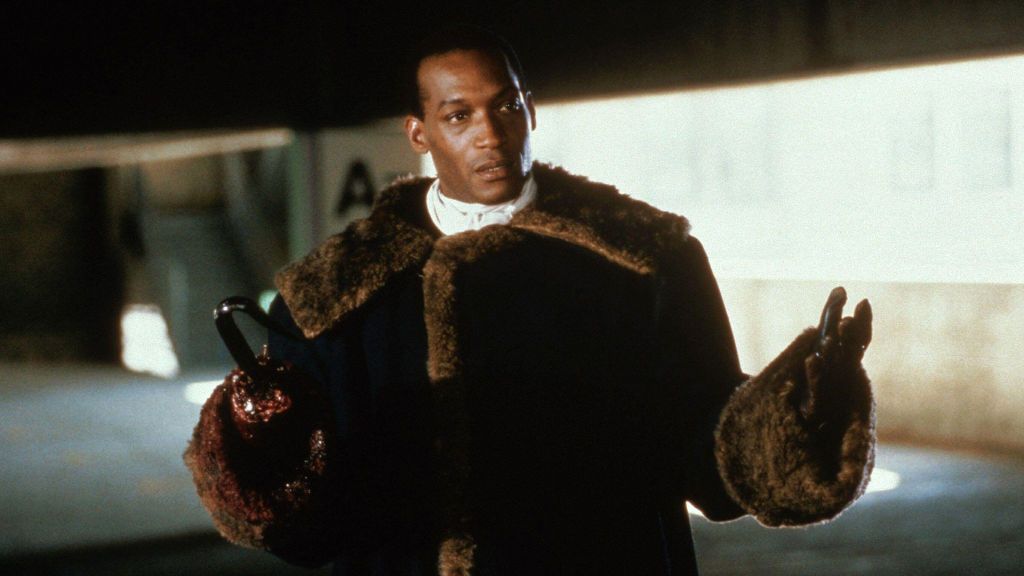
Following the passing of legendary actor Tony Todd, who immortalized the titular role in Bernard Rose’s 1992 masterpiece Candyman and its subsequent sequels, the character remains a towering figure in cinematic horror history. Unlike traditional physical slashers who rely on brute force, Candyman operates on a metaphysical level, functioning as an urban legend summoned through ritualistic repetition.
This supernatural mystique aligns closely with the divine and mystical tier of Mortal Kombat characters, such as Raiden, Fujin, and Shinnok. In terms of integration, Candyman’s cinematic lore offers a compelling introductory framework. A character select or pre-match animation could depict him materializing through a mirror or being summoned by an opponent speaking his name, immediately establishing an intimidating atmosphere.
Mechanically, Candyman provides a distinct blueprint for a hybrid zoner and rushdown fighter. His iconic hook hand could form the basis of close-range piercing attack strings, while his canonical abilities involving flight, teleportation, and swarms of bees would translate cleanly into special projectile and zoning tools. Furthermore, the 2021 spiritual sequel established that the mantle of Candyman is a collective title borne by multiple tormented souls throughout history, offering NetherRealm artistic license to blend classic visual motifs with modern interpretations.
- Pennywise: Psychological Terror and Shape-Shifting Combat
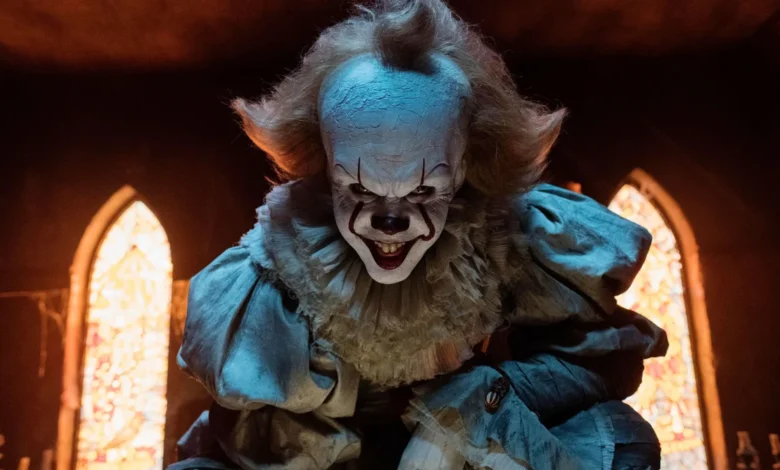
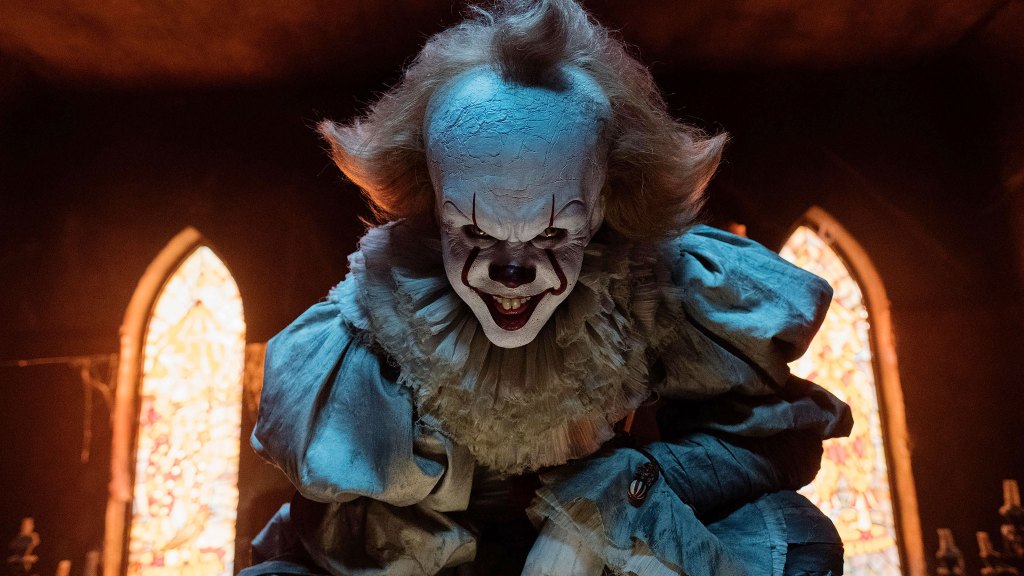
Clowns occupy a unique and troubled space within the Mortal Kombat universe. DC Comics villain The Joker appeared as a playable guest fighter in Mortal Kombat 11, proving that chaotic, theatrical cruelty has a viable home in the franchise. However, Pennywise—the ancient cosmic entity originating from Stephen King’s It and popularized by recent cinematic adaptations starring Bill Skarsgård, alongside expanded universe television projects like IT: Welcome to Derry—represents an entirely different tier of menace.
Though colloquially referred to as a clown, Pennywise is an extraterrestrial shape-shifter that feeds primarily on fear. Modern cinematic interpretations have emphasized the creature’s grotesque, predatory nature, moving far beyond traditional slasher archetypes into surreal cosmic horror. This opens vast creative avenues for NetherRealm’s animation and design teams.
A hypothetical implementation of Pennywise could incorporate signature visual elements, such as hovering ominously via glowing red balloons, manipulating spatial awareness through illusionary teleportation, or utilizing the terrifying "Deadlights" to stun opponents. Furthermore, Pennywise’s capacity for monstrous bodily transformations would allow developers to craft exceptionally imaginative Fatalities and Brutalities that toy with opponents psychologically before delivering a devastating blow. From a marketing perspective, aligning a potential guest appearance with new streaming seasons or cinematic releases provides a powerful mutual promotional incentive.
- Michael Myers: Completing the Slasher Pantheon
Perhaps the most conspicuous omission from the historical roster of Mortal Kombat guest fighters is Michael Myers, colloquially known as "The Shape." Given that major horror heavyweights such as Freddy Krueger, Jason Voorhees, Leatherface, and Ghostface have all made their respective appearances in NetherRealm titles, the absence of the primary catalyst for the modern slasher genre remains notable.
Michael Myers is no stranger to the video game landscape, having previously been featured as a licensed killer in Behavior Interactive’s Dead by Daylight and starring in independent horror gaming projects. The cultural longevity of the Halloween franchise—bolstered by the 2018 cinematic revival trilogy helmed by David Gordon Green—cemented a modern, exceptionally brutal interpretation of the character that feels tailor-made for the modern era of Mortal Kombat.
Unlike the more vocal or supernatural personas of his contemporaries, Michael Myers is defined by absolute silence, implacable resilience, and stalking efficiency. His up-close, blunt-force combat style utilizing his signature kitchen knife could be paired with uncanny movement mechanics, simulating his trademark ability to vanish and reappear directly behind unsuspecting victims. The inclusion of Michael Myers would effectively complete the definitive pantheon of cinematic horror icons within the franchise, fulfilling a long-standing desire among horror fans for a definitive crossover match-up against Jason Voorhees.
- Pinhead: Authority, Body Horror, and Zoner Mechanics
At the apex of potential horror guests stands Pinhead, the lead Cenobite from Clive Barker’s seminal Hellraiser franchise. As demonstrated by ongoing media developments surrounding the property, the enduring appeal of Hellraiser lies in its distinct exploration of extreme body horror, where the boundaries between pain and pleasure dissolve into transcendent agony.
Unlike the chaotic malice of Chucky or the feral nature of Michael Myers, Pinhead possesses a regal, detached authority. As an interdimensional torturer summoned via the mysterious Lament Configuration puzzle box, Pinhead projects a gravitas that rivals iconic Mortal Kombat overlords like Shao Kahn or Shang Tsung. This commanding presence would allow him to fit seamlessly into the narrative and visual grandeur of the franchise.
From a gameplay perspective, Pinhead is uniquely positioned to occupy a specialized "zoner" archetype. By utilizing his mastery over chains and hooks, he could dominate mid-to-long-range engagements, pulling opponents across the arena or trapping them in inescapable spatial pressure. Because Mortal Kombat’s mascot, Scorpion, famously employs a chain-spear mechanic ("Get over here!"), the foundational engine assets and collision logic required for chain-based grappling are already deeply ingrained in the franchise’s code, theoretically streamlining Pinhead’s technical integration. Additionally, special moves could incorporate summoning lesser Cenobites to execute coordinated setups, building upon NetherRealm’s successful experimentation with multi-character fighters seen with Ghostface in Mortal Kombat 1.
Implications and Future Outlook for the Franchise
As NetherRealm Studios continues to evaluate the post-launch roadmap for Mortal Kombat 1 and looks toward the horizon of future hardware generations, the integration of cinematic guest characters remains a potent tool for audience retention and cross-media synergy. Whether through the methodical stalking of Michael Myers, the cosmic terror of Pennywise, or the orderly sadism of Pinhead, horror icons provide a reliable bridge between mainstream pop culture and hardcore fighting game mechanics.
While licensing agreements, likeness rights, and balance complications will ultimately dictate which characters cross the threshold, the historic success of previous horror guests virtually guarantees that NetherRealm will revisit the genre. When the studio inevitably opens the door to another horror icon, the resulting additions will undoubtedly cement Mortal Kombat’s status as the ultimate digital playground for cinematic terror.