First Image of Doctor Who: TARDIS Crew Revealed as BBC Pivots Franchise Toward Preschool Audience

The venerable science-fiction franchise Doctor Who is undergoing a significant structural and creative pivot following a challenging period for its live-action counterpart. While the flagship series navigates an uncertain future marked by shifting international ratings, leadership changes, and an open-ended production hiatus, the BBC is looking toward the franchise’s foundational roots to secure its longevity. The British public service broadcaster has officially released the first promotional imagery and production details for Doctor Who: TARDIS Crew, a brand-new animated television series aimed squarely at preschoolers. Set to premiere on CBeebies and BBC iPlayer in late 2027 or early 2028, the ambitious project represents a major commitment to the youngest demographic in the show’s 63-year history, signaling a return to the educational ethos that defined the program’s inception in 1963.
Current State of the Live-Action Franchise and Recent Turmoil
The announcement of TARDIS Crew arrives at a turbulent time for the broader Doctor Who universe. Following a high-profile co-production deal with Disney designed to infuse the franchise with substantial capital and elevate its production values for global audiences, the anticipated surge in international viewership failed to materialize to the degree expected by stakeholders. This ratings shortfall triggered a series of rapid departures and creative shake-ups.
Ncuti Gatwa, who assumed the role of the Fifteenth Doctor, opted to exit the series earlier than traditional tenure norms dictate. Concurrently, returning showrunner Russell T. Davies engineered a dramatic, headline-grabbing cliffhanger during his exit—a narrative pivot that insiders later noted lacked a concrete long-term plan beyond generating immediate social media engagement and transient buzz.
In response to these developments, the BBC announced an unconventional overhaul last month, opening the pitching process for the next era of the flagship series to any creative team possessing a distinct editorial and visual vision. To date, no actor has been cast in the lead role, and the franchise currently operates without any active contracts for principal actors from the previous seasons. This vacuum in the live-action timeline has left fans speculating about the direction of the core program, even as the BBC focuses its immediate development efforts on expanding the intellectual property into adjacent, demographically targeted formats.
Returning to Educational Roots: The Historical Context of Doctor Who
The strategic decision to launch a preschool-targeted animated series marks a deliberate homecoming for Doctor Who. When the series debuted on BBC television in November 1963 under the guidance of Verity Lambert, Sydney Newman, and C.E. Webber, it was explicitly conceived as an educational program for family audiences. The early format alternated between historical narratives designed to teach young viewers about past civilizations and futuristic science-fiction adventures intended to impart fundamental scientific concepts.
Over the decades, as the program evolved into a prime-time adventure drama with a dedicated cross-generational fanbase, the explicit educational mandate receded in favor of complex mythologies, serialized arcs, and character-driven drama. With TARDIS Crew, the BBC is reviving the original educational mission, adapting the core tenets of curiosity, scientific inquiry, and ethical problem-solving for children aged three to five. Industry analysts note that this approach mirrors successful franchise expansions seen in other major intellectual properties, such as Star Trek: Prodigy, which utilized animation to introduce younger audiences to complex sci-fi concepts while leveraging the cost-effective world-building advantages inherent to the medium.
Character Design, Voice Cast, and Production Specifications
The newly released promotional imagery from the BBC introduces a fresh iteration of the titular protagonist, officially described by the network as a "young Time Lord." This description has sparked considerable debate among the fanbase regarding continuity. While some speculate that the character represents a previously unseen incarnation from the controversial "Timeless Child" narrative arc—a storyline introduced during Chris Chibnall’s tenure that revealed the Doctor to be the immortal source of the Time Lords’ regeneration ability—others suggest the series will deliberately bypass heavy continuity baggage. Given the preschool target demographic, producers are expected to keep the narrative accessible, avoiding the dense mythology that defines the adult-oriented live-action series.

Visually, the animated incarnation of the Doctor has drawn amused comparisons from commentators to a youthful iteration of Rick Sanchez from Rick and Morty, an adult animated series whose cynical protagonist was famously modeled in part on an anarchic, unhinged version of the Doctor. The Doctor in TARDIS Crew will be accompanied by a diverse crew of companions, including human characters Hannah and Beastie, alongside Toast-IE, a character taking the form of a sentient toaster.
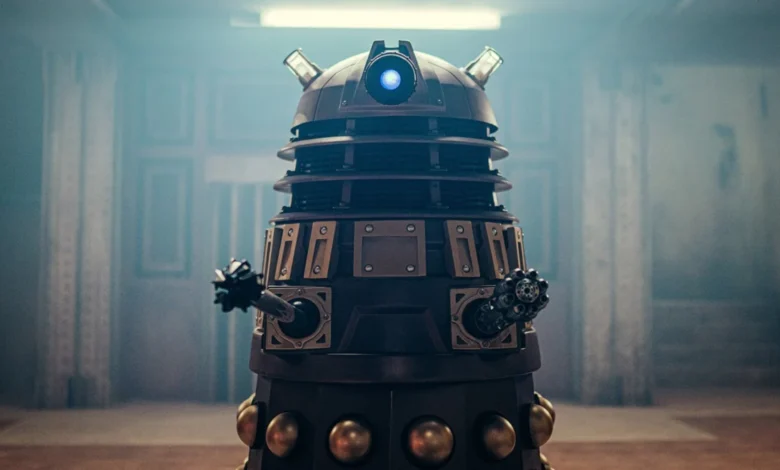
The iconic adversaries of the franchise, the Daleks, will also feature in the series. Animation allows the production team to imbue the metal cyborgs with unprecedented physical flexibility and varied scaling, removing the mechanical limitations that constrained the live-action suits for decades.
Production logistics reflect a substantial investment by the BBC. The network has ordered an initial batch of 52 episodes, each running for an identical duration of 11 minutes. This volume equates to a weekly broadcast schedule spanning a full year, representing a remarkably stable output of content compared to the sporadic, event-driven scheduling typical of modern live-action Doctor Who seasons. While the animation style embraces the limitless creative possibilities of the medium—allowing for complex alien and animal character designs at no incremental production cost—the BBC has not yet announced the voice actors who will breathe life into the principal cast.
Core Themes and Educational Objectives
According to official loglines released by the BBC, TARDIS Crew is designed to foster foundational social and cognitive skills. The narrative framework emphasizes curiosity, courage, and kindness, actively encouraging young viewers to investigate unfamiliar concepts, resolve interpersonal conflicts, and navigate unexpected challenges.
This thematic focus aligns closely with the philosophical tradition of the live-action series, which has consistently championed intellect, diplomacy, and resourcefulness over brute force. Historically, the Doctor has relied on quick thinking and a sonic screwdriver rather than lethal weaponry to neutralize threats, frequently overcoming militaristic, genocidal antagonists through lateral problem-solving. By translating these pacifist, intellect-driven tenets into simplified narrative structures for children, TARDIS Crew aims to instill cooperative values. The official series description highlights that "friendship, teamwork, and quick thinking can change everything," serving as the moral anchor for each standalone, 11-minute adventure.
Broader Industry Implications and Fan Reception
The announcement of Doctor Who: TARDIS Crew highlights a broader industry trend where legacy media franchises diversify their portfolios across distinct demographic targets to mitigate the financial risks associated with high-budget prime-time television. By securing preschool real estate on CBeebies and BBC iPlayer, the BBC ensures brand continuity and introduces the foundational concepts of the Whoniverse to a new generation before those viewers reach the demographic threshold for the adult series.
Reactions from the established fan community have been mixed, oscillating between nostalgic appreciation for the show’s educational origins and skepticism regarding the current management of the broader intellectual property. Observers note that while adult fans may scrutinize how the series fits into established canon or view the project through the lens of recent live-action struggles, the target audience of young children and their parents will likely evaluate the show on its immediate merits as an entertaining and educational viewing experience.
As production moves forward toward the scheduled late 2027 or early 2028 premiere, industry analysts will be monitoring whether TARDIS Crew can successfully cultivate a new entry point for the brand. In doing so, the series may provide a stable foundational pillar for a franchise that has spent the past several years navigating the volatile landscape of modern television production.