Looking Back at How Wes Craven Created a Nightmare on Elm Street and Redefined Modern Horror

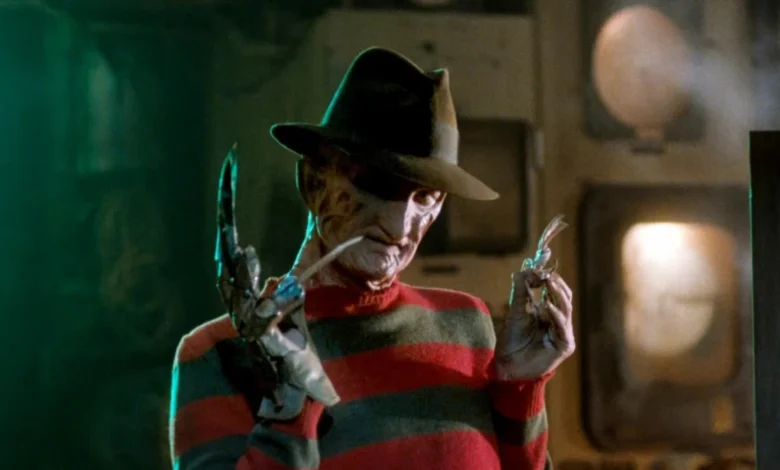
Thirty-five years have passed since the cinematic landscape was irrevocably altered by the introduction of one of horror’s most enduring and terrifying icons: Freddy Krueger. Conceived by visionary writer and director Wes Craven, the character was born out of a chilling amalgamation of psychological dread and lived experience. Craven drew inspiration from two distinct sources: a series of unsettling newspaper articles detailing young Asian refugees who died in their sleep during terrifying nightmares after surviving harrowing ordeals, and a deeply unsettling childhood encounter with a drifter standing outside his window who locked eyes with him and refused to leave.
By synthesizing these elements, Craven crafted 1984’s A Nightmare on Elm Street. The film introduced a groundbreaking slasher villain who did not merely chase teenagers through abandoned campgrounds or dark suburban alleys, but instead hunted them within the vulnerable, inescapable realm of their own dreams. This premise fundamentally shifted the horror genre, establishing rules where exhaustion became fatal and sleep equated to a death sentence. Over the subsequent decade, the franchise expanded into a massive pop-culture phenomenon, spawning multiple sequels, merchandise, and a permanent place in cinematic history before ultimately reaching a crossroads in the early 1990s.
The Chronology of a Franchise: From Revolutionary Origins to Franchise Fatigue
To understand the trajectory of the Elm Street series, one must examine its chronological evolution across seven years of rapid commercial expansion. Following the massive success of the original 1984 film, New Line Cinema—often colloquially referred to as "the house that Freddy built"—quickly greenlit sequels to capitalize on the character’s burgeoning mainstream popularity.
In 1985, A Nightmare on Elm Street 2: Freddy’s Revenge introduced a darker, more possession-focused narrative. This was followed by the critically acclaimed 1987 entry, A Nightmare on Elm Street 3: Dream Warriors, directed by Chuck Russell and co-written by Craven, which transformed Freddy into a wisecracking pop-culture anti-hero and revitalized the series with imaginative set pieces and an empowering ensemble cast of institutionalized teens.
Momentum continued with A Nightmare on Elm Street 4: The Dream Master in 1988, which became the highest-grossing film of the franchise at that time, and A Nightmare on Elm Street 5: The Dream Child in 1989. However, by the time The Dream Child was released, audience fatigue surrounding the slasher genre was setting in. The fifth installment suffered from an overcomplicated narrative exploring Freddy’s maternal lineage and origin, resulting in a steep decline in critical reception and box office returns. Recognizing that the formula was growing stale and that the character was leaning too heavily into cartoonish comedy, studio executives decided to bring the overarching narrative to a definitive close.
Freddy’s Dead and the 3D Experiment of 1991
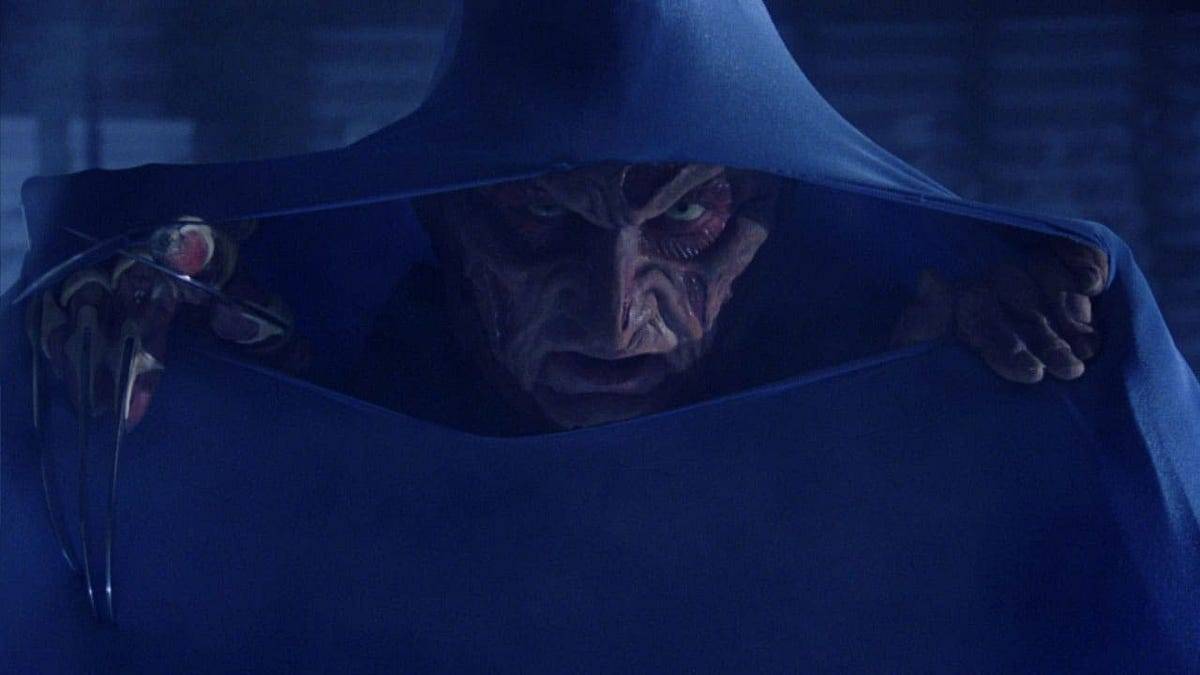
On September 13, 1991, New Line Cinema released Freddy’s Dead: The Final Nightmare, explicitly marketed as the final chapter in the legendary franchise. Directed by Rachel Talalay, the film was designed to provide closure by exploring the backstory of Springwood, Ohio, after Freddy had systematically eliminated nearly every child and teenager in the town.
The narrative centered on John Doe, an amnesiac youth who escapes Springwood and crosses paths with a group of troubled shelter teenagers and a compassionate youth counselor named Maggie Burroughs. Discovering her true familial connection to Krueger, Maggie ultimately confronts the dream demon, pulling him out of the dreamscape and into the physical world where he can finally be destroyed.
To generate event-status excitement, New Line utilized a theatrical gimmick for the film’s climax, shifting into an anaglyph 3D sequence as characters crossed the threshold between dreams and reality. Despite these marketing efforts, the financial and critical metrics reflected a franchise in decline. Produced on a modest budget, Freddy’s Dead grossed approximately $34.8 million worldwide—making a profit given its low production costs, but still marking a downward trend for the series. Critical response was exceptionally harsh, yielding a 23% approval rating on Rotten Tomatoes. The film was viewed by many critics as a disappointing and whimper-like conclusion to a once-pioneering horror franchise, setting a low-water mark for the series that would only be surpassed by the critically panned 2010 commercial reboot.
The Metatextual Triumph of Wes Craven’s New Nightmare
With Freddy seemingly eradicated by the Dream Demons and the box office returns dwindling, the franchise lay dormant. Yet, three years later, Wes Craven returned to the universe he had created alongside New Line Cinema to execute a radically ambitious concept. Released in 1994, Wes Craven’s New Nightmare bypassed the traditional continuity of the sequels, opting instead for an innovative, metatextual approach that predated the self-aware horror boom of the late 1990s.
New Nightmare posited a reality where the original films were merely movies, and the ancient, malevolent entity that inspired the character of Freddy Krueger has broken free into the real world. The film starred original cast members Heather Langenkamp, Robert Englund, and John Saxon, alongside Wes Craven himself, all playing heightened, fictionalized versions of their real-life personas. The plot revolves around Langenkamp realizing that a demonic force mimicking Krueger is targeting her young son, forcing her to step back into the role of a final girl in order to protect her family in reality.
Box Office Realities and Critical Reevaluation
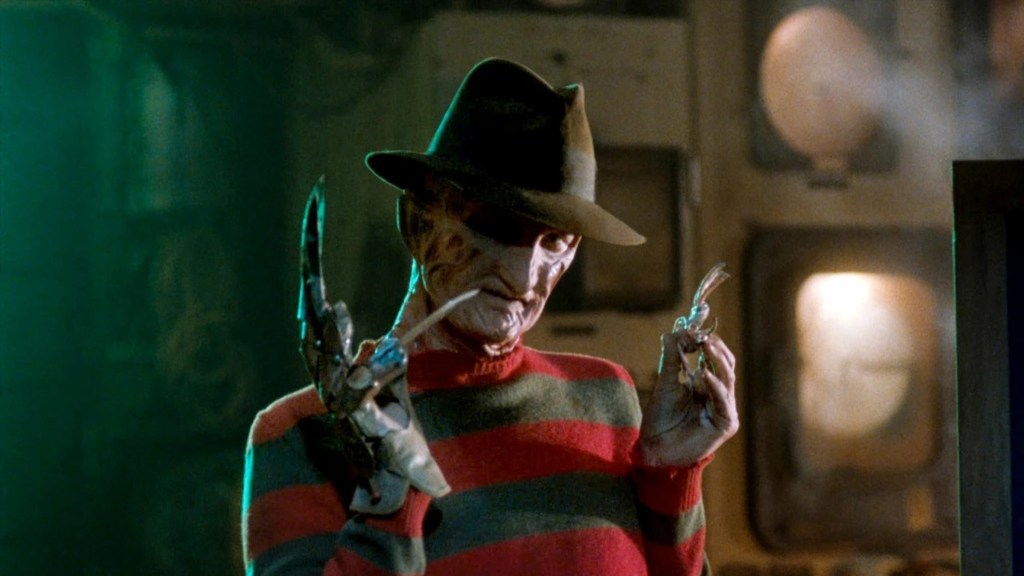
Despite its creative ambition and strong reviews, Wes Craven’s New Nightmare faced commercial hurdles upon its theatrical release. Audiences accustomed to the comedic, hyper-stylized antics of the later sequels were reportedly confused by the film’s serious tone, psychological depth, and complex meta-narrative. Consequently, the film grossed just $19.7 million globally, marking the lowest box office performance in the history of the franchise at that time.
However, critical reception told a vastly different story. New Nightmare earned a 76% positive rating on Rotten Tomatoes, making it the highest-rated installment in the franchise outside of the 1984 original. Film historians and horror scholars have since reassessed the picture, recognizing it as an underrated masterpiece that directly paved the way for Craven’s subsequent blockbuster success with 1996’s Scream. By dissecting the psychological weight of horror icons and exploring the boundary between fiction and reality, New Nightmare redefined what a horror sequel could achieve.
Broader Implications and Legacy on the Horror Genre
The journey of the Elm Street franchise—from its terrifying 1984 inception to its controversial 1991 send-off and its 1994 metatextual renaissance—offers a compelling case study in the evolution of modern intellectual property management. Studios in the early 1990s were navigating a transitional phase where traditional slasher tropes were losing cultural currency.
The commercial failure of New Nightmare underscored the difficulty of taking high-concept risks with established commercial properties during a period of audience saturation. Nevertheless, the film’s long-term legacy remains secure. It proved that horror franchises do not necessarily have to devolve into self-parody; they can evolve, mature, and challenge audiences by turning the lens back on the genre itself. Thirty-five years after Freddy Krueger first entered our collective nightmares, the impact of Craven’s creation continues to resonate across contemporary horror, serving as a testament to the enduring power of imaginative storytelling.