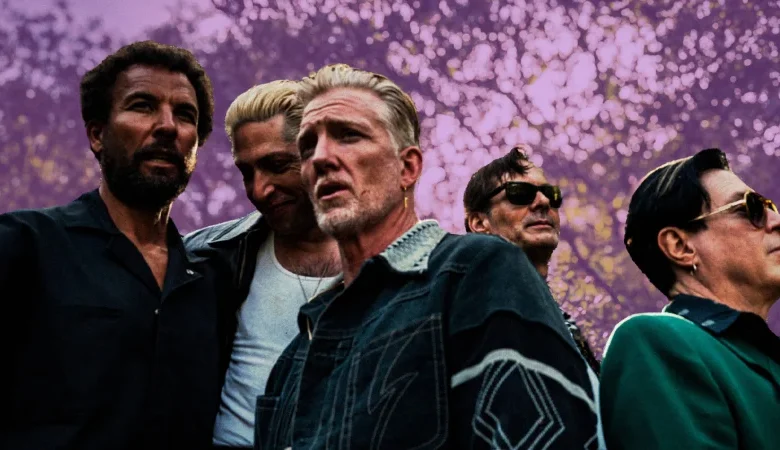
In the wake of Queens Of The Stone Age releasing their studio album Perfecth, music critics and stoner-rock aficionados have once again turned their attention to the band’s extensive catalog. Over more than two decades, Josh Homme and his revolving door of musical collaborators have built a formidable discography, cementing the group as one of the definitive mainstream rock acts of the 21st century. Evaluating their output against the broader landscape of modern rock reveals a rare consistency—a catalog capable of standing shoulder-to-shoulder with the legendary rock groups of any historical era. A definitive retrospective of their top ten tracks highlights not only the commercial peaks of the band, but also the stylistic shifts that defined modern alternative and hard rock.
The Formative Years and Early Sound (1998–2000)
When Queens Of The Stone Age emerged in 1998 with their self-titled debut album, the commercial hard rock landscape was heavily saturated with nu-metal acts, post-grunge imitators, and rap-metal hybrids. Standing apart from this mainstream trend, Queens Of The Stone Age synthesized the primal purity of 1970s hard rock with a sharp, contemporary subversion of traditional song structures.
The album’s opening track, "Regular John," established a blueprint for the band’s career by prioritizing heavy, relentless rhythm sections and hypnotic guitar tones. Released in the same era, "If Only" showcased an uncanny knack for melodic accessibility that quietly subverted the expectations of the late-1990s stoner-metal underground. Despite its radio-friendly hooks, the track remained slightly left-of-center for mainstream radio programmers of the period.
By the turn of the millennium, the band released their sophomore effort, Rated R, which further refined their sonic identity. "Feel Good Hit Of The Summer" served as a satirical yet genuine celebration of rock-and-roll excess, listing a litrance of controlled substances over a relentless, driving punk rhythm. Meanwhile, "The Lost Art Of Keeping A Secret" offered a masterclass in vocal restraint. Josh Homme’s understated tenor proved that vocal delivery did not require aggressive screaming to project authority and coolness, contrasting sharply with the bombastic emotional delivery common among contemporary rock peers.
Mainstream Breakthrough and Critical Acclaim (2002–2005)
The pivotal moment in the band’s commercial trajectory arrived in 2002 with the release of Songs For The Deaf. Widely regarded by critics as one of the premier hard rock records of the 21st century, the album functioned simultaneously as a genuine blockbuster rock release and a tongue-in-cheek satire of commercial radio culture.
A significant catalyst for the album’s dynamic sound was the recruitment of former Nirvana drummer Dave Grohl. Operating purely in the role of a session and touring member, Grohl’s virtuosic, high-energy performance galvanized the rhythm section. Tracks such as "First It Giveth" successfully married Black Sabbath-style doom riffs with the frenetic pacing of punk rock, creating a signature aesthetic for the era.
Among the standout tracks from this phase is "Go With The Flow," a high-velocity single that became an MTV staple and cemented the band’s presence in mainstream alternative rotation. However, the crown jewel of the album—and arguably the definitive song of the band’s career—remains "No One Knows." Driven by a deceptive 4/4 time signature layered with a bobbing, weaving guitar riff, the track achieves a complex rhythmic feel while delivering an immediate, universal endorphin rush.
The mid-2000s also brought stylistic experimentation through albums like 2005’s Lullabies To Paralyze. Tracks such as "I Never Came" demonstrated the band’s capacity for slow-burn ballads, combining a sinister undercurrent with Homme’s characteristic falsetto to explore themes of romance gone awry.
The Collaborative Era and Genre Evolution (2013–Present)
Queens Of The Stone Age has historically functioned as a musical collective rather than a static lineup. Early recordings featured notable contributions from bassist Nick Oliveri and singer Mark Lanegan. Lanegan’s distinctively gravelly, world-weary delivery found its masterclass on Rated R‘s "In The Fade," a seize-the-day anthem that transformed a familiar lyrical sentiment into hard-earned wisdom.
Following a six-year studio hiatus, the band returned in 2013 with …Like Clockwork, an adventurous record that ensured their continued commercial and critical relevance into the modern era. The album featured unexpected guest appearances, including contributions from pop icon Elton John. Among its standout cuts, "I Sat By The Ocean" emerged as an indestructible rock single, pairing a driving melodic sensibility with the lyrical introspection characteristic of Homme’s later songwriting.
Implications and Legacy
The enduring success of Queens Of The Stone Age lies in their ability to bridge the gap between niche stoner-rock subcultures and stadium-scale alternative appeal. By refusing to conform to the transient trends of the late 1990s and 2000s, the band cultivated a timeless aesthetic that continues to influence contemporary guitar-driven music. As new releases like Perfecth continue to expand their sonic palette, the legacy of tracks like "No One Knows," "Go With The Flow," and "Regular John" underscores a rare longevity in modern rock history.