While mainstream media frequently centers its attention on marquee titles like the Justice League of America, the sprawling tapestry of the DC Universe contains decades of alternative rosters that served the fringes of comic book storytelling. Although the Justice League and its prominent auxiliary units—such as Justice League Dark and Justice League Unlimited—traditionally feature the publisher’s most recognizable heavy hitters, a significant portion of DC’s historical output has been dedicated to B-teams, deep cuts, and ensembles of unorthodox characters. A detailed examination of ten lesser-known DC Comics teams reveals the rich narrative risks taken by creators over the decades, offering a window into the evolution of superhero fiction.
The All-Star Squadron and Golden Age Revisions
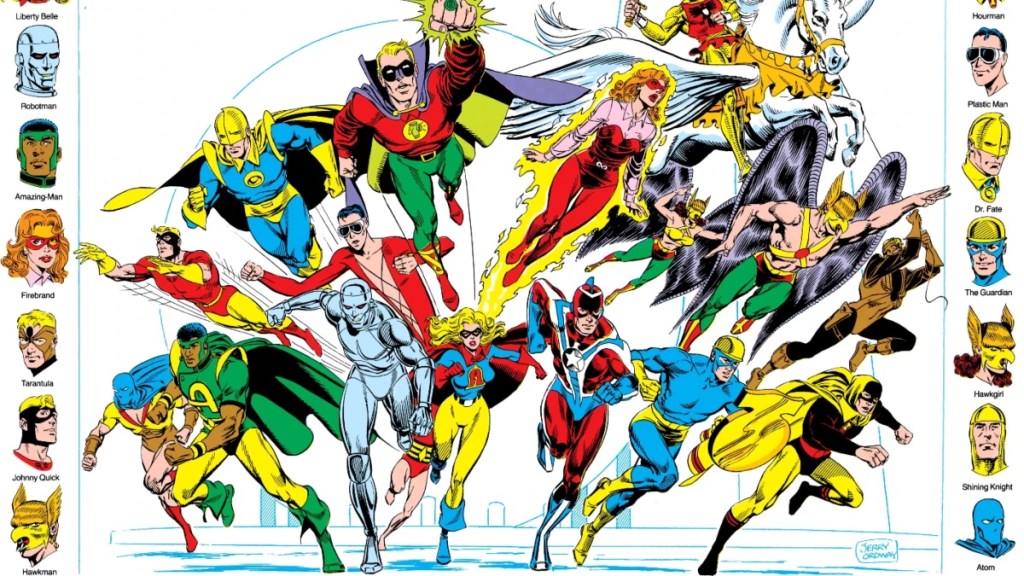
To understand the lineage of DC’s collaborative teams, one must look beyond the initial Golden Age iteration of the Justice Society of America (JSA). Historically, JSA adventures were largely framed as anthological solo narratives featuring icons like the Flash, Sandman, and Starman, functioning more as a social club than an active military or tactical unit.
This dynamic shifted dramatically in the 1980s under the stewardship of writer Roy Thomas. Seeking to establish a cohesive historical footprint during World War II, Thomas integrated the classic JSA roster with other Golden Age properties—including the Freedom Fighters and the Seven Soldiers of Victory—while introducing new figures like Amazing-Man to enhance demographic representation. The resulting aggregate, the All-Star Squadron, officially debuted to consolidate wartime heroism, providing a unified front against Axis powers and domestic threats alike. This restructuring transformed the Golden Age narrative landscape, setting a precedent for retroactive continuity and grand-scale team integration.

Blood Syndicate and Milestone Media Integration
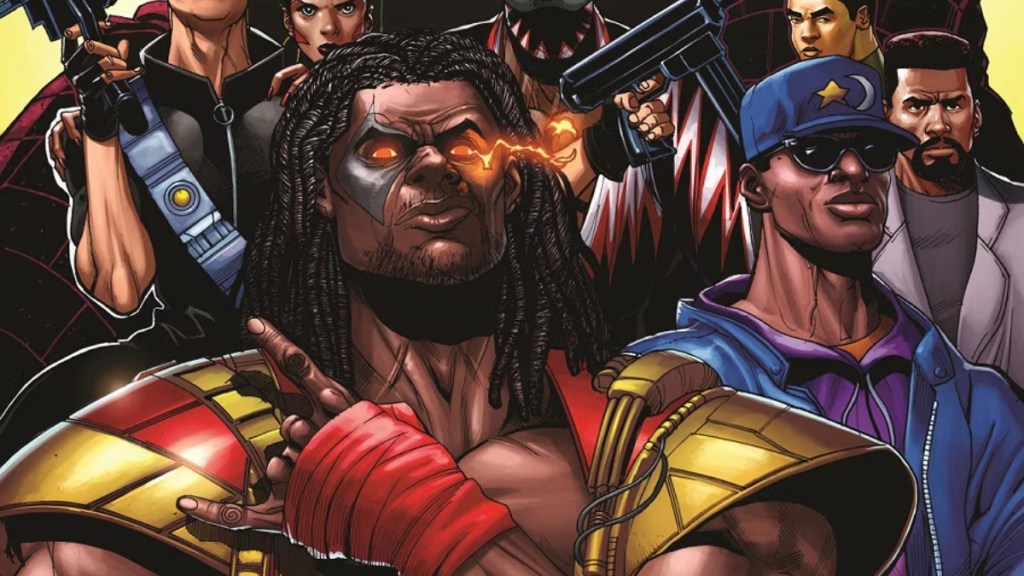
The landscape of diversity in superhero publishing underwent a seismic shift in 1993 with the launch of Milestone Comics, an imprint distributed by DC Comics and founded by industry pioneers including Dwayne McDuffie, Denys Cowan, and Christopher Priest. Designed to actively correct the historical underrepresentation of Black creators and characters, Milestone introduced properties such as Icon, Static, and the Blood Syndicate.
Created by McDuffie, Cowan, and Ivan Velez Jr. in 1993’s Blood Syndicate #1, the team was composed of survivors from various street gangs in Dakota City who gained extraordinary abilities during a catastrophic event known as the Big Bang. Rather than dissolving interpersonal conflict, the writers utilized the Syndicate’s internal tensions and socio-economic struggles as the primary engine for compelling narrative conflict. Following the initial run’s conclusion in 1996 and the subsequent integration of Milestone characters into the mainline DC Universe, authors Geoffrey Thorne and ChrisCross reimagined the property in the 2022 miniseries Blood Syndicate: Season One, breathing new life into a foundational milestone of multicultural comic storytelling.
The Challengers of the Unknown and Exploratory Sci-Fi
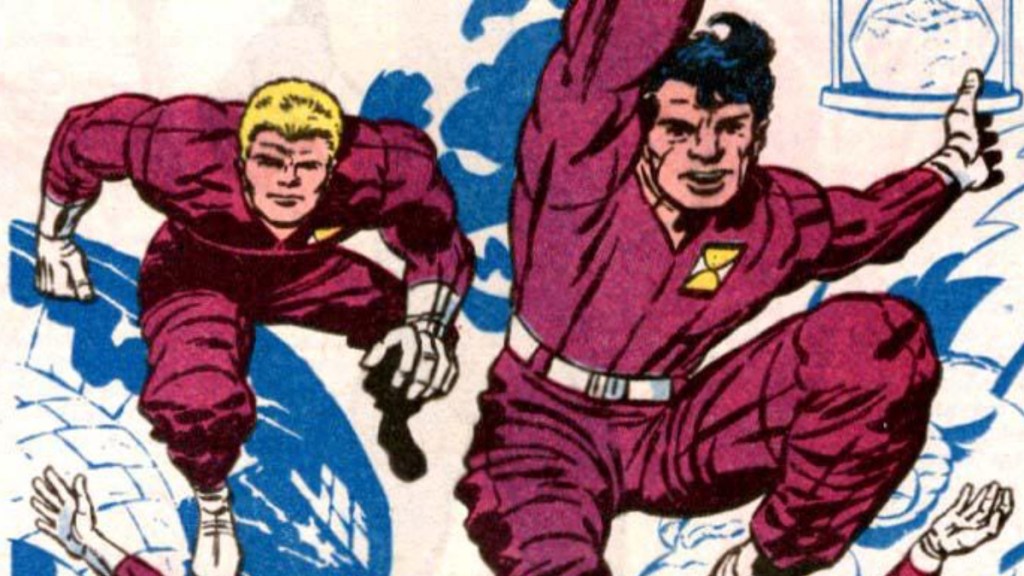
Created by industry legend Jack Kirby for Showcase #6 in 1957, the Challengers of the Unknown occupy a unique niche as science-fiction adventurers rather than traditional costumed crime-fighters. The core concept centered on four men who survived a catastrophic plane crash, choosing to treat their extended lifespans as borrowed time dedicated to exploring the uncharted, often perilous frontiers of the universe.
Kirby later utilized elements of this dynamic when he collaborated with Stan Lee to create Marvel’s Fantastic Four, shifting the conceptual framework from rugged adventurers to a dysfunctional familial unit. Nevertheless, DC’s Challengers persisted through multiple revivals, maintaining a distinct identity defined by exploration and mortal peril rather than caped vigilantism. Their longevity underscores the adaptability of high-concept pulp science fiction within the modern superhero paradigm.
Forever People and the Cosmic Tapestry of the New Gods
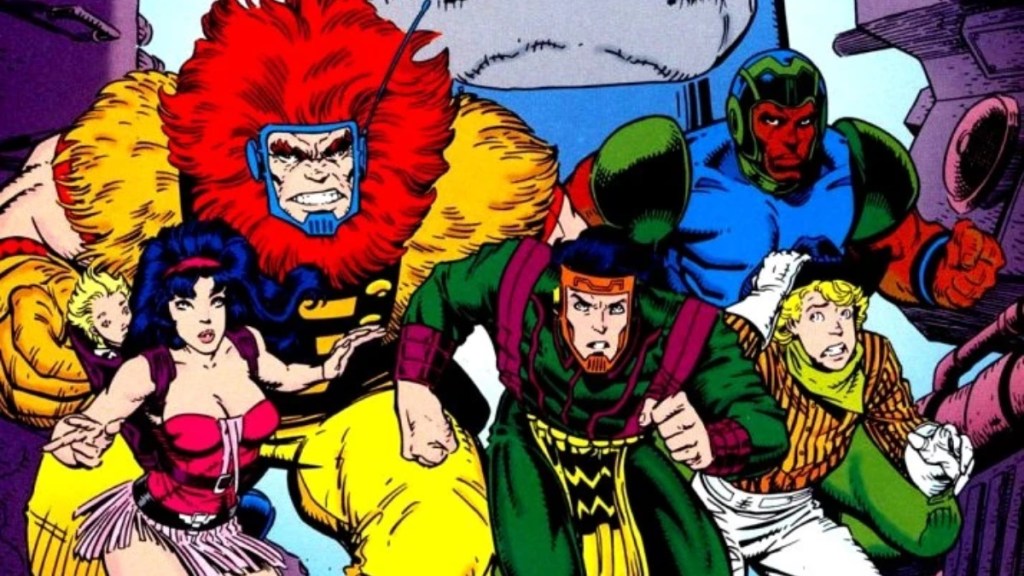
Jack Kirby’s monumental "Fourth World" creation introduced concepts of cosmic scale and mythological struggle to DC Comics, anchored heavily by the oppressive nihilism of Darkseid. While major figures like Orion and Mister Miracle typically command the spotlight in the battle against Apokolips, Kirby conceived an ideological counterweight in the Forever People, who debuted in 1971.
Embodying the countercultural ethos of the 1970s hippie movement, the Forever People were a collective of young New Gods—including characters like Big Bear and Beautiful Dreamer—who utilized high-tech transport and communal values to champion freedom and joy. Designed specifically to challenge Darkseid’s philosophy of absolute conformity, the group represented an abstract, high-concept approach to superhero team dynamics that relied heavily on thematic resonance over brute force.
The Green Team: Wealth, Satire, and Reinterpretation
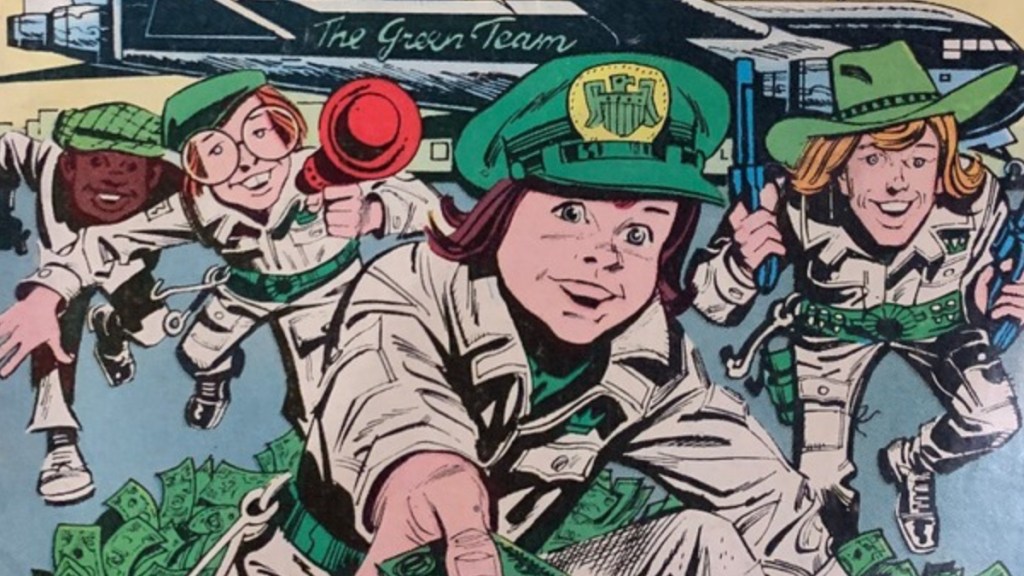
Originally conceptualized in the 1970s by Joe Simon and Jerry Grandenetti, the Green Team centered on a group of adolescent billionaires—dubbed "Boy Millionaires"—who utilized their immense financial resources to fund personal adventures. The initial roster included industry heirs alongside figures such as Abdul Smith, a shoeshine boy who acquired his wealth through a banking error.
Though the original run failed to secure a lasting readership, the satirical and economic concepts inherent to the team invited periodic re-evaluations. A 2013 New 52 miniseries reimagined the characters as "Boy Trillionaires," juxtaposing their immense privilege with grassroots ideological movements like The Movement. Later iterations, such as Tom King’s Danger Street, further subverted the premise, portraying the young billionaires through a critical lens that examined the corrupting nature of unearned wealth.
Infinity, Inc. and Generational Legacy
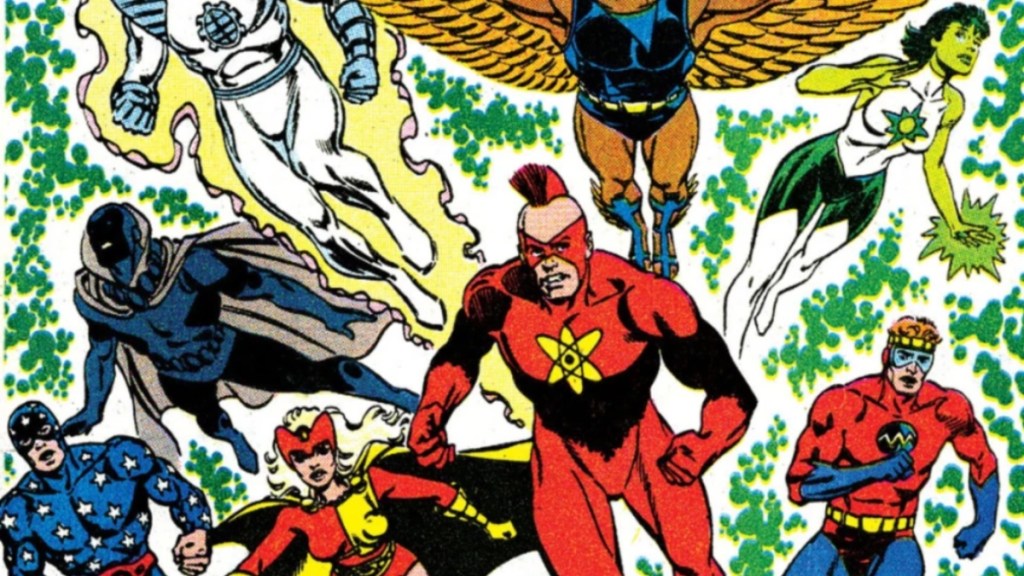
As the aging heroes of Earth-Two’s Golden Age faced the natural limits of their timelines in the 1980s, writer Roy Thomas engineered a solution to maintain narrative momentum: the offspring and heirs of the All-Star Squadron. Thus, Infinity, Inc. was established, creating a dedicated space for legacy heroes to navigate the complexities of inherited responsibility.
The roster featured prominent lineages, including Jade and Obsidian (children of Green Lantern), Silver Scarab (son of Hawkman and Hawkwoman), Fury (daughter of Wonder Woman and Steve Trevor), and the Huntress (daughter of Batman and Catwoman). The team explored themes of generational burden and identity distinctiveness. Following continuity resets such as Crisis on Infinite Earths, the concept of legacy teams became a staple of DC storytelling, paving the way for future multiversal integrations.
The Legion of Substitute Heroes and Rejection as a Badge of Honor
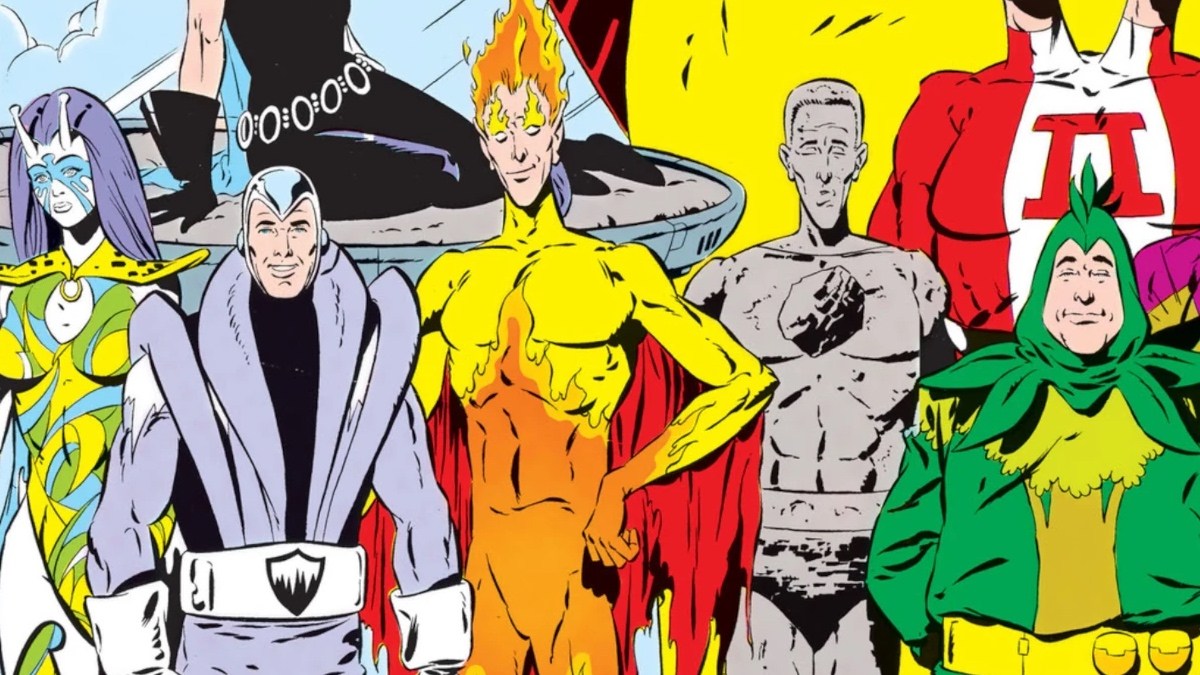
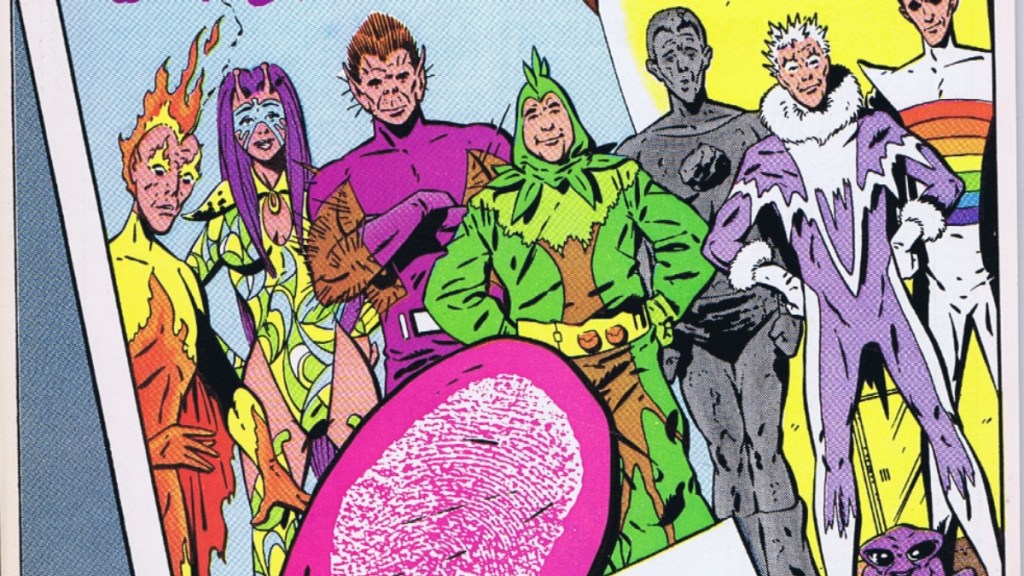
Spinning off from the sprawling futuristic continuity of the Legion of Super-Heroes, the Legion of Substitute Heroes presented a humorous yet remarkably earnest take on heroism. Composed of teenage applicants who were rejected from the primary team due to impractical or hazardous powers—such as Infectious Lass, Stone Boy, Antenna Lad, and Double-Header—the Substitutes formed their own independent unit to protect the 30th century.
Despite the inherent comedy of their origins and limitations, the team demonstrated unwavering altruism, frequently assisting the primary Legion during moments of crisis. Their inclusion in DC lore highlights the publisher’s willingness to embrace characters defined by imperfection, demonstrating that heroism is measured by intent rather than conventional power scaling.
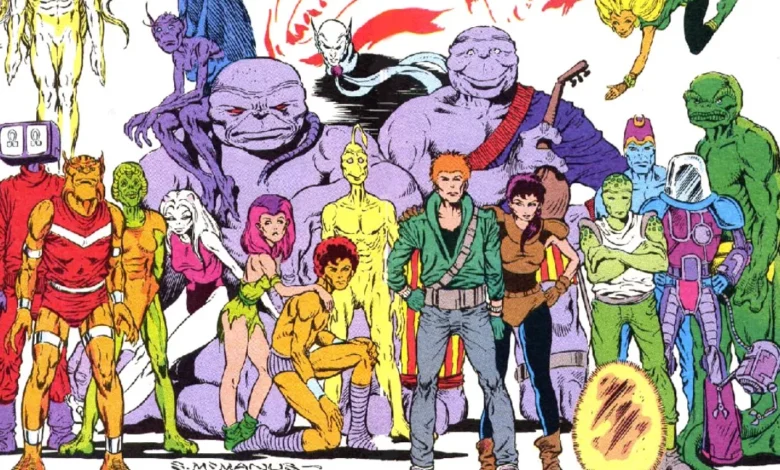
The New Guardians: Evolution and Misstep in the Late 1980s
Emerging from the 1988 crossover event Millennium, the New Guardians represented an ambitious narrative attempt to address global diversity and human evolution. Conceived by Steve Englehart and Joe Staton, the team was formed when eight individuals from various global backgrounds and walks of life—ranging from Hal Jordan’s friend Thomas Kalmaku to the Floronic Man—were imbued with evolutionary abilities by the Guardians of the Universe.
Despite progressive intentions regarding international representation and social issues, the execution suffered from heavy-handed characterization and broad stereotypes. Consequently, the series is widely regarded by industry historians as a missed opportunity, serving as a cautionary tale regarding the complexities of engineering diversity without nuanced creative execution.
The Omega Men: Guerrilla Warfare in the Vega System
Introduced by Marv Wolfman and Joe Staton in Green Lantern #141 (1981), the Omega Men operate far from the traditional Earth-bound theater of operations. Positioned as a coalition of freedom fighters engaged in asymmetrical guerrilla warfare against the authoritarian Citadel regime across twenty-five planets in the Vega System, the group introduced complex socio-political conflict to DC’s cosmic line.
Led primarily by the steadfast Tigorr, the team’s shifting roster has accommodated notable characters over the decades, including the bounty hunter Lobo and, more recently, cosmic heroes featured in television adaptations like Lanterns. The enduring appeal of the Omega Men lies in their status as an embattled coalition of marginalized species fighting systemic oppression against insurmountable odds.
The Outsiders: Batman’s Tactical Alternative
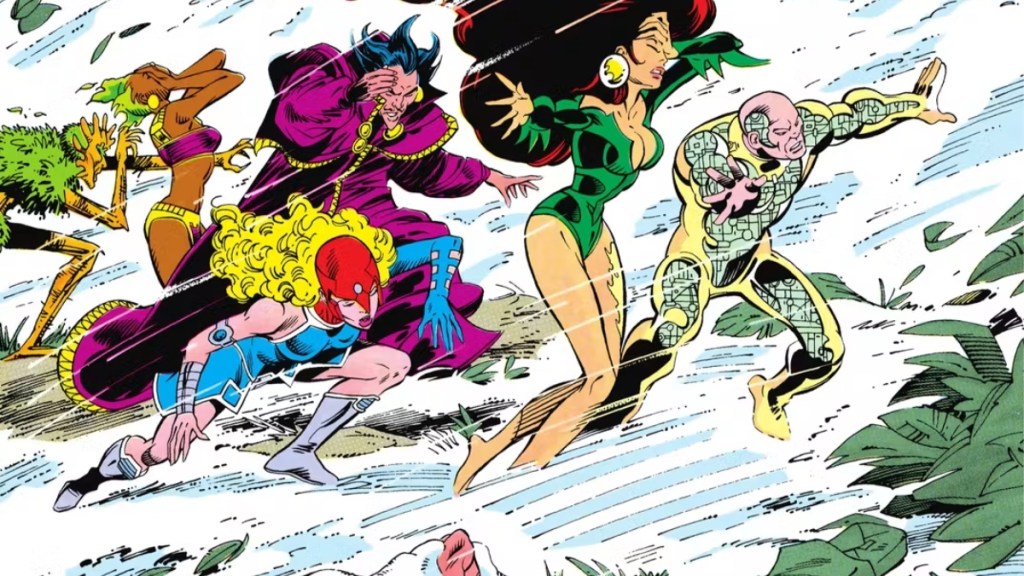
While teams like the Doom Patrol and the Legion of Super-Heroes maintain high cultural visibility, the Outsiders have historically occupied a middle tier of prominence, often serving as guest stars in animated adaptations like Young Justice and Batman: The Brave and the Bold. Created by Mike W. Barr and Jim Aparo in The Brave and the Bold #200 (1983), the team was originally assembled by Batman after he resigned from the Justice League over bureaucratic disagreements regarding international intervention.
Comprising undervalued powerhouses like Black Lightning, Metamorpho, and Katana alongside unique figures like Halo and Geo-Force, the Outsiders functioned as a clandestine strike force willing to handle morally ambiguous operations. Subsequent revivals led by characters like Nightwing in the 2000s cemented the team’s identity as a sanctuary for heroes who operate outside traditional oversight, underscoring the enduring narrative utility of DC’s alternative rosters.
Related posts: