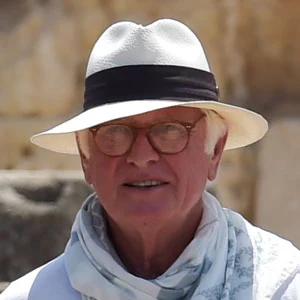
Peter Medak, the acclaimed and remarkably versatile filmmaker whose career spanned six decades across feature films, television, and documentaries, has passed away at the age of 88. According to reports confirmed by Variety, Medak died on Tuesday in Los Angeles, California. As of press time, further details concerning the specific circumstances and cause of his death have not been made public by his representatives or family.
Medak leaves behind an indelible legacy in cinema, best remembered by horror aficionados for directing the 1980 Canadian supernatural classic The Changeling, by cinephiles for helming the brilliantly unhinged dark comedy The Ruling Class, and by television audiences for his extensive contributions to some of the most celebrated prestige dramas of the modern era. He is survived by his four children and five grandchildren, who mourn the loss of a patriarch whose life story was every bit as dramatic as the celluloid tales he brought to the screen.
From Wartime Budapest to the Cutting Rooms of London
The harrowing perspective that underpinned much of Medak’s artistic output was forged long before he ever stepped behind a camera. Born in Budapest, Hungary, in 1937, Medak experienced a childhood defined by geopolitical turmoil and systemic trauma. During World War II and the subsequent Nazi occupation of Hungary, Medak spent a significant portion of his early years in hiding, a precarious existence that exposed him to the fragility of human life at an impressionable age.
When the war ended, relative peace was short-lived. Hungary fell under the oppressive thumb of a hardline Communist regime. Medak’s father was ultimately imprisoned by the state, a devastating event that severely disrupted the family and barred the young Medak from completing his formal education. Refusing to succumb to the suffocating limitations of the regime, Medak participated in the historic Hungarian Uprising of 1956. In the chaotic aftermath of the failed revolution, he fled his homeland as a refugee, eventually making his way to England to seek a new life.
Arriving in the United Kingdom with few resources but boundless determination, Medak entered the British film industry at the absolute ground level. Eschewing formal film schools, he learned the trade through practical application, starting as a clapper boy—the crew member responsible for operating the slate at the beginning of takes. Through sheer grit, technical curiosity, and an intuitive grasp of cinematic rhythm, Medak climbed the ranks of the British crew system, working variously as an assistant director before finally transitioning into the director’s chair.
A Macabre Debut and Critical Acclaim in the 1960s and 1970s
Medak made his feature-length directorial debut in 1968 with Negatives, a psychosexual drama starring the legendary Glenda Jackson. The film centered on a troubled married couple who escaped the mundane realities of their lives by acting out complex, dark fantasies involving historical figures like Jack the Ripper and fictional archetypes like vampires. It was a fittingly unsettling and macabre start for a filmmaker who would spend the next sixty years comfortably navigating the intersections of horror, black comedy, and gritty crime narratives.
Following the cult curiosity of his debut, Medak delivered one of the most blistering satires of the 1970s with The Ruling Class (1972). Adapted from Peter Barnes’s stage play, the film starred Peter O’Toole as an eccentric British aristocrat who inherits a title and firmly believes he is Jesus Christ. The movie was a dizzying blend of musical numbers, biting social critique, and psychological horror. It competed for the prestigious Palme d’Or at the 1972 Cannes Film Festival and earned Peter O’Toole a Best Actor Academy Award nomination. The film cemented Medak’s reputation as a fearless director capable of handling deeply eccentric material with razor-sharp precision and stylistic panache.
The Changeling: A Masterclass in Atmospheric Horror
While Medak’s filmography was remarkably diverse, it is the 1980 supernatural thriller The Changeling that continues to loom largest in the hearts of genre fans and critics alike. Shot entirely on location in Toronto, Canada, the film starred Academy Award-winner George C. Scott as John Russell, a grieving American composer who relocates to a sprawling, isolated Victorian mansion in the Pacific Northwest following the tragic deaths of his wife and daughter.
Once settled into the historic estate, Russell begins to experience inexplicable paranormal phenomena, eventually discovering that the house is haunted by the vengeful ghost of a murdered child. Rather than relying on cheap jump scares or gore, Medak imbued The Changeling with a profound sense of melancholy, architectural dread, and psychological weight. George C. Scott delivered a masterclass in restrained grief and mounting terror, anchoring the supernatural elements in raw human emotion.
Retrospectively, The Changeling is universally cited by film historians and modern horror masters—including Martin Scorsese—as one of the most effective, atmospheric, and influential haunted house movies ever made. Its impact was recognized immediately upon its release in Canada, where it dominated the inaugural Genie Awards, sweeping the competition with eight major wins, including the coveted prize for Best Motion Picture.
A Prolific Career in Hollywood and Prestige Television
Throughout the remainder of the 20th century and well into the 21st, Medak maintained a relentless work ethic, transitioning effortlessly between independent features, studio projects, and episodic television.
In the crime genre, he directed the acclaimed 1990 biographical crime drama The Krays, which explored the lives of the notorious East End gangster twins Ronald and Reginald Kray. The film earned Medak widespread critical acclaim and the Evening Standard British Film Award for Best Director. His other notable feature credits from this era include the biographical crime drama Let Him Have It (1991), the darkly comedic character study A Day in the Death of Joe Egg (1970), and the neo-noir thriller Romeo Is Bleeding (1993), which starred Gary Oldman as a deeply compromised FBI agent.
Medak also proved willing to tackle commercial studio assignments, directing the 1998 sci-fi creature sequel Species II. However, his enduring passion for genre storytelling found a natural home on the small screen. Over the decades, Medak became a trusted television director, helming memorable episodes of iconic anthologies and sci-fi series such as The Twilight Zone, Tales from the Crypt, and Masters of Horror.
As television transitioned into its modern "Golden Age" of serialized prestige dramas, Medak adapted brilliantly, bringing his cinematic eye and narrative discipline to some of the most critically acclaimed television series in history. His television credits include helming episodes of Homicide: Life on the Street, David Simon’s seminal Baltimore-set crime drama The Wire, AMC’s groundbreaking neo-Western tragedy Breaking Bad, and the medical mystery powerhouse House.
Turning the Camera Inward: The Ghost of Peter Sellers
In a poignant late-career pivot, Medak turned his lens inward to examine his own tumultuous experiences in the film industry. In 2018, he released the deeply personal documentary The Ghost of Peter Sellers. The film revisited the disastrous, infamously cursed production of his 1970s comedy Ghost in the Noonday Sun, detailing the erratic, often impossible behavior of its mercurial star, Peter Sellers, which had nearly derailed Medak’s career decades prior.
The documentary was praised by critics as a fascinating, brutally honest, and occasionally humorous post-mortem on the psychological toll that troubled film productions can take on a director. It served as a testament to Medak’s resilience, humor, and unwavering passion for the medium of film, showcasing an artist who was unafraid to interrogate his own professional scars.
Broader Impact and Industry Mourning
News of Peter Medak’s passing has prompted an outpouring of tributes from across the international film community. Directors, actors, and television creators have taken to social media and industry forums to honor a man who was widely regarded as a filmmaker’s filmmaker—someone who consistently elevated the material he was given, possessed an encyclopedic knowledge of visual composition, and approached every project with fierce professional integrity.
Film analysts note that Medak’s career trajectory offers a fascinating case study in artistic survival and reintegration. Forced to flee his homeland as a teenager, he channeled the displacement, resilience, and appreciation for the macabre that he developed during his wartime childhood into a body of work that challenged boundaries and defied simple categorization. Whether he was terrifying audiences with the spectral piano chords of The Changeling, skewering the British aristocracy with The Ruling Class, or directing gritty street-level drama in The Wire, Medak’s cinematic voice remained distinct, uncompromising, and deeply human.
As historians and fans re-evaluate his expansive filmography in the wake of his passing, Peter Medak’s contributions to horror, drama, and television will undoubtedly continue to inspire future generations of storytellers who dare to venture into the darker, more complex corners of human experience.
Related posts: