Sir Patrick Stewart, Star Trek: The Next Generation’s and Star Trek: Picard’s Captain Jean-Luc Picard, has died at age 86.

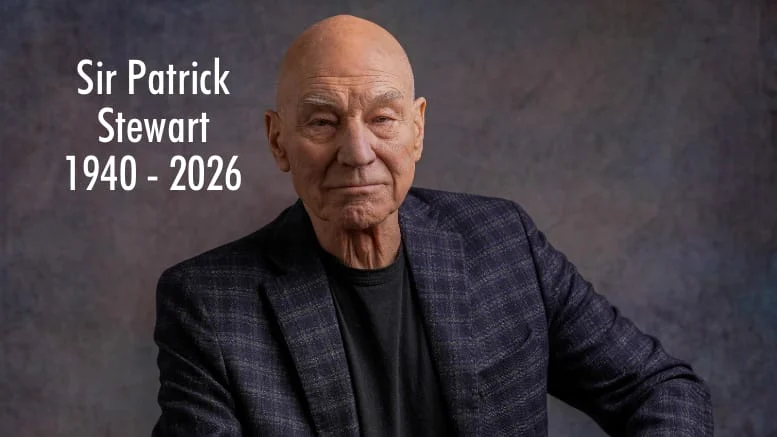
The entertainment industry and the global science fiction community are in mourning following the passing of Sir Patrick Stewart, an actor whose career spanned over six decades and bridged the gap between classical Shakespearean theater and the pinnacle of modern pop culture. Sir Patrick died at his home in Los Angeles on Wednesday, October 28, 2026, following a private, brief battle with Alzheimer’s Disease and Lewy Body Dementia. His passing was confirmed by his family and representatives through an official statement, noting he was surrounded by his wife, Sunny, and loved ones in his final moments.
A Legacy Beyond the Final Frontier
Born in 1940 in Mirfield, West Riding of Yorkshire, England, Stewart’s early life was marked by the hardships of post-war Britain, experiences he often cited as the catalyst for his deep-seated commitment to social justice and human rights. His professional journey began in the traditional theater, where he honed his craft with the Royal Shakespeare Company. His transition from the stage to the screen was not immediate; it was the result of years of disciplined performance that eventually led him to the bridge of the USS Enterprise-D.
As Captain Jean-Luc Picard in Star Trek: The Next Generation (1987–1994), Stewart redefined the archetype of the science fiction lead. Unlike the swashbuckling tropes of the era, Picard was an intellectual, a diplomat, and a moral compass. This performance cemented Stewart’s status as a cultural icon, influencing generations of viewers and setting a standard for leadership in media. Even after his departure from the series, he returned to the character in the acclaimed series Star Trek: Picard (2020–2023), proving the enduring relevance of his craft.

Chronology of a Storied Career
Sir Patrick Stewart’s professional timeline is a testament to versatility. Following his formative years with the Royal Shakespeare Company, he gained international recognition in the late 1980s. Key milestones include:
- 1966: Joined the Royal Shakespeare Company, where he would perform in dozens of productions over the next several decades.
- 1987: Premiered as Captain Jean-Luc Picard in Star Trek: The Next Generation, a role that would run for seven seasons and spawn four feature films.
- 2000: Debuted as Professor Charles Xavier in the X-Men film franchise, bringing a second iconic leader to the screen and bridging the gap between sci-fi and the Marvel Cinematic Universe.
- 2010: Knighted by Queen Elizabeth II for his services to drama, an honor reflecting his contributions to British culture.
- 2020: Returned to the Star Trek universe for Star Trek: Picard, which received critical praise for its exploration of aging, legacy, and the human condition.
- 2023: Published his memoir, Making It So, which provided an intimate look at his path from a Yorkshire village to global stardom.
The Human Behind the Performance
Beyond the spotlight, Stewart was a vocal advocate for several humanitarian causes. His commitment to the survivors of domestic violence, particularly his work with Refuge, stemmed from his own childhood experiences. He was also a staunch supporter of global refugees and mental health services for veterans. His affinity for animal welfare, specifically his well-documented advocacy for foster "pitties" (pit bull terriers), showcased a softer, deeply personal side of his public persona.
His activism was never performative; it was an extension of the empathy he brought to his roles. He often leveraged his platform to bring attention to the systemic issues facing vulnerable populations, maintaining a consistent presence in political and social discourse throughout his later years.
Official Statements and Industry Reaction
The announcement of his death has triggered an outpouring of tributes from co-stars, directors, and political leaders. The official statement released on social media channels captured the solemnity of the occasion:

"We announce with great sorrow the passing of Sir Patrick Stewart yesterday at his home in Los Angeles… He has been held in the warm embrace of family and friends, surrounded by live music, prayer, tears, laughter, and the kind of profound emotion that only he could inspire."
Jonathan Frakes, who portrayed Commander William Riker alongside Stewart for nearly four decades, expressed his grief in a statement, noting that Stewart was "the North Star" for the Star Trek cast. Similarly, the production teams behind Star Trek have announced that they are preparing special memorial programming to honor his contributions to the franchise, acknowledging that his influence on the Star Trek universe is foundational and irreplaceable.
Analysis: The Cultural Impact of the Picard Archetype
The death of Sir Patrick Stewart marks the end of a specific era in television history. His portrayal of Jean-Luc Picard shifted the public perception of the "action hero." By emphasizing diplomacy, moral inquiry, and intellectual fortitude over physical aggression, Stewart provided a blueprint for leadership that resonated across demographics.
From a sociological perspective, Stewart’s influence extended into academia and policy. His presence in the Star Trek franchise served as a catalyst for discussions on ethics, the philosophy of consciousness (particularly through his interactions with the character Data), and the importance of scientific inquiry. The "Picard effect" remains a subject of study in media and communications departments, where his work is cited as an example of how fictional narratives can shape real-world attitudes toward inclusivity and justice.

Furthermore, his success as a crossover actor—transitioning seamlessly between the Shakespearean stage, television science fiction, and high-budget comic book cinema—helped dissolve the traditional barriers that once existed between these genres. He demonstrated that serious acting technique could elevate material regardless of its setting, a realization that paved the way for the current golden age of prestige genre television.
A Legacy of Grace
In his memoir, Making It So, Stewart reflected on his own life with a characteristic blend of humility and insight. "Like me, Jean-Luc has lived an unusual life that has taken him far beyond the bounds of normal human experience," he wrote. "But he is also someone who has remained true to his earthbound roots, for they are what gave him his identity. In the end, he feels the call of home, as do I."
As the world processes this loss, the focus remains on the immense volume of work he leaves behind. Whether through his definitive stage performances, his time as the captain of the Enterprise, or his advocacy for those without a voice, Sir Patrick Stewart’s impact is indelible.
The entertainment industry is expected to hold several memorial events, with the British theater community planning a tribute at the Royal Shakespeare Company to honor their former star. While the physical presence of Sir Patrick Stewart has been lost, his work remains a permanent fixture of our cultural heritage. The final frontier, for him, has arrived, but his contributions to the human condition—both on and off the screen—will continue to inspire, provoke, and comfort audiences for generations to come.

TrekMovie.com and other major outlets have begun aggregating tributes from around the world, as fans continue to share their personal stories of how his performances helped them through personal difficulties or inspired them to pursue careers in science, education, and the arts. His death is not merely the loss of a famous actor; it is the closing of a chapter on a man who, through his dignity and humanity, became a symbol of the very best aspects of the human experience.
Related posts: