See Captain Seven try to keep her fragile fleet together in preview of Star Trek 2

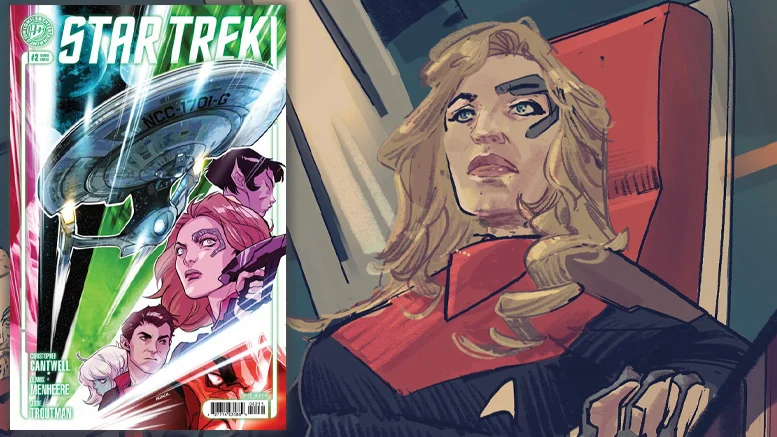
The ongoing flagship Star Trek comic series continues its narrative expansion this week with the release of its second issue, further cementing the post-Picard era of the franchise. Following a debut that was widely praised for its psychological depth and high-stakes tension, the series—written by Eisner Award nominee Christopher Cantwell—positions Captain Seven of Nine and the crew of the U.S.S. Enterprise-G in a precarious position beyond the boundaries of known space. As the crew navigates the mysterious Epsilon Corridor, the narrative shifts from the established lore of the television series into a new, uncharted frontier, exploring the logistical and emotional burdens of leadership in deep space.
The Narrative Arc: A Fragile Fleet in Deep Space
The story picks up in the immediate aftermath of the events depicted in Star Trek: Picard, with Captain Seven of Nine at the helm of the Enterprise-G. The primary mission is humanitarian in nature: the crew is attempting to relocate the displaced population of Revlav to the Trinity System, a region characterized by its aesthetic beauty and perceived potential for colonization. However, the mission is far from straightforward. The narrative introduces a “wagon train” of vessels, including the Vulcan science vessel V.S.S. Skon and the Defiant-class U.S.S. Lewis, creating a complex dependency structure that leaves the fleet vulnerable to both internal friction and external threats.

In the second issue, the arrival at the Trinity System acts as a catalyst for a sudden, reality-bending crisis. The synopsis indicates that the stability of the fleet is compromised, with the narrative hinting at a malevolent force residing within the heart of a local star. This antagonist, described as an entity perturbed by the presence of Starfleet, represents a direct challenge to the Federation’s expansionist philosophy. The thematic core of the conflict centers on the arrogance of colonization and the unforeseen consequences of venturing into territories where the laws of physics or sentient life may operate under different, more hostile parameters.
Creative Team and Editorial Context
The series is helmed by Christopher Cantwell, whose previous work on Marvel’s Iron Man and the critically acclaimed Out of Alcatraz has earned him a reputation for character-driven drama. Alongside him is Ringo-nominated artist Dennis Menheere, known for his work on Little Nightmares: Descent to Nowhere and Hello Darkness. The collaboration between Cantwell and Menheere is central to the series’ tone, which has been described in internal reviews as a "psychological thriller."
The artistic direction in this second issue maintains the visual intensity established in the debut, utilizing the vastness of the Epsilon Corridor to mirror the isolation and mounting pressure experienced by Captain Seven. The decision to focus on the psychological toll of command rather than purely tactical space combat suggests a deliberate effort to differentiate this comic run from previous Star Trek adaptations, focusing on the internal evolution of Seven of Nine as she navigates her role as a Starfleet captain—a trajectory that has been a focal point of discussion among fans and critics since her promotion in the Picard series finale.

Chronology and Setting
To understand the significance of this comic, one must look at the timeline established within the broader Star Trek universe. The series is set shortly after the conclusion of Star Trek: Picard, placing it in the early 25th century. This era is a transitional period for Starfleet, characterized by the recovery from various galactic crises and an increased focus on exploration and the re-establishment of diplomatic ties.
The mission into the Epsilon Corridor is a high-stakes endeavor. Unlike traditional missions within the Alpha or Beta Quadrants, this voyage represents a significant departure from Federation supply lines and support structures. The decision to include a "wagon train" of support ships emphasizes the lack of infrastructure in this region, heightening the risk for the crew. For the reader, this provides a grounded perspective on the logistical reality of Starfleet operations, moving away from the "convenience" of established starbases and towards the rugged isolation of true exploration.
Supporting Data and Production Details
The release of Star Trek #2 is scheduled for November 18, 2026. The issue features several cover variants, including the primary cover by Dennis Menheere, which is also available in a full-art format. This multi-variant strategy is standard for modern comic publishing, designed to cater to both casual readers and collectors.

From a production standpoint, the series is distributed through standard retail channels and the Comic Shop Locator service, with digital availability via platforms such as Amazon/comiXology. This dual-track distribution model ensures that the series reaches a global audience, maintaining the accessibility required for a flagship title. The integration of QR codes and direct digital links in the source material highlights a modern approach to reader engagement, facilitating immediate access to both physical and digital formats.
Implications for the Star Trek Franchise
The trajectory of this comic series carries significant weight for the future of the Star Trek intellectual property. By focusing on the Enterprise-G and Captain Seven, the writers are effectively filling the narrative vacuum left by the conclusion of recent television productions. This allows for a deeper exploration of the "Big Picard" threads—the lingering mysteries and unresolved tensions that remained after the show’s finale—without the budgetary or time constraints of live-action filming.
The themes presented in the second issue—specifically the critique of colonization and the confrontation with a hostile, indigenous entity—mirror classic Star Trek tropes but are updated for a modern sensibility. This reflects a broader trend in current science fiction media, where the moral ambiguities of space exploration are scrutinized more heavily than in the 20th-century iterations of the franchise. The implication is that Starfleet’s "vanity" in believing it can seamlessly colonize unknown systems will be a recurring point of failure for the crew, forcing the characters to grapple with the ethics of their mission in real-time.

Official Statements and Critical Reception
While official statements from the creative team have been limited, Christopher Cantwell has previously spoken regarding his approach to the legacy of Captain Seven. In an interview, he noted the necessity of honoring the character’s growth from a former Borg drone to a Starfleet officer, while simultaneously acknowledging the trauma and psychological history that informs her decision-making process. The inclusion of characters like Raffi and the acknowledgment of the "ghost" of Captain Shaw (the late commander of the Titan/Enterprise-G) serve to ground the series in the specific emotional landscape of the Picard era.
Early indicators from the comics community suggest that the series is being received as a necessary bridge between the legacy characters and the potential for new stories. The "psychological thriller" label is not merely marketing; it describes a narrative structure where the external dangers of the Epsilon Corridor are inextricably linked to the internal state of the crew.
Future Outlook
As the series progresses, the focus will likely remain on the tension between the crew’s duty to the Federation and the harsh realities of the uncharted sector they are currently traversing. With two more issues already teased, the series appears to be building toward a larger climax that will test the structural integrity of the Enterprise-G and the leadership capabilities of its captain.

The success of this comic serves as a bellwether for the viability of the franchise’s print media as a primary narrative vehicle. By maintaining high-quality production standards and engaging with complex, serialized themes, the creative team is ensuring that the "flagship" status of the comic is earned. For the audience, the next few issues will be critical in determining whether the Enterprise-G can successfully establish a new home for the people of Revlav, or if the "shadow" within the star will ultimately succeed in dismantling the fleet.
In conclusion, the second issue of the new Star Trek series represents a pivotal moment in the current expansion of the franchise’s narrative universe. By blending the high-stakes action of a space adventure with the intimate, often painful, psychological development of its lead characters, the series provides a comprehensive look at the post-Picard landscape. As Captain Seven faces the existential threats posed by the Epsilon Corridor, the readers are treated to a story that challenges both the characters and the fundamental tenets of Starfleet’s mission. The upcoming release is a significant development, not only for the ongoing arc of the Enterprise-G but for the continued evolution of the Star Trek mythology as it ventures into the unknown.
Related posts: