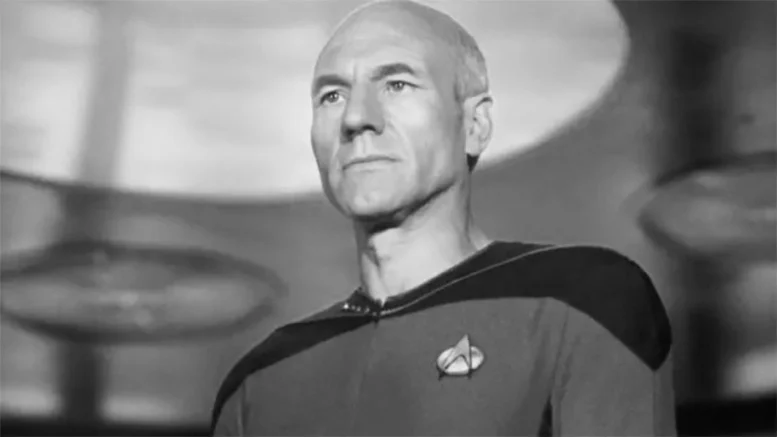
The world of entertainment and the global science fiction community are in mourning following the passing of Sir Patrick Stewart, who died this week at the age of 86. The legendary actor, whose career bridged the gap between classical British theater and the pinnacle of modern blockbuster cinema, succumbed to complications arising from Alzheimer’s disease and Lewy body dementia. Best known to millions as the stalwart Captain Jean-Luc Picard of the USS Enterprise, Stewart’s influence extended far beyond the bridge of a starship, leaving an indelible mark on the performing arts through his advocacy, stage presence, and multifaceted filmography.
A Chronology of a Storied Career
Born in Mirfield, West Yorkshire, in 1940, Stewart’s ascent began at the Bristol Old Vic Theatre School in the late 1950s. His early career was defined by a rigorous commitment to the classics, leading to his tenure with the Royal Shakespeare Company (RSC) throughout the 1960s and 70s. It was this classical foundation that would later provide the emotional depth and intellectual rigor he brought to the science fiction genre.

In 1987, Stewart made the transition to American television, a move that defied conventional industry wisdom at the time. Despite initial skepticism from series creator Gene Roddenberry—who was reportedly hesitant to cast a bald, middle-aged British actor as the lead for Star Trek: The Next Generation—producers Bob Justman and Rick Berman championed his selection. The gamble paid off, as The Next Generation grew from a syndicated experiment into a cultural phenomenon. The series finale, aired in 1994, drew a record-breaking 31 million viewers, solidifying Stewart’s status as a television icon.
Following his tenure on the Enterprise, Stewart expanded his reach into the X-Men franchise, portraying the telepathic Professor Charles Xavier across seven films, a role that introduced him to a new generation of comic book enthusiasts. His later career saw a poignant return to the character of Jean-Luc Picard in the 2020 sequel series Star Trek: Picard, which concluded in 2023 with a widely acclaimed final season that reunited the original TNG cast.
The Shakespearean Approach to Science Fiction
Stewart’s impact on Star Trek was transformative. In episodes such as "The Measure of a Man," "The Best of Both Worlds," and "The Inner Light," Stewart brought a Shakespearean gravitas that elevated the material. His ability to deliver complex technical dialogue with the same weight as a soliloquy from Hamlet or The Tempest provided the Star Trek franchise with a moral center that resonated with audiences.

Industry analysts note that Stewart’s resistance to the "genre" label early in his career actually served to sharpen the quality of the production. His colleagues frequently recounted his initial frustration with the "goofy" aspects of sci-fi production, yet he eventually channeled that intensity into the performance itself. This professional friction is widely credited with preventing the series from devolving into caricature, instead pushing it toward character-driven drama.
Humanitarian Advocacy and Personal Causes
Beyond the camera, Stewart was a tireless advocate for social justice. His personal history, marked by witnessing domestic abuse in his childhood home, drove him to become a prominent voice against violence toward women. He worked extensively with Amnesty International and served as a patron for Refuge, a UK charity supporting victims of domestic violence.
In addition to his humanitarian efforts, Stewart was a vocal champion for animal welfare. He was particularly known for his passion for pit bulls, frequently fostering dogs and working to dispel negative stereotypes surrounding the breed. These personal convictions were not kept separate from his work; he notably lobbied to incorporate themes of social responsibility and personal redemption into the narrative arcs of Star Trek: Picard, ensuring that his character’s evolution mirrored his own values.

The Industry Perspective and Official Reactions
While formal statements from major studios and his former co-stars continue to emerge, the industry consensus remains one of profound respect. Jonathan Frakes and Brent Spiner, who shared decades of screen time with Stewart, have frequently cited his mentorship and work ethic as foundational to the success of the Next Generation era.
Media analysts point to the 2023 finale of Star Trek: Picard as a watershed moment for the franchise. The reunion of the original cast at a poker table served as a thematic bookend to the series finale of 1994. By successfully bridging the gap between legacy television and modern streaming, Stewart proved that his appeal was not limited to a specific era, but was rooted in the universal themes of leadership, aging, and reconciliation.
Fact-Based Analysis: The Legacy of a Leading Man
The implications of Stewart’s passing are significant for the landscape of modern genre television. His career trajectory—from the Royal Shakespeare Company to global science fiction superstardom—served as a blueprint for the "prestige" era of sci-fi. By bringing high-level acting talent to serialized television, he helped pave the way for the current golden age of genre storytelling, where complex, serialized narratives are now the industry standard.

Data regarding his film and television credits reveals a prolific output that spans over six decades. With more than 100 episodes of American Dad! and a central role in the X-Men cinematic universe, Stewart successfully avoided the "typecasting" trap that often plagues actors associated with long-running sci-fi roles. His work in A Christmas Carol and Moby Dick further underscored his versatility, ensuring that his legacy would not be defined by a single uniform.
Future Influence and Cultural Impact
As the world reflects on the life of Sir Patrick Stewart, the focus turns to the longevity of his work. His performances in the Star Trek franchise, particularly his portrayal of a leader who prioritized diplomacy and intellect over force, have been cited as an inspiration for generations of fans who entered fields ranging from science and engineering to politics and law.
The institutionalization of his roles—most notably in the Library of Congress and the cultural archives of modern science fiction—ensures that his contributions to the craft of acting will be studied for years to come. Whether through his advocacy work for women’s rights or his iconic command to "Engage," Stewart’s influence is woven into the fabric of contemporary popular culture.

His journey, which began in a small English town and ended on the global stage, serves as a testament to the power of the performing arts to bridge cultures, challenge prejudices, and inspire humanity to "seek out new life." The loss of Sir Patrick Stewart is not merely the loss of a prominent actor, but the conclusion of a singular chapter in 20th and 21st-century performance history.
As tributes continue to pour in from across the globe, the lasting image of Stewart remains that of a man who commanded the screen with quiet authority and relentless integrity. He leaves behind a body of work that will continue to serve as a beacon for aspiring performers and a source of comfort for the millions who saw in Jean-Luc Picard not just a captain, but a standard for what humanity could achieve at its best.