
The intersection of modern digital media, economic inequality, and high-octane action cinema takes center stage in Amazon MGM Studios’ latest release, How to Rob a Bank. Directed by filmmaker David Leitch and written by screen-writer Mark Bianculli, the feature-length film blends adrenaline-pumping heist sequences with a biting commentary on contemporary financial disparities, systemic debt, and the consumption of viral information. Anchored by a first-rate ensemble cast that includes Nicholas Hoult, John C. Reilly, Zoë Kravitz, Anna Sawai, and Pete Davidson, the film transcends the traditional boundaries of the crime-thriller genre to examine the motivations driving a generation disillusioned by structural barriers to financial stability.
Plot Outline and Narrative Structure
The narrative establishes its high-stakes premise early during a meticulously planned bank heist in Pittsburgh. A coordinated crew utilizes a diversionary bomb hoax on a city bridge, executed by Emi—portrayed by Anna Sawai—who calls in the emergency dispatch to redirect law enforcement resources. Meanwhile, the core robbery team dons theatrical masks, filming their actions for a planned public broadcast.
In a makeshift production studio, ringleader Ryan, played by Nicholas Hoult, wears a wolf mask while crew member Hugo, played by Rhenzy Feliz, records the operation. Rather than merely stealing funds for personal enrichment, the "Wolf team" uses their platform to broadcast statistical data regarding the high success rate of bank robberies, while distributing practical tips on eluding modern forensic technology, such as DNA-erasing aerosol sprays.
Subsequent broadcasts pivot from logistical advice to socio-political commentary. The Wolf confronts security personnel regarding compensation disparities, questioning why underpaid guards should risk their lives to protect institutional wealth. Furthermore, the broadcasts address broader economic grievances within the United States, highlighting crushing student-loan debts, mounting medical expenses, escalating costs of living, and systemic barriers that preclude young citizens from achieving homeownership.
The Cat-and-Mouse Chase and Law Enforcement Response
The audacity of the broadcasts and the unbroken streak of successful heists draw the ire of federal authorities, specifically veteran FBI agent John West, portrayed by John C. Reilly. Frustrated by the lack of traditional investigative leads, West approaches Reagan, an ex-professor from Carnegie Mellon played by Zoë Kravitz.
Reagan is currently serving a sentence of house arrest due to her involvement in designing a location-tracking software program that, while developed without malicious intent, was utilized by unrelated actors to locate and burn down a judge’s residence. Recognizing her technical aptitude, West offers to commute her house arrest in exchange for her assistance in decoding the digital footprints left by the Wolf team. Reagan meticulously analyzes the uploaded footage, searching for structural and environmental commonalities across the various streaming locations to narrow down the crew’s operational base.
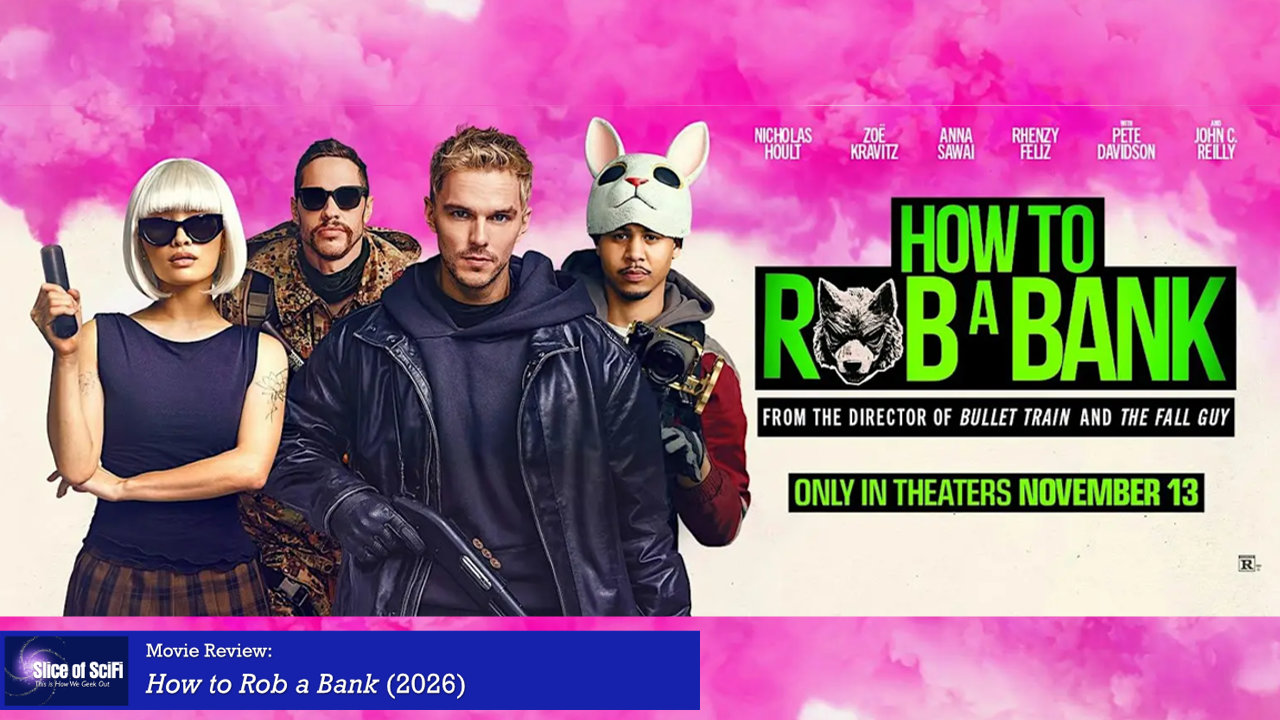
Character Profiles and Motivations
Beneath the action-oriented exterior, the film explores the distinct personal backgrounds driving each member of the criminal enterprise:
- Ryan (Nicholas Hoult): Driven by a profound sense of loss following the death of his son, Ryan channels his grief and bitterness into systemic rebellion. Alongside his romantic partner Emi, his commitment to the cause remains absolute, though his underlying compassion for affected individuals creates internal friction.
- Vince (Pete Davidson): An ex-military specialist responsible for high-precision driving tactics, Vince maintains a complex duality as a dedicated family man striving to provide for his wife and daughter, utilizing his tactical expertise to ensure the crew’s physical extractions.
- Hugo (Rhenzy Feliz): The technical backbone of the streaming operation, Hugo’s primary financial motivation is securing enough capital to alleviate his mother from enduring a lifetime of labor.
- Emi (Anna Sawai): Serving as a core coordinator on the ground and in digital communications, Emi shares a deeply bonded partnership with Ryan, balancing tactical precision with ideological fervor.
Chronology of the Climax and Investigation
As the narrative progresses toward its climax, the tension escalates during an attempted armored car robbery. Unlike previous operations, the heist deviates from logistical projections, preventing the crew from executing their planned vehicle switch. Forced to flee directly in the armored truck, the ensuing vehicular pursuit through urban corridors showcases director David Leitch’s signature stunt choreography, ultimately resulting in a successful escape by the robbers.
Parallel to the escape, Reagan’s digital forensics yield precise geographic coordinates for the Wolf team’s broadcasting studio. A subsequent FBI raid uncovers critical operational equipment and physical evidence, including an asthma inhaler bearing the personal identification of team member Vince. Concurrently, the film reveals a pre-recorded counter-interrogation guide produced by the crew, demonstrating their preparedness for law enforcement apprehension.
Socio-Political Themes and Media Consumption Analysis
How to Rob a Bank explicitly examines the modern consumption of digital media, noting how citizens increasingly ingest complex socioeconomic data through fragmented, short-form video content. The film contrasts the ephemeral nature of viral internet culture with the necessity for deep, academic inquiry, subtly questioning whether viral broadcasts can genuinely substitute for structural reform or whether they merely entertain a desensitized public.
The ideological friction between the Wolf team and federal investigators like Agent West introduces a broader philosophical debate regarding order versus justice. While West embodies the traditional institutional perspective—the necessity of legal frameworks to prevent societal anarchy—he simultaneously acknowledges the legitimacy of the grievances voiced by Ryan. This nuance prevents the narrative from devolving into a simplistic morality tale, offering instead a balanced examination of civil disobedience against an imperfect status quo.
Production and Technical Execution
Director David Leitch, known for prior action features including Bullet Train and The Fall Guy, brings a kinetic pacing to the film. The integration of high-octane stunt work with character-driven backstories is maintained through precise editing and a contemporary musical score that complements the rapid escalation of the plot. Performances across the principal cast have received widespread critical acknowledgment, particularly Reilly’s grounded portrayal of an analog investigator navigating a digital age, and Davidson’s emotionally resonant, albeit concise, screen presence as a veteran operative balancing domestic life with high-stakes criminality.
Broader Implications and Industry Context
Released under the Amazon MGM Studios banner, How to Rob a Bank contributes to a growing body of contemporary cinema that utilizes genre tropes to critique institutional wealth distribution. While critics note that the film occasionally oversimplifies complex economic structures to fit the runtime constraints of a commercial action thriller, its success lies in its ability to provoke discourse regarding debt, economic mobility, and the evolving relationship between digital activism and criminal enterprise. As the narrative concludes, the lingering question remains whether the actions of the Wolf team will inspire genuine systemic evaluation or fade into the transient stream of digital history.