Heart of the Beast highlights the bond between dog and man in rugged survival drama directed by David Ayer

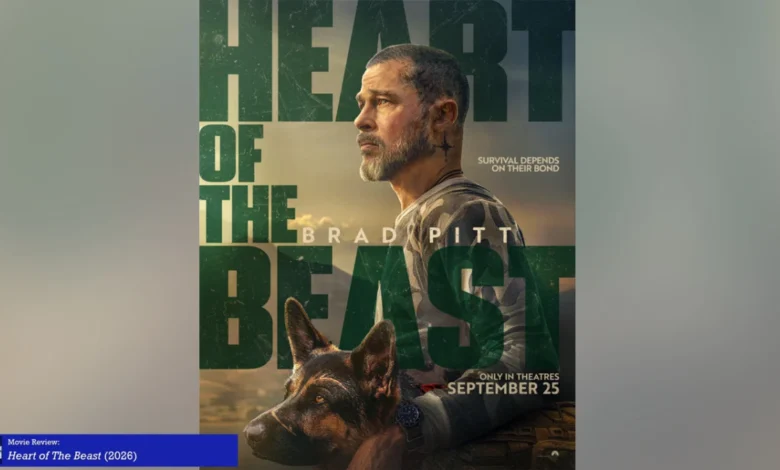
The cinematic landscape of wilderness survival dramas has long relied on familiar tropes: man against nature, the harsh elements, and the ultimate test of human endurance. Yet, the upcoming adventure thriller Heart of the Beast manages to carve out a distinct emotional niche within a well-trodden genre. Directed by David Ayer and written by Cameron Alexander, the film centers on the profound, symbiotic relationship between a decorated human soldier and a combat-tested military service dog. Headlined by Academy Award-winner Brad Pitt alongside a remarkable canine ensemble, the feature delves into themes of trauma, rehabilitation, and survival, all while raising questions about the representation of working military animals on screen.
Main Facts and Production Overview
At its core, Heart of the Beast is an intense survival adventure that explores the physical and psychological toll of service, experienced by both human and animal. Brad Pitt stars as James Belmont, a retired Special Forces operator who served extensive tours in Iraq and Afghanistan. His companion is Odin, a battle-scarred German Shepherd outfitted with a prosthetic foreleg, reflecting the physical sacrifices made during active duty. Odin is brought to life on screen not by a single animal, but by a family of four related dogs—Uber, Ryker, Hondo, and Zika—whose collective performance anchors the film’s emotional weight.
The feature is rounded out by a supporting cast that includes Anna Lambe as Amber, a motorist who crosses paths with the survivors, and J.K. Simmons in a brief yet confounding role as an overly talkative wilderness dweller named Watkins. Behind the camera, the production leans heavily on technical execution, boasting breathtaking cinematography that captures sprawling mountain ranges, dense valleys, and pristine lakes. Although the film is ostensibly set in the rugged backcountry of Alaska, principal photography actually took place across landscapes in New Zealand, with visual effects seamlessly filling in the gaps for regional wildlife, including moose, bears, and wolves, as well as atmospheric phenomena like the aurora borealis.
Chronology of the Narrative
The film utilizes a framing device to structure its narrative tension. It opens on a stark highway somewhere in Alaska, where a truck driven by Amber encounters a large dog standing resolutely in the middle of the road. A supertitle flashes back to events a week earlier, establishing the beginning of James and Odin’s ill-fated excursion into the wild.
Arriving via a Cessna pontoon aircraft, James and Odin set up a remote camp, living off the land. They observe a moose without firing a weapon, and fish for their meals, with Odin expertly retrieving their catches. During this period, the narrative establishes that both man and dog suffer from Post-Traumatic Stress Disorder (PTSD) stemming from their military deployments, complete with shared night terrors and flashbacks.
Complications arise when they encounter Watkins, a loquacious stranger who insists on camping with them before vanishing into the misty morning mist via canoe, never to be seen again. Shortly thereafter, a severe storm system rolls in. James rapidly packs the campsite and pilots the Cessna above the cloud cover, seeking calmer air.
Crisis strikes mid-flight when James suffers a massive heart attack, clutching his left arm in agony before losing consciousness. The rudderless aircraft descends rapidly, clipping tree branches before crashing into a remote lake. Thrown from the passenger-side door during the impact, Odin survives the fall largely uninjured. James manages to break free from an air pocket, surfaces, and locates his dazed companion. Utilizing survival training, James swims back to the submerged aircraft to salvage essential cargo boxes, mapping out a route on foot to find the nearest road. The narrative builds toward their grueling trek back to civilization and their eventual encounter with Amber.
Background and Context of Military Service Dogs
The inclusion of a canine protagonist with combat-related trauma sheds light on a growing body of real-world discourse surrounding military working dogs (MWDs). Historically, military dogs have played vital roles in combat engineering, tracking, explosive detection, and tactical operations dating back to World War I and World War II. However, it is only in recent decades that the public has gained greater awareness of the psychological toll active duty takes on these animals.
Organizations dedicated to military working dogs frequently report that combat canines can exhibit symptoms identical to human PTSD, including hypervigilance, anxiety, startling responses, and avoidance behaviors. Legislation such as Robby’s Law, passed in 2000, and subsequent updates have made it easier for handlers and civilian families to adopt retired MWDs, ensuring they receive necessary veterinary care and rehabilitation. Heart of the Beast taps directly into this cultural shift, framing the canine not merely as a plot device or a pet, but as an equal veteran entitled to healing and dignity.
Critical Analysis and Stylistic Choices
From a cinematic perspective, critics have pointed out that Heart of the Beast follows a predictable trajectory reminiscent of classic wilderness survival films, echoing structural elements found in historical adventure pictures. The inclusion of the Watkins character, played by J.K. Simmons, has drawn scrutiny from reviewers who note that his presence feels largely extraneous to the central plot—serving primarily as an expositional device to allow James to speak about his past before abruptly exiting the narrative. Some speculation within film circles links Simmons’ casting to his previous collaboration with executive producer Damien Chazelle on the critically acclaimed film Whiplash.
Furthermore, certain action sequences strain credulity. A harrowing sequence involving James taking a violent tumble down a rushing river and an aggressive confrontation with an outnumbering pack of wolves push the boundaries of conventional realism. Filmmakers likely relied on James’ elite Special Forces background to justify his improbable resilience, though these over-the-top moments require a significant suspension of disbelief from the audience.
Despite these narrative hurdles, the technical merits of the production have earned widespread praise. The editing during high-stakes sequences—such as the plane crash, the river descent, and the wildlife attacks—exhibits a high degree of fluidity and composition. Moreover, Brad Pitt’s physical commitment to the role is evident; production notes detail a rigorous training regimen designed to mirror the capabilities of an active-duty operator. Because the film contains minimal dialogue, the success of the project hinged entirely on the non-verbal chemistry between Pitt and the canine actors. Reviewers have universally lauded this aspect, noting that the genuine-feeling bond between man and dog anchors the emotional stakes of the picture.
Broader Implications and Audience Reception
Heart of the Beast arrives at a time when audiences are increasingly drawn to high-concept survival narratives that prioritize practical effects and emotional realism over CGI spectacle. By centering the story on the rehabilitation of a disabled military dog, the film elevates a niche subject into mainstream cinematic discourse, potentially inspiring greater public interest in the welfare of retired working animals.
While the film’s intense sequences—particularly those involving wildlife predators—may prove too frightening for younger viewers, its overarching message regarding loyalty, trauma recovery, and resilience has resonated strongly during early screenings. Earning a solid three-and-a-half-star rating from early critical reviews, David Ayer’s latest venture successfully balances pulse-pounding action with a tender exploration of companionship, proving that even the most well-worn genres can find new life when anchored by compelling performances and genuine thematic depth.