Remedy Entertainment Releases Major Patch for Control Resonant to Address Critiques Over Enemy Health and Combat Balance

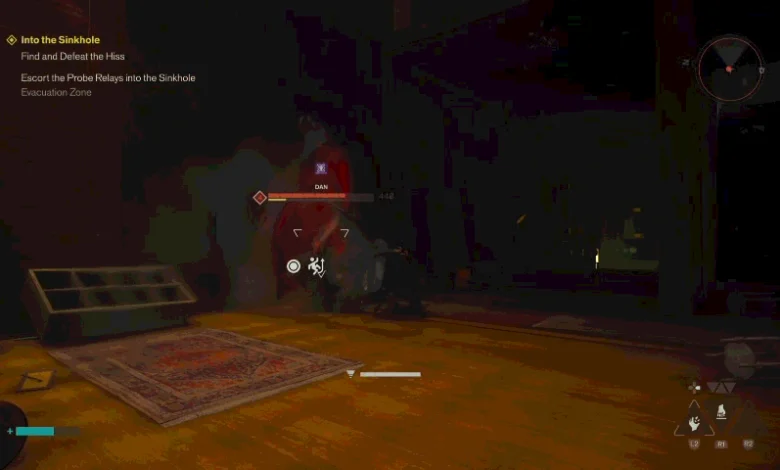
Remedy Entertainment has officially released a comprehensive launch hotfix for its latest action-oriented project, Control Resonant. The update arrives directly in response to initial critical feedback and telemetry data collected during the game’s opening weeks on the market. While critics largely celebrated the title’s atmospheric world-building, signature surrealism, and intricate environmental design, a recurring point of contention centered on combat pacing. Specifically, reviewers and early adopters noted that enemy health pools were overly inflated, rendering standard encounters protracted and diminishing the impact of the protagonist’s offensive capabilities.
In light of this feedback, the Finnish developer mobilized quickly to recalibrate core mechanics. The newly deployed patch introduces sweeping adjustments to enemy resilience, player power scaling, economic systems within the game, and user interface clarity. By addressing these foundational combat grievances early in the game’s lifecycle, Remedy aims to bridge the gap between its ambitious design vision and the practical, moment-to-moment experience of the player base.
Chronology of Events: From Critical Reception to Rapid Intervention
The trajectory leading to this patch highlights the increasingly responsive nature of modern game development, where post-launch telemetry and rapid community feedback loops dictate immediate development priorities.
Upon the release of Control Resonant, initial critical appraisals highlighted a dichotomy in the player experience. Reviewers praised the studio’s trademark penchant for atmospheric dread, environmental storytelling, and bizarre narrative concepts. However, a persistent technical and design critique dominated discussions: the Hiss armada and standard adversaries possessed health values that outpaced the offensive tools available to the protagonist, Dylan Faden. Combat encounters that should have flowed with cinematic intensity often devolved into endurance tests, heavily bottlenecking player progression during the early hours of the campaign.
Recognizing the friction this caused, Remedy Entertainment leadership and development teams initiated an internal review process. According to official statements published on the developer’s corporate blog, studio personnel spent the weeks following launch reading critical assessments, analyzing early telemetry and player behavioral data, and conducting internal playtests.
The studio concluded that Dylan Faden’s baseline capabilities at the start of the game felt disproportionately underpowered when juxtaposed against enemy defense parameters. Rather than waiting for a major seasonal update or expansion window, Remedy opted to fast-track a localized hotfix. The patch notes were finalized and published on the game’s official web portal, outlining immediate reductions to combat friction and adjustments to vendor economies to ensure smoother progression curves for both newcomers and seasoned veterans of the developer’s interconnected universe.
Core Gameplay Adjustments: Health, Stamina, and Power Scaling
The primary focus of the new hotfix centers on recalibrating the baseline parameters of combat engagement. Remedy has implemented structural reductions to the health and stamina bars of a broad category of adversaries, ensuring that standard encounters require fewer consecutive strikes to resolve.
Specific attention was paid to early-game pacing bottlenecks. The Dancer and Deserter bosses—two formidable roadblocks encountered during the opening acts of Control Resonant—have received direct health pool reductions. By scaling back the durability of these early Resonants, Remedy intends to mitigate the steep difficulty curve that previously alienated players during the initial hours of gameplay.
Simultaneously, the protagonist’s offensive toolkit has been enhanced. Dylan Faden’s base melee weapon damage and the maximum potential strength values for supernatural abilities have been elevated. This dual-pronged approach—simultaneously lowering enemy survivability and raising player output—is designed to restore a sense of kinetic fluidity to the combat loop.
"We strongly believe these changes will improve the gameplay feel and flow while still providing a challenge," Remedy Entertainment stated in an official post detailing the update.
For players seeking an even more tailored experience, the developer reiterated the availability of the game’s robust accessibility suite. The title features a comprehensive array of adjustable sliders, allowing users to fine-tune variables such as incoming damage, resource collection rates, and combat assistance without installing third-party modifications. However, the studio noted that this specific patch leaves existing assist settings untouched, focusing instead on baseline structural adjustments rather than optional toggles.
Economic Overhauls and User Interface Refinements
Beyond direct combat tuning, the patch introduces notable improvements to the game’s internal economy and vendor systems, addressing secondary player complaints regarding resource scarcity and character customization flexibility.

In Control Resonant, player builds rely on respec items to reallocate character progression and experiment with different combat styles. Prior to the update, acquiring these items was described by some players as overly restrictive. The new hotfix addresses this by lowering the overall cost of respeccing character attributes. Furthermore, all in-game vendors—uniquely styled to resemble ice cream trucks—now stock an increased quantity of respec items.
Boss encounter rewards have also been adjusted to support this economic shift. The game’s opening boss, known as The Artist, now drops two respec items upon defeat, doubling the previous yield and providing players with early experimentation freedom before entering the mid-game zones.
Complementing these mechanical and economic fixes are targeted improvements to the user interface. Select UI elements, primarily within the English-language version of the game, have been revised for enhanced clarity, reducing visual clutter and streamlining menu navigation.
Broader Context and Studio History with Post-Launch Support
Remedy Entertainment has built a strong reputation within the gaming industry for its dedication to long-term post-launch support and iterative game refinement. This commitment is evidenced by the lifecycles of the studio’s previous masterworks, including the original Control, Alan Wake, and Alan Wake 2.
Historically, Remedy’s titles have relied heavily on expanding their respective universes through dedicated story-based downloadable content (DLC) and technical optimization patches. For instance, both Control and Alan Wake 2 received substantial post-launch content updates, performance passes, and highly requested features such as dedicated photo modes.
However, the post-launch roadmap for Control Resonant remains notably distinct from its predecessors. As of publication, Remedy has not announced a season pass, nor has the studio detailed plans for narrative expansions akin to Control’s "The Foundation" or "AWE" DLCs. Whether Resonant will follow the traditional expansion path or pivot toward an alternative support model remains to be seen.
Despite the absence of confirmed story expansions, studio executives have hinted at additional quality-of-life additions. During a recent interview with MinnMax, Game Director Mikael Kasurinen discussed the potential implementation of a photo mode following launch. Past precedents within the studio indicate a variable timeline for such features: Control received its photo mode approximately one month and a half after release, whereas Alan Wake 2 integrated its equivalent feature roughly eight months post-launch.
Industry Implications and Future Outlook
The rapid deployment of the Control Resonant hotfix underscores a broader industry trend toward agile developer responsiveness. In an era where digital distribution allows for immediate telemetry collection and instantaneous patch delivery, development studios face mounting pressure to address critical consensus rapidly before public sentiment hardens.
By acknowledging critical friction points within weeks of release, Remedy Entertainment has demonstrated a proactive approach to community management. The willingness to adjust core design tenets—such as enemy health values and early-game balance—reflects a pragmatic balancing act between artistic vision and player accessibility.
As the studio continues to monitor telemetry and community forums, further adjustments may be deployed if these initial modifications prove insufficient. For now, Remedy has encouraged players to continue exploring the title’s surreal environments while providing ongoing feedback.
"We will closely follow your feedback and make further adjustments as needed," the studio concluded. "Enjoy the game, take your time, explore, and let us know what you think."
As Control Resonant settles into its post-launch phase, these foundational updates will serve as the baseline for how players experience Remedy’s latest psychological and supernatural odyssey.