Star Trek Strange New Worlds showrunner Akiva Goldsman confirms Year One spin-off is not moving forward

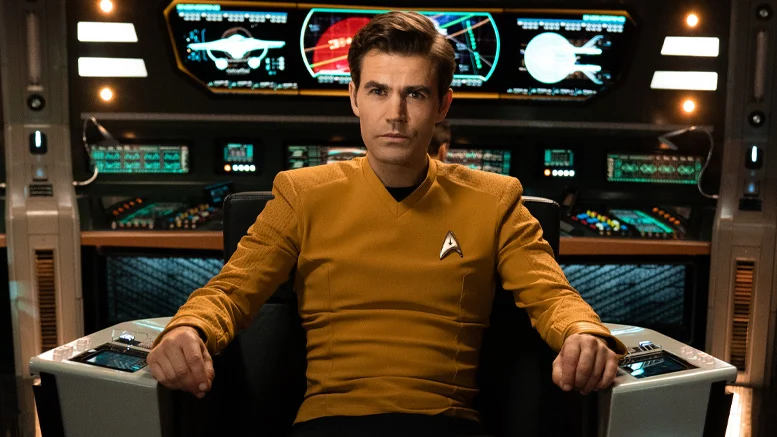
The long-speculated prospect of a follow-up series to the critically acclaimed Star Trek: Strange New Worlds has officially been extinguished. Following months of internal hope among the creative team and fervent fan speculation, executive producer and co-showrunner Akiva Goldsman has confirmed that the proposed project, internally titled Star Trek: Year One, will not be moving into production. The announcement, delivered during recent industry engagements surrounding Star Trek Day in New York, marks a definitive turning point for the franchise as it prepares to sunset the current iteration of its flagship television property in 2027.
For nearly a year, Goldsman had publicly championed the concept of a series bridging the gap between the conclusion of Strange New Worlds and the start of the iconic five-year mission depicted in the 1960s original series. The proposed show was envisioned as a narrative bridge, effectively serving as a sixth season of the current series while simultaneously acting as a pilot arc for the era of Captain James T. Kirk. However, the logistical and economic realities of modern television production have rendered the project non-viable in the eyes of studio leadership.
Chronology of a Failed Transition
The trajectory of the Star Trek television franchise over the last several years has been defined by rapid expansion followed by a strategic consolidation. The timeline of the Strange New Worlds era is as follows:

- 2019: Captain Christopher Pike, portrayed by Anson Mount, is introduced in the second season of Star Trek: Discovery, sparking immediate fan demand for a dedicated spin-off.
- 2022: Star Trek: Strange New Worlds debuts on Paramount+, successfully reintroducing an episodic, mission-of-the-week format to the franchise.
- 2025: Production on the final season of Strange New Worlds concludes, setting the stage for the series finale.
- 2026 (May): Paramount initiates the auction of major set pieces and props from the series, signaling the end of the show’s physical production footprint.
- 2026 (September): Akiva Goldsman formally acknowledges in interviews that the Year One project is not proceeding, citing a lack of studio interest and the disassembly of core production assets.
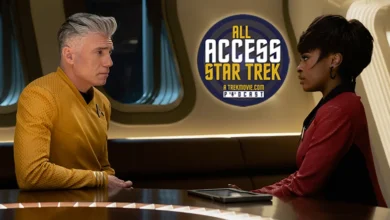
The decision to auction off sets earlier this year was perhaps the most tangible indicator of the show’s fate. While co-showrunner Henry Alonso Myers noted that certain high-value assets—including the Enterprise bridge and essential costumes—remained in storage, the dismantling of the primary filming stages made the prospect of a continuation increasingly improbable. Goldsman’s comments to the Radio Times clarified that while he was open to the possibility of a two-hour feature or a limited revival should the studio request it, there is currently no mandate or financial impetus to pursue the project.
The Vision for Year One
Star Trek: Year One was designed to satisfy a dual mandate: providing a satisfying conclusion to the Strange New Worlds character arcs while seeding the foundations of the Original Series. The project would have centered on Paul Wesley’s portrayal of James T. Kirk, tracking his transition from a rising star in the fleet to the commander of the USS Enterprise.
The inclusion of foundational characters such as Dr. Leonard "Bones" McCoy and Hikaru Sulu—who were scheduled to be introduced in the final season of Strange New Worlds—would have provided the connective tissue for this new series. By focusing on the "year zero" of Kirk’s captaincy, the show intended to explore the tension between the established crew dynamics of the Pike era and the incoming command style of the Kirk era. Despite the enthusiasm of the cast members, who have expressed repeated interest in reprising their roles, the creative team has now accepted that their time with these specific iterations of the characters has come to an end.
The Changing Landscape of Franchise Television
The cancellation of the Year One concept occurs against a backdrop of wider industry shifts. The streaming landscape, once defined by an aggressive "more is better" strategy, has transitioned toward a model of fiscal restraint and content rationalization. This shift has affected other projects within the Star Trek umbrella, including the conclusion of Starfleet Academy following its upcoming second season.

Goldsman, in his reflections, acknowledged that the era of "peak TV" consumption—where audiences were expected to follow an endless pipeline of interconnected spin-offs—may be waning. His recent comments to NPR reflect a broader industry sentiment: that viewers may now prefer shorter, high-impact arcs that offer a definitive beginning, middle, and end, rather than the perpetual serialized storytelling that defined the last decade of franchise television.
Implications for the Star Trek Brand
The end of the Strange New Worlds era invites a period of introspection regarding the franchise’s reliance on prequel material. Since the launch of Discovery, the franchise has leaned heavily into the "prequel" format, attempting to fill in the gaps of the established timeline. While this allowed for the revitalization of classic characters like Spock, Pike, and Uhura, it also introduced significant challenges regarding canon consistency and the "stakes" problem.
Critics have frequently noted that when a story is set within an established timeline, the audience’s knowledge of the characters’ eventual survival can undermine the tension of life-or-death scenarios. Episodes like the Season 4 installment "Off Hour" served as a microcosm of this dilemma: while the production design and episodic genre-bending remained high, the narrative urgency was inherently limited by the knowledge that the central figures were destined for later events.
Moving forward, the franchise is at a crossroads. With new leadership at the helm—specifically Chris Parnell, who has been tasked with defining the next phase of Star Trek television—the mandate appears to be shifting toward fresh narratives. Goldsman has expressed confidence in Parnell’s vision, noting that he is a "real Star Trek fan" who understands the core tenets of the universe. However, for the creative team behind Strange New Worlds, the mission is effectively over.

Goldsman’s departure from the franchise serves as an acknowledgment that the "toy box" of Star Trek is best enjoyed by new generations of creators. His tenure, which began with the development of the Pike arc on Discovery, leaves behind a legacy of thematic diversity. By embracing the episodic format and exploring various genres—from courtroom dramas to musical episodes and psychological thrillers—the show successfully carved out a unique space within the 60-year history of the brand.
As the production team packs away the remaining hero props and the sets of the Enterprise, the focus shifts from what might have been to the final episodes of the series. The legacy of Strange New Worlds will likely be defined by its attempt to bridge the gap between the cerebral, philosophical roots of the 1960s show and the modern visual requirements of contemporary science fiction. Whether that bridge will ever be extended through the Year One concept remains, for now, entirely outside of the control of those who built it. For the audience, the conclusion of the series in 2027 will mark the end of one of the most experimental and ambitious chapters in the history of the Star Trek universe.