Live-Action Wandance Film Expands Cast with Kira Yamaguchi and Three Other New Members Ahead of November Premiere

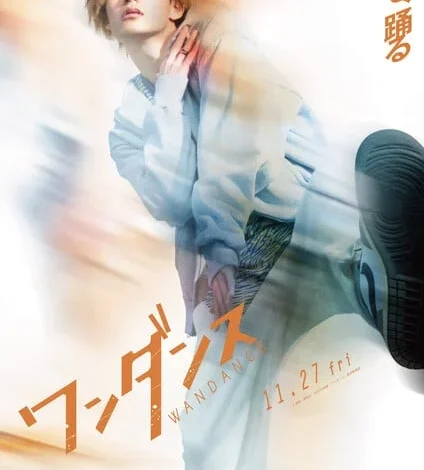
The production committee for the upcoming live-action cinematic adaptation of Coffee’s acclaimed manga series, Wandance, has officially announced the addition of four new cast members, further intensifying the anticipation for the film’s scheduled release on November 27. The announcement, disseminated through the film’s official website and social media channels, was accompanied by a series of character-specific teaser videos and promotional visuals, offering fans a first look at the live-action incarnations of several fan-favorite supporting characters. Joining the production are Kira Yamaguchi, Ran (a member of the boy group MAZZEL), Tsukki, and Aloha Takamatsu (of the group Bullet Train/Chotokkyu), all of whom bring significant performance backgrounds to a project that places high-level choreography at its narrative center.
Kira Yamaguchi has been cast in the role of On Miyao, while Ran Mazzel will portray Iori Itsukushima. Tsukki is set to play Gaku Kabeya, and Aloha Takamatsu will take on the role of Usen Takumi. These additions round out a cast led by JO, a member of the global boy band &Team, who stars as the protagonist Kaboku Kotani, and Anji Ikehata, known for her roles in Yano-kun no Futsū no Hibi and the voice cast of Lonely Castle in the Mirror, who portrays the enigmatic and passionate Hikari Wanda. The strategic casting of active performers from the J-pop and dance industries underscores the production’s commitment to authenticity in the film’s numerous hip-hop dance sequences.

A Narrative of Movement and Self-Discovery
Wandance, originally created by the artist Coffee, has garnered significant praise since its debut for its nuanced portrayal of social anxiety, the pressure of conformity, and the liberating power of artistic expression. The story centers on Kaboku Kotani, a high school student who has spent his entire life suppressing his own desires to fit the expectations of his peers, teachers, and parents. His life takes a transformative turn when he encounters Hikari Wanda, a small but fiercely talented girl who dances with total abandon in the school’s hallways.
The narrative follows Kaboku as he joins the school’s hip-hop dance club, a move that forces him out of his comfort zone and into a world where communication is achieved through rhythm and physical movement rather than social posturing. The manga has been frequently compared to other "seishun" (youth-centric) masterpieces such as Blue Period and Your Lie in April due to its focus on the obsessive, often grueling pursuit of a craft. By focusing on the specific subculture of Japanese street dance, Wandance provides a unique lens through which to view the universal struggles of adolescence and the quest for a personal identity.
Strategic Casting and Performance Pedigree
The decision to cast established performers like JO, Ran, and Aloha Takamatsu reflects a broader trend in Japanese live-action adaptations where the physical requirements of the roles necessitate professional-grade talent. JO, as a member of the HYBE Labels Japan group &Team, brings a rigorous training background that aligns with Kaboku’s journey from a novice to a dedicated dancer. Similarly, Ran’s involvement brings the star power of the group MAZZEL, which was formed through the high-profile BMSG "MISSIONx2" audition process, ensuring that the character of Iori Itsukushima possesses the necessary stage presence.

Aloha Takamatsu, a member of the long-running dance and vocal group Bullet Train (Chotokkyu), further bolsters the film’s credibility. His experience in high-energy choreography is expected to translate well to the competitive and collaborative atmosphere of the dance club depicted in the film. The inclusion of Kira Yamaguchi and Tsukki rounds out a diverse ensemble capable of executing the complex street dance styles—ranging from breaking to waacking—that are integral to the source material’s appeal.
Production Leadership and Creative Supervision
The film is being helmed by director Naoya Kusaba, with a screenplay penned by Keiichi Kobayashi. Kobayashi’s involvement is particularly noteworthy given his experience in capturing the delicate emotional landscapes of Japanese youth. However, the most critical hire for a production of this nature is arguably the dance supervisor. The production committee has secured Charisma Kantarō, a renowned figure in the Japanese dance scene and a successful entrepreneur, to oversee the film’s choreography and dance direction.
Charisma Kantarō’s role involves ensuring that the "freestyle" nature of the manga’s dance battles is translated effectively to the screen. In the original manga, Coffee uses a distinct, fluid art style to represent the "flow" of movement, a visual challenge that the live-action film must address through cinematography and editing. The involvement of a professional of Kantarō’s caliber suggests that the film will prioritize genuine dance technique over camera tricks, providing a raw and visceral experience for the audience.

Chronology of the Wandance Franchise
The development of the Wandance media franchise has followed a rapid trajectory since the manga’s inception. Coffee first launched the series in Kodansha’s Monthly Afternoon magazine in 2019. Its popularity quickly led to a simultaneous publication on the Magazine Pocket app, reaching a wider digital audience.
- 2019: Manga serialization begins in Monthly Afternoon.
- 2021: Kodansha USA Publishing licenses the manga for English-language distribution, introducing the series to the North American market.
- October 2025: A television anime adaptation debuts in Japan, with global streaming handled by Disney+. The anime’s release served as a significant catalyst for the series’ popularity, bringing the rhythm and music of the story to life for the first time.
- December 2025: Kodansha publishes the 15th compiled book volume of the manga in Japan.
- November 2026: The live-action film is scheduled to open in Japanese theaters, coinciding with the English release of the 14th manga volume by Kodansha USA.
This multi-platform approach—spanning print, animation, and live-action cinema—indicates Kodansha’s confidence in Wandance as a pillar of modern youth drama. The synchronization of the film’s release with ongoing manga publications ensures that the franchise remains at the forefront of the cultural conversation.
Cultural Context: The Rise of Dance in Japanese Media
The production of the Wandance film comes at a time when street dance has seen a massive surge in mainstream popularity in Japan. Recently integrated into the Japanese physical education curriculum and gaining global recognition through international competitions and the Olympics, dance has transitioned from a niche hobby to a major cultural force.

Live-action films focusing on specialized skills—whether it be traditional arts, sports, or music—have a long history of success in the Japanese box office. By focusing on hip-hop dance, Wandance taps into a contemporary zeitgeist. Unlike traditional sports movies that focus on winning championships, Wandance emphasizes the internal state of the dancer—the "blank space" that Kaboku feels when he moves, and the "taste of freedom" that comes from breaking away from societal expectations. This psychological depth is expected to be a primary draw for the film, distinguishing it from more formulaic idol-driven projects.
Broader Impact and Industry Implications
The live-action Wandance film represents a significant investment in the "coming-of-age" genre, which continues to be a staple of the Japanese film industry. By leveraging the fan bases of &Team, MAZZEL, and Bullet Train, the film is positioned to perform well among younger demographics. Furthermore, the global availability of the anime on Disney+ has already primed international audiences for the story, potentially opening doors for the live-action version in overseas markets or on streaming platforms following its theatrical run.
Industry analysts suggest that the success of Wandance could pave the way for more adaptations of "hobbyist" manga that require high levels of physical specialization. The collaboration between the manga industry, professional dance organizations, and the music industry (via the casting of idols) creates a synergistic model that maximizes the project’s reach.

As the November 27 release date approaches, the production is expected to release further promotional material, including a full-length trailer featuring the newly announced cast members in action. For fans of the manga and the anime, the film offers a chance to see the kinetic energy of Coffee’s illustrations translated into the physical reality of human movement. For the broader public, it serves as a high-profile exploration of a vibrant subculture and a poignant story about the courage required to dance to the beat of one’s own drum.
Related posts: