Kenta Shinohara Concludes Five-Year Run of Supernatural Comedy Manga Witch Watch in Weekly Shounen Jump Issue 51

The popular supernatural comedy manga series Witch Watch, created by acclaimed author Kenta Shinohara, has officially reached its conclusion. The series wrapped up its extensive run with the publication of its 270th chapter in the 51st issue of Shueisha’s venerable Weekly Shounen Jump magazine on Monday. This final installment brings a definitive close to a successful five-year serialization journey that has captured the attention of manga readers worldwide since its debut in early 2021.
The conclusion of Witch Watch marks the end of a significant chapter for both Shueisha’s flagship magazine and the career of Shinohara, who is widely recognized within the industry for his distinct blend of supernatural elements, character-driven comedy, and heartfelt narrative arcs. Over its half-decade run, the series established itself as a staple of modern Weekly Shounen Jump, balancing episodic comedic adventures with overarching narrative threats and rich world-building.
Chronology and Serialization History
The journey of Witch Watch began in February 2021, when Kenta Shinohara launched the supernatural comedy in the pages of Weekly Shounen Jump. Shinohara, who previously gained critical acclaim and a dedicated global fanbase for his work on Sket Dance and Astra Lost in Space, aimed to deliver a fresh take on magical realism and teenage domestic comedy.
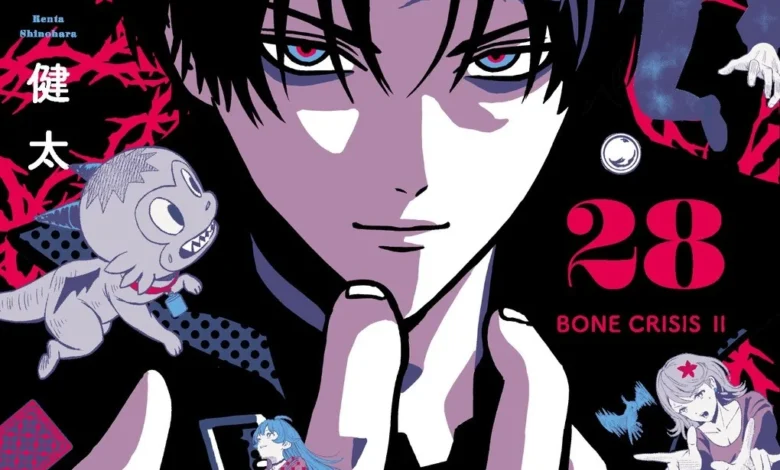
From its inception, the manga gained steady traction, building a robust domestic and international readership. Shueisha collected the individual chapters into tankobon volumes, steadily releasing them over the years. As the series approached its climax, the publisher maintained a consistent release schedule, ultimately culminating in the publication of the 28th compiled volume on October 2, just weeks before the final magazine chapter hit newsstands and digital platforms.
Simultaneously, the series expanded its global footprint. In February 2022, Viz Media announced that it had licensed Witch Watch for English-language distribution in North America, bringing the series to a broader Western audience. Viz Media has continued to release the collected volumes, with the 19th English volume going on sale on August 25. Additionally, Shueisha has provided global access to the series via its official Manga Plus website and mobile application, allowing international fans to read chapters simultaneously with Japanese releases.
Adaptation into Animation
The immense popularity and critical acclaim of Witch Watch naturally paved the way for a multimedia expansion, most notably a television anime adaptation. Produced by Bibury Animation Studios, the 25-episode first season of the anime adaptation made its broadcast debut in Spring 2025. The transition from print to screen brought Shinohara’s vibrant character designs and dynamic comedic timing to life, further expanding the franchise’s reach.
The anime’s distribution strategy reflected the global demand for contemporary anime titles. Crunchyroll and Netflix secured worldwide streaming rights, simulcasting the series globally with subtitles and dubs in multiple languages. This wide-reaching distribution ensured that both longtime fans of the manga and newcomers to the franchise could experience the adaptation concurrently. Following the conclusion of the first season and the positive reception from audiences worldwide, production committees announced that a second season of the anime is officially in development, ensuring that the adventures of Nico and Morihito will continue to entertain viewers on screen.
Plot Synopsis and Narrative Framework
At the core of Witch Watch is a premise that blends traditional magical tropes with contemporary teenage drama and situational comedy. The story follows Nico Wakatsuki, a young witch who has just completed her six years of rigorous magical training in isolation. Having finished her formal education, she prepares to move back to town by herself to begin life as a fully-fledged witch.
According to magical tradition, a new witch must choose a familiar to accompany, assist, and protect her. However, Nico diverges from convention by choosing a non-animal familiar. Her companion of choice is Morihito "Moi" Otogi, her stoic childhood friend who happens to be an ogre. Initially, Morihito is vehemently opposed to the idea of serving as her subordinate and bodyguard. His resistance, however, is short-lived; he learns that a binding magical curse would transform him into a bizarre cow-tiger hybrid if he were to directly disobey a legitimate witch’s order. Faced with this peculiar ultimatum, Morihito reluctantly accepts his fate.
Logistical developments further entangle their lives. With Morihito’s father departing for an extended business trip and Nico’s mother remaining behind in the Witches’ Holy Land, the two teenagers find themselves living under the same roof. This cohabitation serves as the primary catalyst for the series’ dynamic humor. While Nico is ecstatic to live in close proximity to her secret crush, Morihito quickly discovers that her erratic magical experiments, spells gone wrong, and general clumsiness generate constant chaos, creating far more problems than they solve.
Adding a layer of narrative urgency to the domestic comedy is a foreboding prophecy. A vision reveals that a major disaster will befall Nico within the year. Consequently, Morihito must balance his daily responsibilities as her roommate and reluctant familiar with his crucial duty as her bodyguard, stopping at nothing to protect her from impending peril while navigating the trials of high school life.
Industry Context and Supporting Data
The conclusion of Witch Watch in Weekly Shounen Jump highlights the shifting landscape of manga serialization. In an industry where titles face intense scrutiny regarding popularity rankings and reader retention, sustaining a supernatural comedy for five years and 270 chapters is a notable achievement. Shinohara’s ability to maintain narrative momentum, introduce a diverse and endearing cast of supporting characters, and balance absurd comedy with genuine emotional stakes allowed Witch Watch to carve out a permanent space in contemporary manga history.
Sales figures further demonstrate the commercial success of the series. With 28 collected volumes published in Japan by Shueisha and steady domestic and international distribution handled by industry giants like Viz Media and Manga Plus, Witch Watch established itself as a reliable commercial property for the publisher. The synergy between the manga’s print run, its digital availability on Manga Plus, and the Spring 2025 anime adaptation by Bibury Animation Studios created a comprehensive media ecosystem that maximized audience engagement across multiple platforms.
Broader Impact and Implications
The ending of Witch Watch leaves a noticeable vacancy in Weekly Shounen Jump, particularly in the genre of supernatural comedy and lighthearted slice-of-life storytelling. Over the past five years, Kenta Shinohara has reinforced his reputation as one of the industry’s most reliable and versatile creators, capable of transitioning smoothly from intense science-fiction survival dramas like Astra Lost in Space to whimsical magical comedies.
For the readership, chapter 270 provides a sense of closure to a narrative that has accompanied fans through half a decade of publication. While the manga medium bids farewell to Shinohara’s weekly output for this specific title, the continuation of the anime adaptation through its recently announced second season ensures that the intellectual property remains active in the public eye. Furthermore, the availability of the complete manga run across physical volumes and digital platforms guarantees that new generations of readers will continue to discover and appreciate the comedic chemistry between Nico and Morihito for years to come.