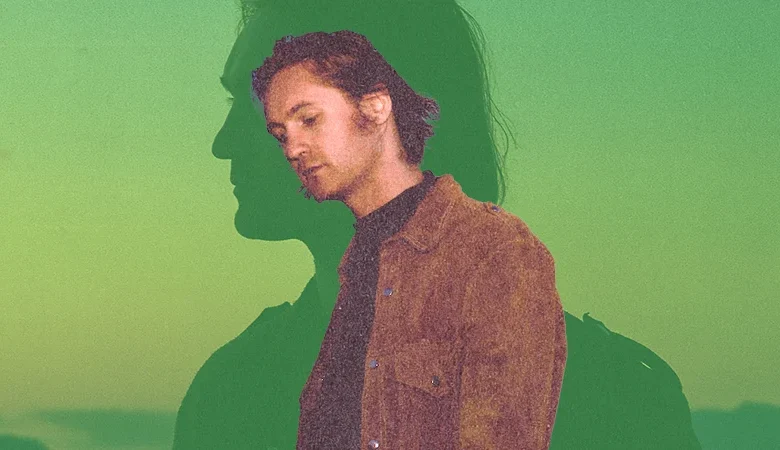
Miles Hewitt, the 31-year-old singer-songwriter whose latest album, "Vainglory," is set to release on July 24th, offers a profound and often unsettling exploration of humanity’s relationship with technology and its potential to strip away our essence. While the album title itself, "Vainglory," speaks to a grand, almost cosmic sense of misplaced human confidence, Hewitt’s artistic process is characterized by meticulous attention to detail and a deep-seated quest for emotional resonance. His background, which includes studying poetry at Harvard, has clearly informed his lyrical depth, allowing him to dissect complex themes with a precision that belies the sweeping nature of his musical arrangements.
Hewitt’s journey into crafting "Vainglory" was not a rapid one. The album is the culmination of several years of work following the critical success of his 2022 debut, "Heartfall." Unlike his previous work, which was conceived with elaborate sonic blueprints during the pandemic, "Vainglory" emerged from a more improvisational and studio-driven approach. This shift, Hewitt explains, was essential for capturing the specific "feeling" and "spirit" the album was intended to embody.
Thematic Core: "Vainglory" and the Human Condition
The title "Vainglory" carries a dual meaning for Hewitt. Primarily, it serves as a critique of what he perceives as a Western colonial and Enlightenment-era hubris – a belief in humanity’s supreme control over technology and, by extension, the universe. Drawing parallels to the biblical pronouncements of Ecclesiastes, Hewitt suggests that this conviction is ultimately a form of vanity, a "vanity of vanities" to believe in a unique or elevated human perspective. This theme is particularly relevant in an era grappling with the rapid advancements and societal implications of artificial intelligence.
Beneath this sociopolitical commentary lies a more personal layer. "Vainglory" also reflects Hewitt’s own arduous artistic journey in creating the album. He speaks of the "torturous artistic process" required to achieve something truly glorious, a testament to the dedication and struggle inherent in artistic creation. This introspection adds a layer of vulnerability to the album’s grand themes, making it a deeply personal as well as a universal statement.
A Sonic Tapestry of Desolation and Grandeur
Musically, "Vainglory" achieves "peak grandiosity," as described by critics. Hewitt crafts spectral folk-rock soundscapes that evoke desolate, haunted landscapes, mirroring the album’s cover art. His inspirations include prime-era English folk artists like Nick Drake, and his music shares a similar capacity for slow-building, immersive despair. Hewitt’s voice, a sensitive and reedy instrument that has been likened to a synthesis of Dan Bejar and Marianne Faithfull, softly intones over shifting moods, creating a cohesive yet dynamic listening experience.
The album’s meticulous construction is evident in its collaborative nature. Hewitt enlisted a roster of esteemed musicians from acclaimed indie-rock acts, including collaborators from bands like Destroyer, Cass McCombs, and Andy Shauf. This ensemble of talent was instrumental in Hewitt’s iterative process, as he explored different sonic arrangements and versions of songs to achieve his precise vision. This dedication to sonic perfection, even when it meant revisiting ideas that seemed complete, underscores his commitment to the album as a unified artistic statement.
The Creative Process: Iteration and Aesthetic Pursuit
Hewitt’s creative process for "Vainglory" was a departure from the pre-pandemic meticulous planning of "Heartfall." While "Heartfall" was built from detailed sonic blueprints and mood boards, "Vainglory" embraced a more spontaneous approach, venturing into the studio with a clear mood and lyrical intent but allowing the music to unfold organically. This method, while demanding, was crucial for capturing the album’s desired emotional resonance.
"For me, what makes an album really special isn’t just that it’s good or that it sounds good, but it has that feeling to it," Hewitt explained. "It feels like something emotional that you can tell is coming from a particular place. And it just took a while to find that. It took going through a lot of iterations." This pursuit of authentic feeling often led to musicians questioning the need for multiple versions of a song, highlighting the depth of Hewitt’s artistic search.
A "Bird’s-Eye View" on Existential Questions
Thematically, Hewitt often adopts a "bird’s-eye view" in his songwriting for "Vainglory." He describes feeling less like the central protagonist and more like an observer of the world’s unfolding narrative. This perspective, he admits, initially felt presumptuous, prompting him to question his right to address such large-scale concerns. However, he found that these themes – the anxieties surrounding technological advancement and the potential end of a familiar world order – are widely shared.
This expansive perspective leads to profound existential inquiries. When asked about the presence of God in his songs, Hewitt engages with the question directly, stating that his work is a "search for something beyond the barbarity and materialism" of the current world. He grapples with the tension between a purely materialistic worldview, where everything is quantifiable and controllable, and the more elusive aspects of human experience. "Who are we?" he asks. "Are we data points, or are we something that the quantification of our world can’t actually quite grasp?" This exploration positions "Vainglory" as a deeply philosophical work.
The Album as a Unified Narrative
While not a traditional concept album with distinct characters or a linear plot, Hewitt acknowledges that "Vainglory" functions as a song cycle. He expresses a deep affinity for the album as an artistic medium, valuing its ability to create a cohesive experience where the whole is greater than the sum of its parts. The sequencing of the songs on "Vainglory" was a deliberate act, with each track intended to engage in a dialogue with the others, creating a flow of interconnected ideas and emotions. Even the sonic texture of one song might serve as a reaction or complement to another, reinforcing the album’s unified narrative.
Lyrical Prowess and Musical Foundation
Despite his background in poetry, Hewitt insists that music was his initial artistic love. He recounts how his early exposure to Bob Dylan led him to poets like Allen Ginsberg, reversing the more typical trajectory. The visceral impact of sound, he explains, is "unstoppable." The act of playing a piano key and hearing that sound reverberate is a fundamental, deeply felt experience that forms the bedrock of his creative impulse. For Hewitt, writing words is simply another dimension of this overarching art form.
The dedication to refining every element of his music, from the most subtle lyrical nuance to the grandest sonic arrangement, cements Miles Hewitt’s position as a significant voice in contemporary music. "Vainglory" is not just an album; it’s a meticulously crafted testament to the enduring human spirit in the face of technological and existential upheaval, offering a hauntingly beautiful soundtrack to our uncertain future.