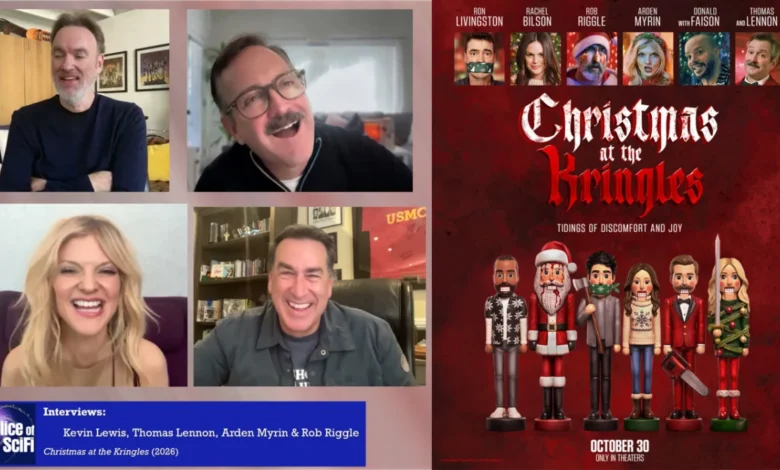
The subversion of traditional holiday tropes has long been a lucrative and creatively liberating subgenre within horror and dark comedy, and the cinematic landscape is welcoming a raucous new addition with the release of Christmas at the Kringles. Directed by Kevin Lewis and featuring a star-studded comedic ensemble that includes Thomas Lennon, Arden Myrin, and Rob Riggle, the film dives headfirst into the chaotic intersection of festive cheer and unbridled carnage. In a recent extensive discussion with the creators and cast on the Slice of SciFi podcast, the team behind the holiday horror romp unpacked the meticulous balance of practical effects, physical comedy, and seasonal satire that brought the project to life.
The Genesis and Vision of Holiday Horror
For decades, the horror genre has sought to corrupt wholesome cultural touchstones, transforming benign icons into vessels of terror. From classic slashers to modern black comedies, holiday-themed horror occupies a unique space where audiences can project the inherent stress, familial friction, and commercialized superficiality of the season onto exaggerated, blood-soaked narratives. Christmas at the Kringles fits squarely into this lineage, embracing a tone that is equal parts slapstick comedy and high-stakes gore.
Director Kevin Lewis, tasked with steering this chaotic ship, approached the project with a clear cinematic philosophy: prioritize tactile, physical filmmaking over sterile computer-generated imagery. In the interview, Lewis detailed the logistical and creative challenges of maintaining precise comedic timing while orchestrating massive third-act destruction that wreaks havoc on both the cast and the meticulously designed set pieces. By leaning heavily into practical effects—such as squibs, breakaway props, and old-school stunt work—Lewis and his crew sought to capture the visceral, tangible energy characteristic of cult classic horror-comedies from the 1980s and 1990s. This commitment to practical wizardry not only heightened the authenticity of the violence but also provided the actors with physical realities to react against, anchoring the absurdity in genuine performances.
Meet the Kringles: Character Dynamics and Wardrobe Architecture
At the heart of the cinematic chaos is the dysfunctional Kringle family, brought to vivid, unhinged life by a cast of veteran comedic actors. Thomas Lennon, stepping into the role of the erratic family patriarch Nick Kringle, discussed his approach to playing a character teetering on the edge of complete psychological fracture. Lennon embraced the physical demands of the role, performing the vast majority of his own stunt work and intense fight choreography opposite co-star Peter Livingston. Rather than relying on stunt doubles for every kinetic beat, Lennon’s direct involvement in the physical altercations lends the character a frantic, desperate energy that elevates the comedic stakes. Reflecting on the experience, Lennon expressed a strong appetite for further exploration within the holiday horror genre, signaling that his tenure as a cinematic terror-maker might not end with the credits of this film.
Complementing Lennon’s unhinged patriarch is Arden Myrin as Carol Kringle, a matriarch whose polite exterior masks a volatile and bizarre internal landscape. Myrin delved into the specific behavioral quirks and psychological ticks that define Carol, noting that the character operates on a frequency entirely her own. A significant element of Myrin’s performance relies on visual storytelling, specifically through a heavily customized holiday wardrobe that she jokingly describes as channeling the energy of the "Real Housewives of the North Pole." Every sequin, velvet trim, and festive accessory was weaponized to project an aura of forced, superficial perfection that sharply contrasts with the escalating violence surrounding her. Myrin emphasized that the fun of playing Carol lay in the stark duality of maintaining a pristine, welcoming smile while absolute bedlam unfolded around her.
Battle Santa and the Logistics of Festive Warfare
Perhaps no character embodies the literal clash between holiday commercialism and genre violence quite like Rob Riggle’s "Battle Santa." Riggle, known for his larger-than-life comedic persona, embraced the role of a holiday icon willing to commit to extreme violence in a desperate bid to preserve the true, unadulterated spirit of Christmas. Preparing for the role required rigorous physical preparation, particularly for intricate fight sequences shared with legendary co-star Beverly D’Angelo. Riggle’s dedication to the physical comedy of a combat-ready Santa required not only athletic endurance but also a high tolerance for the absurdities of movie-making makeup and wardrobe.
Among the more unexpected hazards of playing an action-hero iteration of Santa Claus, Riggle recounted the persistent, low-level operational danger of having an overabundance of holiday glitter permanently embedded in his facial hair—a lingering reminder of production days that followed him long after the cameras stopped rolling. Despite the minor cosmetic casualties of glitter inhalation and the physical toll of stunt choreography, Riggle hinted at his readiness to step back into the tactical boots of Battle Santa for a potential sequel, should the audience demand a Round 2.
The Cultural Resonance of Holiday Subversion
The release of Christmas at the Kringles arrives at a time when audiences increasingly gravitate toward genre-blending entertainment that provides a pressure valve for the pressures of modern life. Holiday seasons are frequently marketed as infallible periods of peace and joy, yet sociological data and psychological studies consistently indicate that the holidays are also prime generators of stress, familial anxiety, and consumer fatigue. By injecting lethal absurdity and anarchic comedy into the foundational myths of the season, films like Christmas at the Kringles offer viewers a cathartic release.
Industry analysts note that holiday horror has steadily transitioned from a niche, direct-to-video market into a reliable theatrical and streaming subgenre. Titles that successfully marry recognizable holiday iconography with high-concept scares or dark satire often build passionate cult followings, driven by repeat viewing traditions that rival classic family-friendly holiday programming. The creative team behind Christmas at the Kringles clearly understood this cultural niche, crafting a narrative that respects the tropes of traditional holiday specials while systematically dismantling them with a chainsaw and a smile.
Production Challenges and Practical Ingenuity
Behind the festive sweaters, fake snow, and tactical holiday gear lies a complex production history. Directing a hybrid comedy-horror film requires a delicate tonal balancing act; stray too far into genuine horror, and the comedy feels out of place; lean too heavily into farce, and the stakes evaporate entirely. Kevin Lewis’s direction relied heavily on pacing, rhythmic editing, and the deliberate escalation of chaos to keep the audience off-balance.
The reliance on practical effects, as emphasized by the director, served as both a creative choice and a logistical hurdle. Unlike digital effects that can be adjusted in post-production, practical gore and set destruction must be executed cleanly in real-time, often leaving single-digit margins for error. The collaborative atmosphere on set, driven by an ensemble of seasoned improvisers and physical comedians like Lennon, Myrin, and Riggle, allowed for spontaneous creative choices that elevated the scripted material. When actors are physically interacting with tangible set destruction and practical hazards, their improvisational reactions often yield the most memorable comedic beats.
Looking Ahead and Audience Engagement
As Christmas at the Kringles rolls out to audiences via its official platform and associated promotional channels, the creative team remains eager to gauge public reaction to their labor of love. The intersection of sci-fi, horror, and indie cinema communities—long championed by outlets such as the Slice of SciFi podcast—serves as an ideal incubator for genre-bending projects that might otherwise struggle to find a foothold in major studio slates.
The filmmakers’ enthusiasm during their recent retrospective discussion underscores a broader industry trend: independent genre cinema thriving through direct engagement with passionate fan bases. Whether viewers choose to embrace holiday horror as an alternative seasonal tradition or prefer to keep their festive cheer strictly partitioned from their cinematic bloodshed, projects like Christmas at the Kringles ensure that the conversation—and the carnage—will continue for seasons to come. As the Kringles demonstrate, sometimes the only proper response to the pressures of the holidays is to watch the North Pole burn while laughing all the way.