Rubberhead: Nick Taylor spotlights the SFX work of Steve Johnson Looking at the highs (and lows) of a career in Hollywood special effects

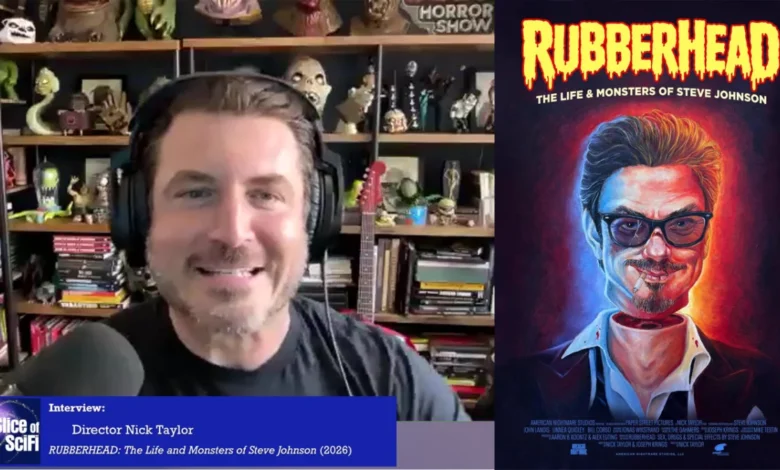
The cinematic landscape of the 1980s and 1990s was defined in large part by the tactile, visceral art of practical special effects. Before digital manipulation and Computer-Generated Imagery (CGI) came to dominate modern filmmaking, monsters, aliens, and extraordinary physical transformations were brought to life through rubber, foam latex, animatronics, and mechanical ingenuity. At the vanguard of this artistic movement was legendary special effects creator Steve Johnson. Now, his turbulent, brilliant career is the subject of a comprehensive new feature-length documentary, Rubberhead: The Life and Monsters of Steve Johnson, directed by filmmaker Nick Taylor.
The documentary is slated to make its highly anticipated world premiere at the prestigious Fantasia International Film Festival on July 23, 2026. Ahead of the debut, director Nick Taylor joined the Slice of SciFi podcast to discuss the painstaking process of bringing Johnson’s story to the screen, exploring the remarkable peaks and devastating valleys of a career that helped shape modern cinematic history.
From Memoir to Motion Picture: The Genesis of Rubberhead
The genesis of Taylor’s documentary lies in the pages of Steve Johnson’s brutally honest and eccentric memoir, Rubberhead: Sex, Drugs, and Special FX. Originally conceptualized as a five-volume series—of which the first two volumes have been published—the book offers an unfiltered look at the high-pressure, chaotic, and often hedonistic world of Hollywood special effects workshops during their golden era.
When Taylor first encountered the memoir, he was immediately struck by the sheer magnitude of Johnson’s life story. Beyond the impressive filmography—which includes iconic creature designs for films like Ghostbusters, Species, Big Trouble in Little China, and A Nightmare on Dream Street 4: The Dream Master—Taylor discovered a deeply human narrative about passion, artistic obsession, and the heavy toll exacted by the entertainment industry.
Unlike traditional biographical films that rely solely on talking-head interviews, Taylor’s documentary delves deep into the physical artifacts of Johnson’s career. The production team went through extensive archives, storage lockers, and personal collections filled with concept art, mold casts, maquettes, and behind-the-scenes footage. This tactile approach mirrors the very medium that made Johnson famous, grounding the documentary in the tangible history of practical monster-making.
The Art and Evolution of Practical Effects in Modern Cinema
During his discussion on Slice of SciFi, Taylor touched upon a sentiment increasingly shared by modern moviegoers: a deep-seated nostalgia and preference for practical effects over fully digital creations. While CGI has evolved significantly since its infancy, many fans and filmmakers argue that computer-generated elements often lack the weight, lighting interaction, and physical presence that practical effects inherently possess.
Steve Johnson was a master of bridging the gap between art and technology. Operating during an era when animatronics were becoming more sophisticated through the integration of electronics and pneumatics, Johnson and his teams pushed the boundaries of what could be achieved physically on a movie set. The creation of the Stay Puft Marshmallow Man for Ghostbusters, the terrifying transformations in An American Werewolf in London (through his work with master artist Rick Baker), and the complex alien designs of Species required an encyclopedic knowledge of chemistry, sculpture, mechanics, and human anatomy.
However, the documentary does not shy away from the darker side of this artistry. The transition in the late 1990s and early 2000s toward digital effects caused a massive disruption in the practical effects industry. Studios increasingly favored the perceived cost-effectiveness and flexibility of CGI, leaving many legendary practical effects houses struggling to survive. For artists like Johnson, whose identity was inextricably linked to physical creation, this shift brought profound personal and professional challenges, themes that form the emotional core of Taylor’s documentary.
Chronology of a Master SFX Career
To understand the weight of Rubberhead: The Life and Monsters of Steve Johnson, one must examine the timeline of Johnson’s contributions to the film industry.
The late 1970s and early 1980s served as the formative training ground for Johnson, where he worked alongside industry pioneers like Rob Bottin and Rick Baker. This era was characterized by an explosion of practical effects innovation, driven by breakthroughs in foam latex technology and cable-controlled animatronics.
By the mid-1980s, Johnson had established himself as a premier talent. His work on Ghostbusters (1984) cemented his reputation, particularly his creation of the towering, foam-latex Stay Puft Marshmallow Man and the gelatinous ghost slime that terrorized New York City. Throughout the remainder of the decade and into the 1990s, Johnson contributed to numerous genre classics, working under immense studio pressures and punishing production schedules.
As the industry pivoted toward digital pipelines at the turn of the century, Johnson faced the dual pressures of changing technological standards and personal struggles. His memoir and the subsequent documentary chronicle this tumultuous period, offering a cautionary yet triumphant tale of resilience and artistic survival.
The Fantasia International Film Festival Premiere and Industry Implications
The selection of Rubberhead: The Life and Monsters of Steve Johnson for the Fantasia International Film Festival places the documentary in an ideal cultural ecosystem. Known worldwide as a premier showcase for genre cinema, independent filmmaking, and retrospectives of visionary artists, Fantasia provides a receptive audience of cinephiles, critics, and industry professionals who deeply appreciate the mechanics of cinematic illusion.
The release of the documentary arrives at a time of renewed appreciation for practical craftsmanship in filmmaking. In recent years, high-profile blockbusters have increasingly returned to practical effects, hybrid creature designs, and in-camera stunts as a reaction against audience fatigue with homogenous CGI. Documentaries like Taylor’s serve a vital archival function, preserving the history of an analog era that risks being forgotten as older generations of artists pass the torch.
Furthermore, the film highlights the often-overlooked physical and psychological toll placed on below-the-line crew members and special effects supervisors. While directors and actors frequently capture the public spotlight, practical effects artists often labor in toxic, high-stress environments, working around the clock with hazardous chemicals and impossible deadlines to achieve cinematic magic. By centering Steve Johnson’s unfiltered perspective, Taylor’s work elevates the conversation surrounding labor conditions and artistic recognition in Hollywood.
Broader Impact and Fan Engagement
As the countdown to the July 23, 2026 premiere continues, anticipation within the science fiction and horror communities has steadily mounted. Podcasts, fan forums, and specialized media outlets have amplified discussion around the film, reflecting a broader cultural appetite for deep-dive cinematic histories.
Director Nick Taylor’s meticulous documentation of Johnson’s life not only honors an unsung hero of cinematic monster-making but also educates a new generation of filmmakers on the value of tactile world-building. Whether through the pages of his multi-volume memoirs or on the big screen via Taylor’s documentary, Steve Johnson’s legacy remains a testament to the strange, brilliant, and occasionally chaotic marriage of art and science that defines Hollywood special effects.