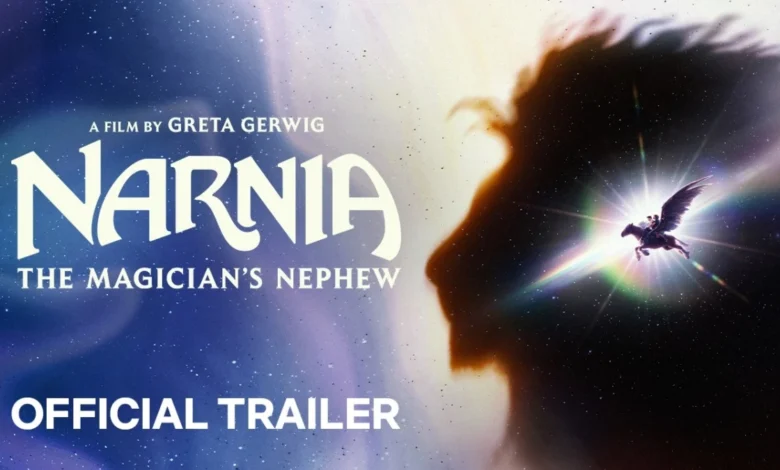
Spearheaded by Academy Award-nominated director Greta Gerwig, who has frequently expressed her lifelong reverence for Lewis’s literary universe, the film serves as the inaugural chapter in a planned multi-part cinematic expansion. By bypassing the chronological publication order of the original Chronicles of Narnia series—which famously began with The Lion, the Witch and the Wardrobe in 1950—Gerwig and her production team have chosen to ground their new franchise in the chronological genesis of the fictional universe. This strategic decision aims to present viewers with the primordial history of Narnia, detailing the creation of the world, the birth of Aslan, and the mechanisms through which ordinary mortals first stumbled across the boundary between Earth and magical dimensions.
The Star-Studded Cast and Creative Vision
The production boasts a stellar ensemble cast featuring established luminaries and dynamic contemporary performers. The principal lineup includes David McKenna, Beatrice Campbell, Emma Mackey, Carey Mulligan, Ciarán Hinds, Daniel Craig, Meryl Streep, Kobna Holdbrook-Smith, Denise Gough, and Susan Wokoma. Gerwig, who both authored the screenplay and directed the feature, brings her distinct narrative sensibility and visual acumen to a property traditionally associated with more conventional studio blockbuster aesthetics. Industry analysts note that Gerwig’s involvement elevates the project beyond a standard intellectual property exploitation, positioning it as an auteur-driven epic capable of attracting both cinephiles and multi-generational family audiences.
The inclusion of actors of the caliber of Meryl Streep and Daniel Craig underscores Netflix’s substantial financial commitment to the enterprise. The streamer has increasingly turned to prestige talent to anchor its high-budget franchise plays, hoping to cultivate theatrical prestige alongside subscriber retention. Gerwig’s adaptation is expected to balance the whimsical, allegorical scale of Lewis’s theological and philosophical themes with the character-driven psychological depth that characterized her previous directorial efforts, such as Little Women and Barbie.
Historical Chronology of Narnia Adaptations
The journey of C.S. Lewis’s Chronicles of Narnia from page to screen spans several decades, characterized by varying degrees of critical reception and technological evolution. Understanding the historical lineage of these adaptations provides essential context for the gravity of Gerwig’s current undertaking.
- 1988–1990: The BBC produced a pioneering television adaptation of the core books, including The Lion, the Witch and the Wardrobe, Prince Caspian, The Voyage of the Dawn Treader, and The Silver Chair. While constrained by 1980s television budgets and practical effects, the BBC miniseries remains a nostalgic touchstone for millions of viewers.
- 2005: Walt Disney Pictures and Walden Media released The Lion, the Witch and the Wardrobe, directed by Andrew Adamson. The film was a massive commercial success, grossing over $740 million worldwide and winning an Academy Award for Best Makeup and Hairstyling.
- 2008: Walden Media and Disney returned for The Chronicles of Narnia: Prince Caspian. While profitable, it experienced a noticeable box office decline compared to its predecessor, grossing approximately $419 million globally.
- 2010: 20th Century Fox took over distribution for The Chronicles of Narnia: The Voyage of the Dawn Treader, directed by Michael Apted. Released in digital 3D, the film earned around $415 million worldwide. Plans for subsequent adaptations, including The Magician’s Nephew and The Silver Chair, languished in development hell due to expiring rights agreements.
- 2018: Netflix announced a groundbreaking multi-year agreement with The C.S. Lewis Company to develop series and film projects across the entire Narnia catalog, marking the first time a single entity held the rights to all seven books.
- 2022–Present: Greta Gerwig was officially attached to write and direct at least two films in the Narnia universe for Netflix, culminating in the formal 2027 release date announcement for The Magician’s Nephew.
Production Data and Strategic Implications for Netflix
Netflix’s distribution strategy for Narnia: The Magician’s Nephew reflects a growing industry trend: hybrid theatrical and streaming rollouts for tentpole intellectual properties. By partnering with IMAX for a multi-week exclusive window beginning February 12, 2027, prior to the April 2 streaming debut, Netflix aims to capture the prestige and box office revenue traditionally associated with major traditional studio competitors like Disney, Warner Bros., and Universal.
Financial analysts point out that streaming services face mounting pressure to demonstrate long-term profitability and subscriber retention through high-value, universally recognizable franchises. With blockbuster cinematic universes like Marvel and Star Wars experiencing varying degrees of audience fatigue, fertile ground exists for high-fantasy adaptations that offer distinct artistic visions. The partnership with IMAX is expected to maximize visual fidelity, capitalizing on the expansive, mythical landscapes described in Lewis’s text—from the dying world of Charn to the pristine, auditory genesis of Narnia through Aslan’s song.
Furthermore, the decision to launch with an exclusive IMAX preview period on February 10, 2027, creates a tiered release structure designed to build grassroots word-of-mouth momentum. This mirrors strategies historically employed by premium live-action spectacles, bridging the gap between theatrical exclusivity and home-viewing accessibility.
Broader Industry Impact and Cultural Reception
The cultural resonance of C.S. Lewis’s work ensures that any adaptation will be subjected to intense scrutiny by literary purists, theological scholars, and casual filmgoers alike. The Magician’s Nephew, published in 1955, serves as the mythological cornerstone of the Narnia series. It explains the origin of the mysterious lamppost in the snowy woods, the backstory of the White Witch, the magical properties of the wardrobe wood, and the establishment of Aslan’s authority over the talking beasts.
By initiating the Netflix franchise with this specific narrative, Gerwig bypasses the immediate expectations of audiences looking for a direct remake of The Lion, the Witch and the Wardrobe. Instead, viewers are invited into an origin story that subverts traditional fantasy tropes by exploring themes of temptation, consequence, cosmic creation, and the fragility of human curiosity—exemplified by the characters of Digory Kirke and Polly Plummer.
Industry observers note that the success of Gerwig’s film will likely dictate the trajectory of Netflix’s multi-billion-dollar investment in the Narnia license. Should The Magician’s Nephew achieve its intended cultural and financial impact, it will validate Netflix’s aggressive push into theatrical exhibition partnerships and cement Gerwig’s status as one of the few contemporary filmmakers capable of commanding both critical acclaim and mega-budget studio machinery. As the countdown to February 2027 begins, the global entertainment landscape watches closely to see how the legendary lion’s roar will translate to the modern cinematic era.