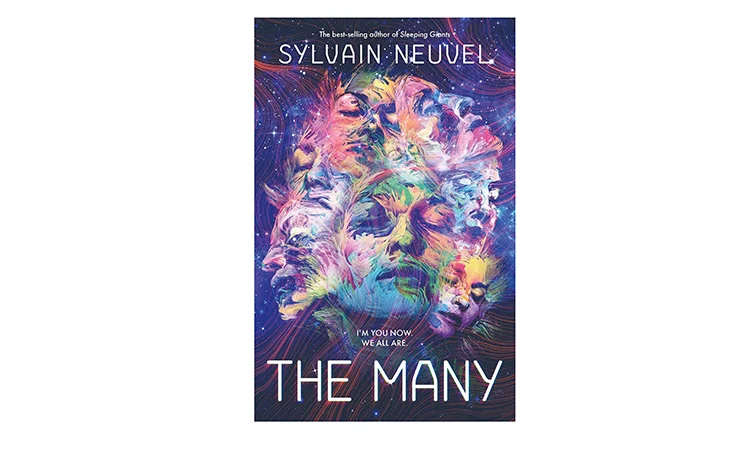
Sylvain Neuvel’s latest literary offering, The Many, reinterprets a familiar science fiction trope – the emergence of a collective consciousness – through a lens of unexpected optimism and profound exploration of human connection. Rather than succumbing to the prevalent narratives of paranoia and the erosion of individuality, Neuvel crafts a novel that is both conceptually ambitious and remarkably hopeful. The story, which has begun to generate significant buzz within literary and science fiction circles, offers a fresh perspective on what it means to be part of something larger than oneself, challenging conventional fears surrounding such transformative events.
The narrative’s genesis is deliberately understated, eschewing dramatic alien invasions or cataclysmic events for a far more subtle and unsettling beginning. The inciting incident, described as a "tick and a little ‘bitey’ incident in a local bakery," serves as an almost absurdly mundane point of origin. This quiet, domestic beginning belies the global scale of the phenomenon that gradually unfurls, demonstrating Neuvel’s masterful control over pacing and escalation. The initial spread is so understated that it could easily be mistaken for a localized anomaly, a testament to the author’s ability to build tension and intrigue from the most ordinary of circumstances.
The Genesis of a Collective: From Bakery to Global Phenomenon
The timeline of The Many‘s unfolding phenomenon, while not explicitly detailed with precise dates, can be inferred from the narrative’s progression. It begins with isolated incidents, seemingly unrelated and easily dismissed. These initial "bites," as they are colloquially termed, likely occur within a contained geographical area, perhaps a single city or region. The lack of overt aggression or immediate, recognizable symptoms initially allows the phenomenon to spread with an almost stealthy efficiency. Public health officials, were they to have been aware, might have initially classified these early cases as unusual neurological disorders or a novel form of infectious disease, lacking the hallmarks of a coordinated or intentional attack.
As the phenomenon progresses, the "bites" begin to cluster, creating small pockets of individuals exhibiting a shared cognitive experience. This phase is characterized by a growing, yet still unarticulated, sense of connection among those affected. The "many" begin to experience a shared awareness, a subtle merging of thoughts and perceptions that initially manifests as enhanced empathy and understanding. This is where Neuvel deliberately diverges from typical horror narratives. Instead of dread and fear, the affected individuals report a sense of clarity, belonging, and even comfort. The loss of individual self, a common fear in hive-mind scenarios, is here reframed as an expansion of consciousness, a liberation from the isolation of the individual mind.
Redefining the Hive Mind: Connection Over Conquest
What truly distinguishes The Many from its predecessors in the genre is its unique tone. Neuvel eschews the creeping dread and existential terror typically associated with stories of collective consciousness. There is no sense of identity being erased or humanity being overwritten by an alien force. Instead, the narrative focuses on the positive aspects of this emergent unity. Those who become part of "the many" do not experience a loss of self, but rather a profound sense of connection and shared understanding. This reinterpretation positions the collective consciousness not as a threat to human individuality, but as a potential evolutionary leap, offering a form of interconnectedness previously unimaginable.
This approach is particularly evident in the way Neuvel portrays the internal experiences of those affected. Rather than depicting a descent into madness or a loss of agency, the novel showcases a heightened sense of awareness and a deep, empathetic bond with others. This could be interpreted as a response to the increasing social isolation and digital disconnect prevalent in contemporary society. The novel, in this regard, offers a thought-provoking counterpoint, suggesting that a different form of connection, one that transcends individual boundaries, might offer a path to greater understanding and well-being.
Structural Ingenuity: Preserving Individuality Within Unity
Neuvel’s structural approach to The Many is arguably its most significant literary achievement. While writing from multiple perspectives is a common narrative technique, Neuvel’s masterful execution of writing as a collective, while simultaneously preserving distinct and recognizable voices, is groundbreaking. The novel navigates this complex challenge with remarkable success. Even as characters become integrated into the collective consciousness, their individual personalities, thoughts, and questioning natures remain discernible. This delicate balance between individuality and unity is central to the novel’s thematic core and is conveyed with exceptional clarity and confidence by the author.
This structural feat allows readers to engage with the evolving collective on a deeply personal level. We witness the integration process not as a monolithic erasure, but as a dynamic evolution. The internal monologues and interactions within the collective highlight the lingering echoes of individual consciousness, demonstrating that unity does not necessarily equate to homogeneity. This nuanced portrayal invites readers to consider the very definition of self and the potential for expanded consciousness without sacrificing the essence of what makes each individual unique.
Humor and Whimsy: An Unexpectedly Charming Dimension
Adding another layer of charm and accessibility to The Many is its sharp, often playful sense of humor. The inclusion of animal perspectives, particularly a wonderfully surreal chapter narrated from the viewpoint of a giraffe, injects an unexpected level of whimsy into the narrative. These diversions, far from detracting from the story’s intellectual weight, serve to ground the high-concept ideas in a more relatable and even comical reality. The influence of Louise, a feline character whose actions subtly shape the collective’s emergent behaviors, leading to universally understood urges like knocking objects off tables, provides genuinely laugh-out-loud moments.
These humorous interludes are not mere comedic relief; they serve a crucial narrative purpose. By incorporating elements of the absurd and the familiar, Neuvel makes the extraordinary phenomenon of collective consciousness more approachable and understandable. The inclusion of animal perspectives, for instance, highlights the universal nature of consciousness, suggesting that the "many" might extend beyond the human species, further blurring the lines between individual and collective experience in a way that is both thought-provoking and delightful.
The Scale of Shared Consciousness: Narrative Control and Momentum
As the phenomenon escalates, encompassing entire communities and eventually the globe, The Many becomes an impressive testament to Neuvel’s narrative control. The author adeptly conveys the immense scope of a shared consciousness without sacrificing coherence or narrative momentum. The novel remains an engaging read, propelled forward by the sheer force of its innovative ideas and the energetic unfolding of its plot.
The depiction of global integration would likely involve a phased approach. Initial awareness might spread through anecdotal evidence and increasingly frequent reports of synchronized actions or shared sentiments across disparate populations. Governments and scientific bodies would grapple with the unprecedented nature of this phenomenon. Initial responses might range from dismissal and skepticism to widespread panic and attempts at containment, which would likely prove futile against a phenomenon rooted in consciousness rather than physical contagion. The novel’s success in maintaining clarity amidst such vastness suggests a methodical portrayal of this global shift, perhaps focusing on key individuals and communities as touchstones for the broader experience.
Broader Implications: A New Understanding of Humanity
By the novel’s conclusion, The Many leaves readers with an unusual and profound sentiment for a story of this genre: not relief from a perceived threat, but a faint sense of longing. Neuvel has masterfully taken a well-trodden science fiction concept and reframed it into something warm, funny, and quietly profound. The implications of such a narrative are far-reaching. It challenges our ingrained fears of conformity and loss of self, suggesting that a collective consciousness could, in fact, be a pathway to deeper understanding, empathy, and a more harmonious existence.
The potential societal implications of such a phenomenon, even as a fictional exploration, are immense. It prompts reflection on the nature of empathy, the barriers to global cooperation, and the potential for a unified human purpose. If "the many" represent an evolution of consciousness, it raises questions about our current societal structures, which are often built upon individual competition and division. The novel’s optimistic portrayal suggests a future where shared knowledge, collective problem-solving, and profound mutual understanding could lead to unprecedented progress and a fundamental shift in the human experience.
The Many by Sylvain Neuvel is a significant contribution to contemporary science fiction, offering a nuanced and hopeful exploration of collective consciousness. It is a novel that not only entertains but also compels readers to reconsider their understanding of self, connection, and the potential future of humanity. The book’s ability to blend high-concept ideas with genuine emotional resonance and a healthy dose of humor makes it a standout work, one that is likely to spark considerable discussion and admiration. The author’s innovative approach to a classic sci-fi theme proves that even the most familiar concepts can be revitalized with fresh perspective and exceptional storytelling.