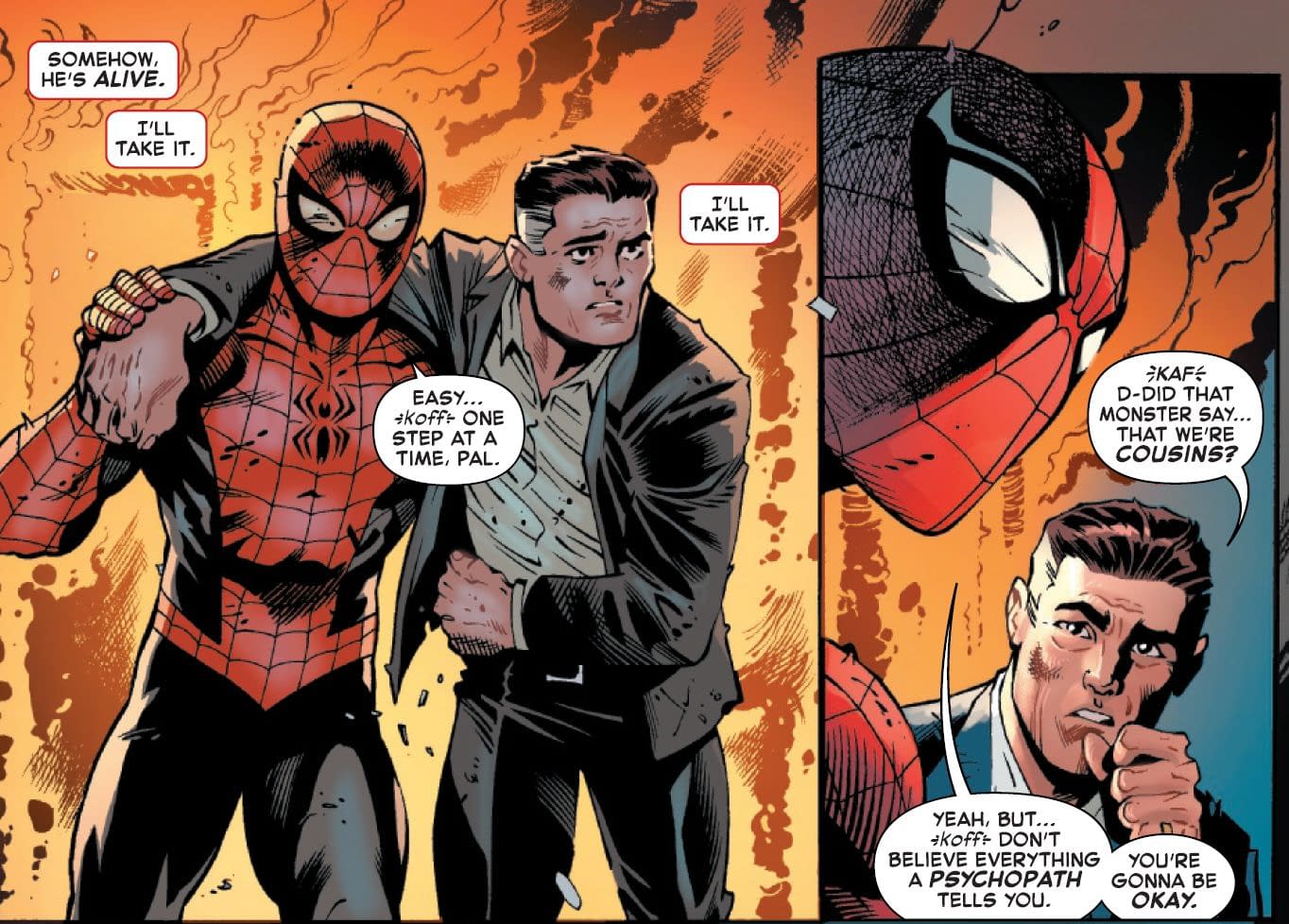
Marvel Comics has ignited a firestorm of speculation and anticipation among fans with the introduction of a mysterious new character, Crane, identified as Peter Parker’s first cousin. This seismic revelation, unfolding across recent issues of Amazing Spider-Man and set to culminate in the landmark Amazing Spider-Man #1000, promises to redefine Peter Parker’s long-established family history and could irrevocably alter the very foundation of the Spider-Man mythos. The unexpected familial connection was first teased within the pages of Amazing Spider-Man #26 and further explored in Amazing Spider-Man #27, sparking intense debate about the true parentage of this enigmatic figure and his potential impact on the web-slinger’s life.
The Emergence of Crane: A New Family Member and a Deadly Hunt
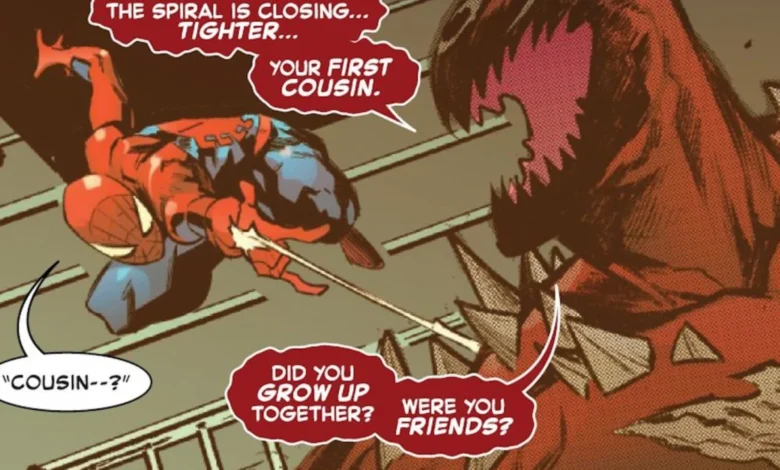
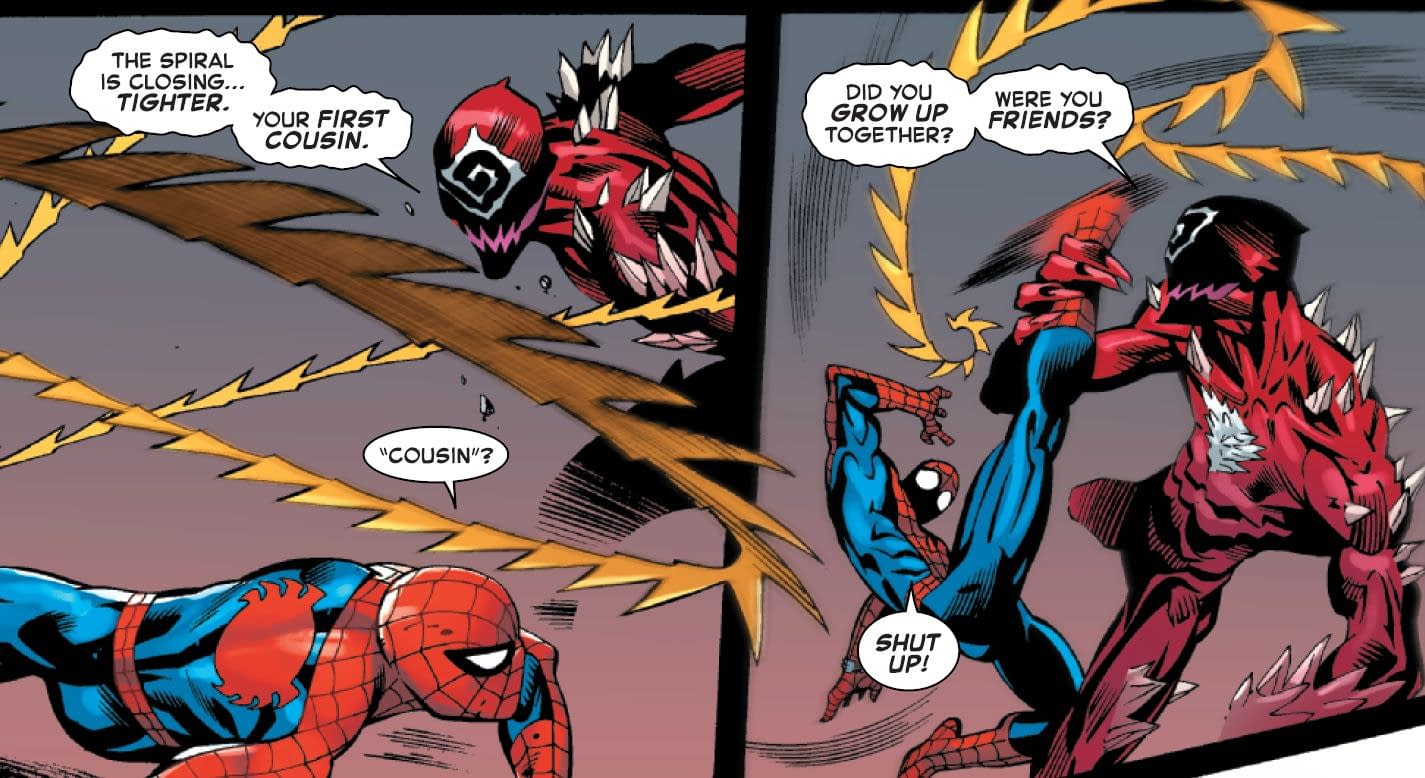
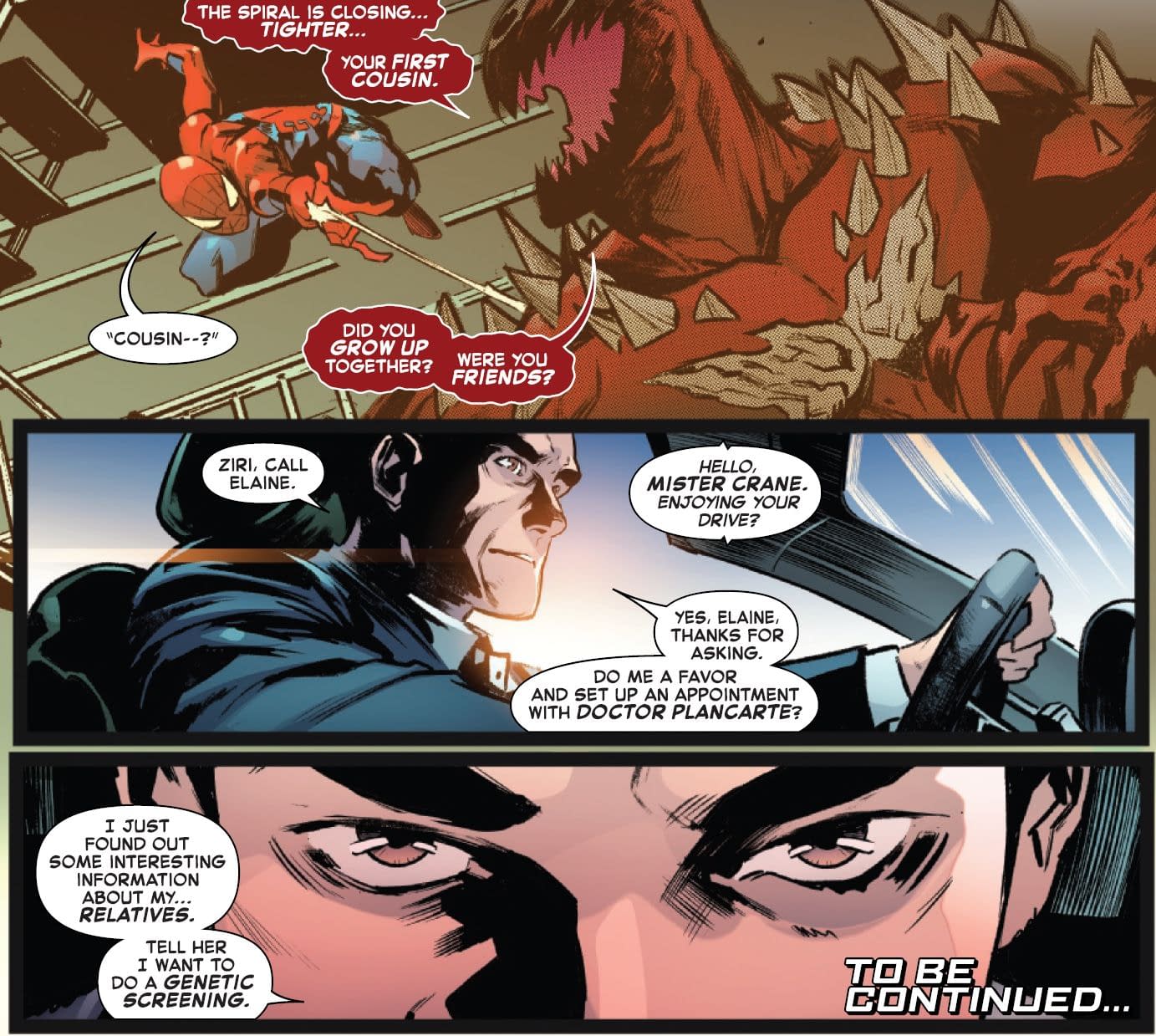
The initial hints of Peter Parker’s previously unknown relative surfaced within a grim storyline dubbed "Death Spiral." This narrative arc features the formidable duo of Torment and Carnage embarking on a brutal, genetically motivated serial killing spree. Their twisted objective is to systematically eliminate entire family trees, targeting individuals from the most distant relatives to the closest, even those whose existence is unknown to their intended victims. It was through this horrifying context that Peter Parker’s first cousin, now known as Crane, was brought into the spotlight as a target.
In Amazing Spider-Man #26 (legacy number #990), crafted by the creative team of Joe Kelly, Francesco Manna, and Ed McGuinness, Torment explicitly identified a man as Peter Parker’s cousin. This was a significant moment, as Peter Parker, in established Marvel continuity, has no known male blood cousin. Previous characters, such as Sam Reilly (an adoptive aunt’s nephew), have existed on the periphery, but never as a direct blood relation. The introduction of Crane, therefore, immediately signaled a major departure from long-standing canon. The subsequent Amazing Spider-Man #27 (legacy number #991), penned by Joe Kelly with art by Carlos Gomez and Francesco Manna, revisited this individual, providing further clues about his identity and background.
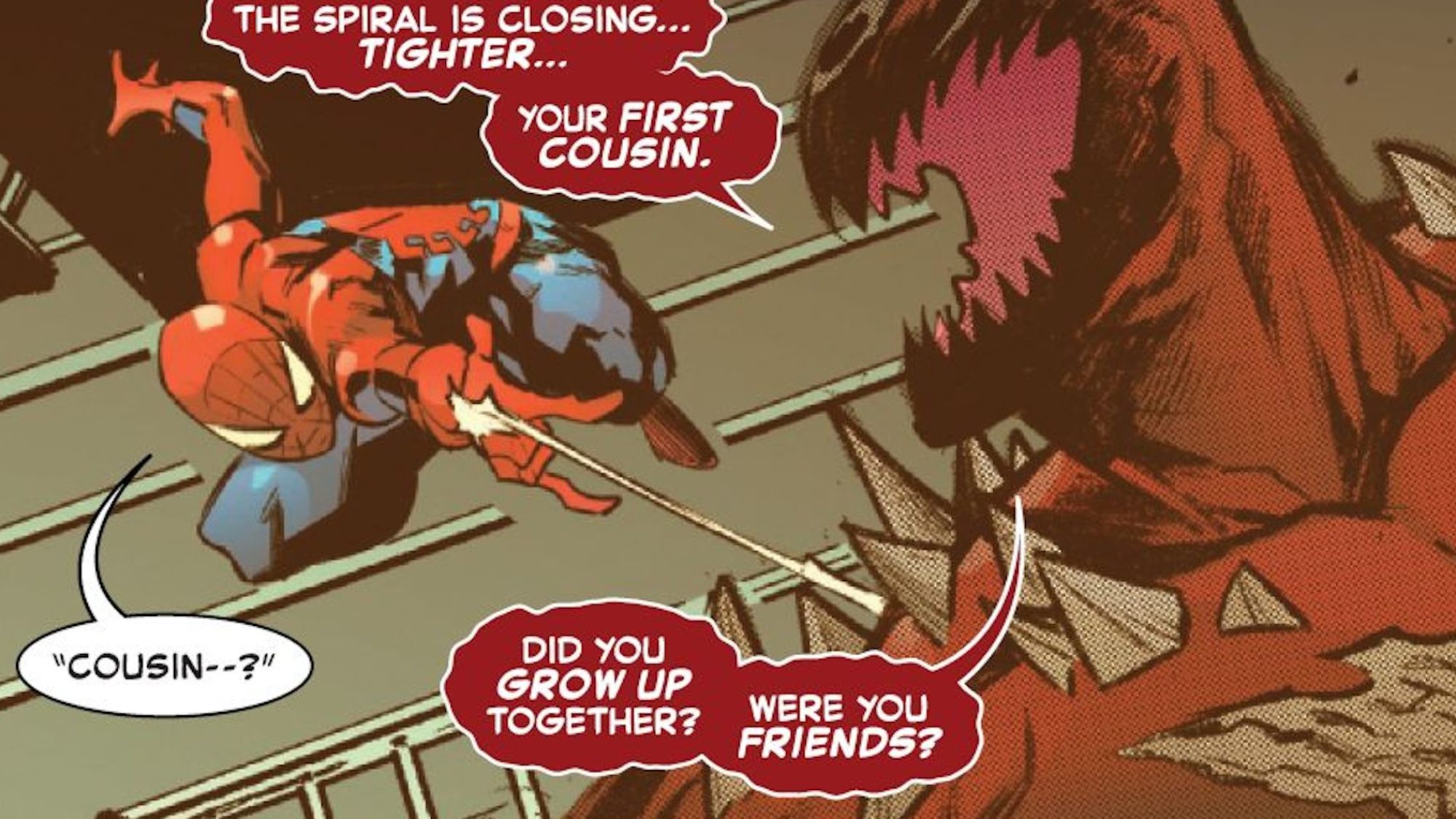
Crane is depicted as a well-to-do New Yorker, visibly older than Peter Parker. Crucially, genetic testing confirms that one of his biological parents bears the surname "Parker." However, the specific parent — whether May, Ben, Richard, Mary, or even Peter’s previously established "sister" Teresa Parker — remains shrouded in mystery, fueling rampant fan theories. The implications are profound: not only could Crane expose a new genetic lineage for Spider-Man, but his mere existence, if he were so inclined, could also potentially expose Peter Parker’s secret identity, adding another layer of vulnerability to the hero’s already complex life.
"The Talk" and Looming Revelations in Amazing Spider-Man #31
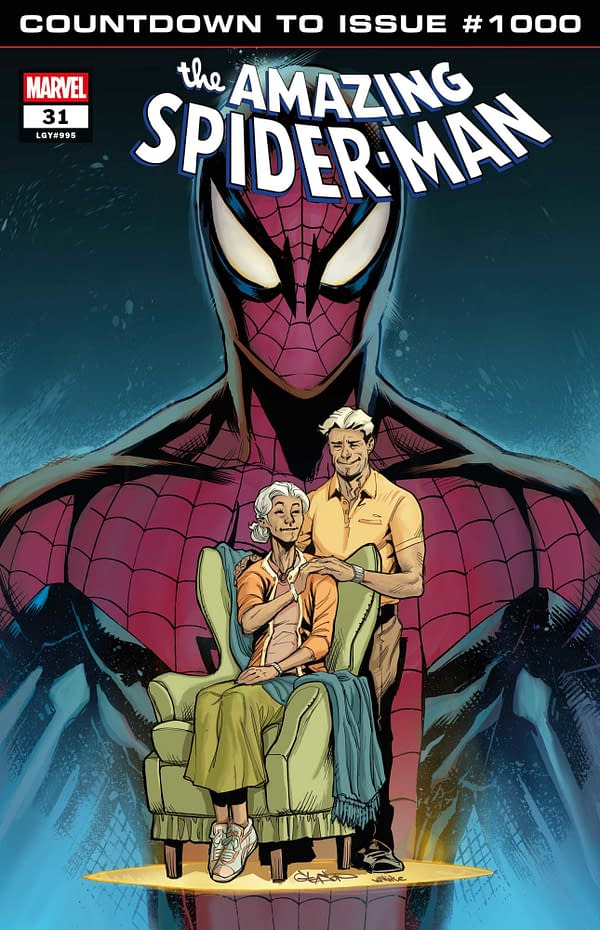
The full scope of these family revelations is expected to unfurl dramatically in the lead-up to the monumental Amazing Spider-Man #1000. Marvel Comics editor Nick Lowe has publicly teased the significance of these upcoming issues, posting on social media, "Not only is it climactic ‘Death Spiral’ but there is a big moment you will not want to miss that will reverberate." He further highlighted Amazing Spider-Man #31, which is provocatively labeled "The Talk." The cover art for this pivotal issue, featuring Aunt May seated, with Uncle Ben standing protectively behind her, strongly suggests that a long-held secret is about to be unveiled.
The solicitations for Amazing Spider-Man #31 promise that writer Joe Kelly will be joined by artist Patrick Gleason for this crucial installment. The official description reads: "Patrick Gleason joins Kelly for ‘THE TALK.’ Just in time for AMAZING SPIDER-MAN #1000, Peter Parker’s world is turned upside down with one of the biggest reveals in Spider-Man history. Don’t miss this pivotal story that leads directly into AMAZING SPIDER-MAN #1000 and beyond." This emphasizes that the events of #31 are not merely a standalone narrative but a foundational shift designed to resonate throughout the Spider-Man universe for years to come, setting the stage for the milestone #1000 issue and subsequent storylines. The imagery of May and Ben, central figures in Peter’s upbringing and moral compass, underscores the deeply personal and potentially heartbreaking nature of "The Talk."
Historical Precedent: Challenging Spider-Man’s Origin
The introduction of a previously unknown blood relative for Peter Parker, particularly one that challenges the established narrative of his parentage, is not without precedent in Marvel Comics history. The character of Peter Parker has one of the most iconic and enduring origin stories in comics: orphaned by his biological parents, Richard and Mary Parker, he was raised by his loving Aunt May and Uncle Ben, whose tragic death instilled in him the mantra of "with great power comes great responsibility." This foundation has largely remained sacrosanct for decades, forming the emotional core of Spider-Man.
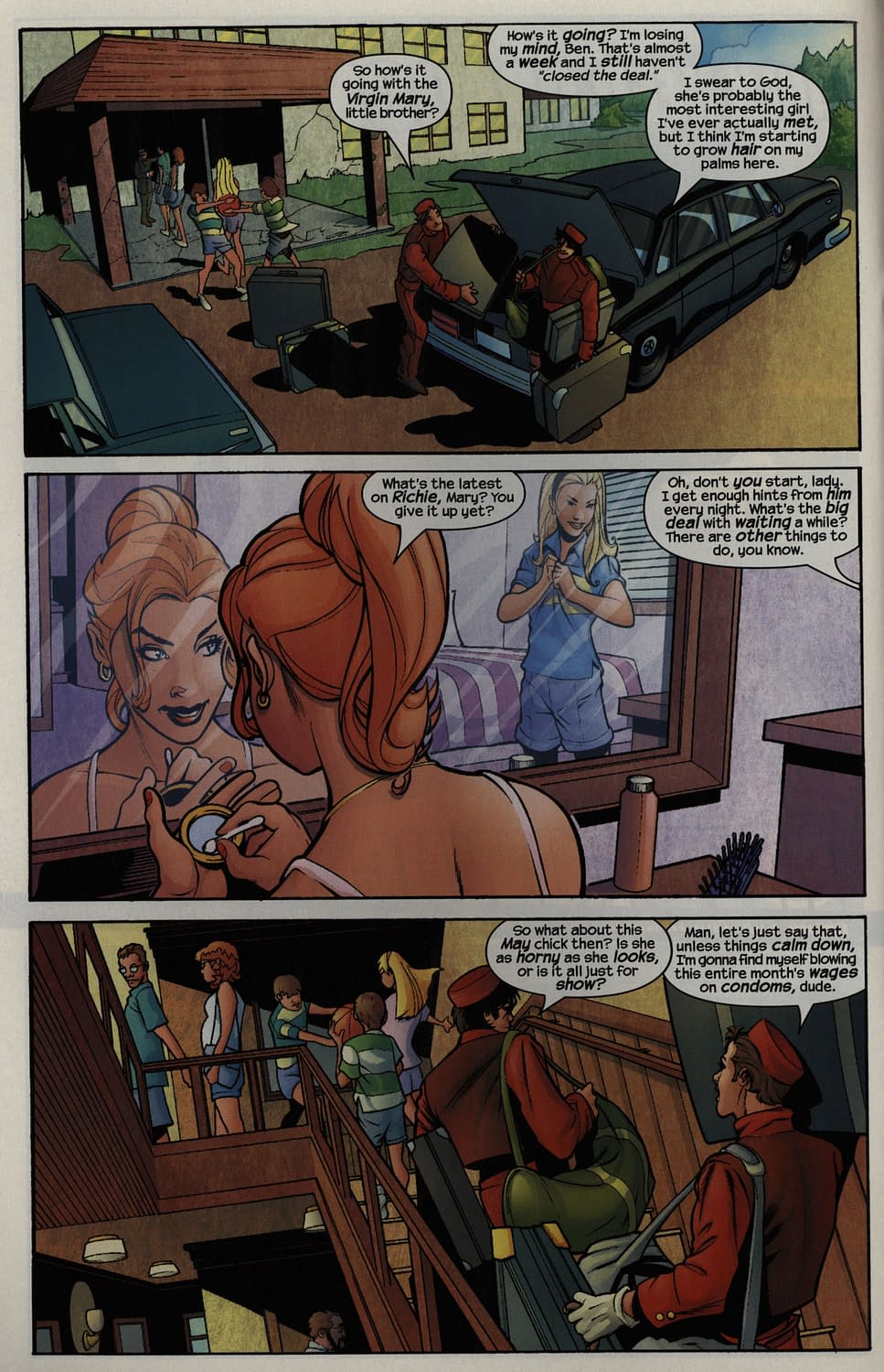
However, in 2003, Marvel Comics launched a five-issue limited series titled Trouble, by writer Mark Millar and artists Terry and Rachel Dodson. Marketed as a potential new origin story for Peter Parker, Trouble depicted teenage versions of May Reilly (later Aunt May), Ben Parker (later Uncle Ben), and Peter’s biological parents, Richard and Mary Parker. The controversial plot suggested that May and Richard had an affair, resulting in May becoming pregnant. She then gave birth to a child, Peter, who was subsequently raised by Richard and Mary as their own biological son.
At the time of its publication, Trouble was met with mixed reactions, largely due to its perceived disregard for established continuity and the significant retcon it implied. The primary critique was that the characters’ ages and the timeline of events in Trouble did not align with Marvel’s mainstream continuity, making it difficult to integrate into Peter Parker’s official history. It was ultimately relegated to an "alternate universe" or non-canonical status by many fans and creators.
The current "Cousin Crane" storyline, however, reopens the door to similar controversial lineage discussions, potentially offering a more plausible way to integrate such a narrative twist. If Crane is indeed the product of a secret affair involving one of Peter’s presumed parents, or a child May or Ben had before Peter, the Trouble concept of a hidden child could be revisited, albeit with a different character at its center. This historical context demonstrates Marvel’s willingness to experiment with the core tenets of its most beloved characters, even if such attempts often prove contentious.
The Speculation Whirlwind: Unpacking the Possibilities
The introduction of Crane and the impending "Talk" have unleashed a torrent of speculation among the Spider-Man faithful regarding the true nature of this new familial bond. Several theories, each with profound implications, are currently being debated:
-
A Child of May or Ben Before Peter: This is perhaps the most straightforward theory. Aunt May or Uncle Ben might have had a child together or separately with another party before Peter Parker came into their lives. This child could have been adopted, believed to be dead, or simply never mentioned to Peter, existing as a closely guarded secret. If Crane is this child, it would fundamentally alter our understanding of May and Ben’s pasts, adding layers of untold history to their characters. It would also make Crane Peter’s half-sibling (if by a single parent) or full cousin (if from a sibling of May or Ben). The "Parker" DNA suggests a direct link to the Parker lineage, which could be May’s maiden name or Ben’s surname.
-
Peter Parker is May and Ben’s Biological Child: This theory posits an even more radical retcon. What if Richard and Mary Parker were not Peter’s biological parents at all, and he was, in fact, the biological son of May and Ben, with Richard and Mary acting as adoptive parents or a cover story? In this scenario, Crane could still be a child May or Ben had earlier, or even a child of Richard and Mary, making Peter and Crane true cousins. This would be an immense rewrite of Spider-Man’s origin, potentially undermining the "orphan" aspect of his character that has always been central to his journey.
-
Crane is an Unrevealed Child of Richard and Mary Parker: Peter’s presumed biological parents, Richard and Mary Parker, were intelligence agents who seemingly died in a plane crash. While their lives have been explored in various limited series, the possibility of them having another child, perhaps an older one who was separated from them or believed to be lost, cannot be entirely discounted. If Crane is their child, it would make him Peter’s full brother, a revelation that would be emotionally devastating and transformative for Peter, who has always believed himself an only child. The "cousin" designation might then be a misdirection or a broader familial term.
-
Aunt May and Richard Parker’s Affair: This theory echoes the controversial premise of Trouble. Could Aunt May and Peter’s biological father, Richard Parker, have had an affair, resulting in a child? If this child is Crane, it would mean Peter’s "cousin" is actually his half-brother, and that his beloved Aunt May harbored a deep secret involving his biological father. This would introduce a profound moral complexity to May’s character and a shocking betrayal within the Parker family history, significantly impacting Peter’s perception of his family and himself. The "older cousin" aspect could then fit, as the child from such an affair would likely predate Peter.
Each of these possibilities carries enormous narrative weight, threatening to destabilize the bedrock of Spider-Man’s personal history. The emotional fallout for Peter, who has already endured so much loss and self-doubt, could be immense. His relationships with Aunt May, the memory of Uncle Ben, and his own identity as a Parker could all be thrown into disarray.
Broader Implications for the Spider-Man Mythology
Such a significant alteration to Peter Parker’s family tree would reverberate throughout the entire Spider-Man mythology. For a character whose core identity is so deeply intertwined with his personal relationships and his origin story, a revelation of this magnitude is not merely a plot twist but a potential paradigm shift.
Firstly, it introduces a new, previously unacknowledged character into Peter’s inner circle. Crane’s personality, motivations, and allegiances will undoubtedly become crucial. Will he be an ally, a new supporting character, or perhaps even an antagonist, given the "Death Spiral" context? His potential to expose Peter’s secret identity adds a layer of constant threat and ethical dilemma.
Secondly, it forces a re-evaluation of established characters. Aunt May, in particular, has long been the moral anchor of Peter’s life, a figure of unwavering support and wisdom. If she has harbored a secret child or been involved in a clandestine affair, her character will gain an unprecedented level of complexity and perhaps moral ambiguity. This could lead to a deeper, more nuanced portrayal of May, or it could risk alienating readers who cherish her traditional role.
Thirdly, it opens up new storytelling avenues. Future narratives could delve into Crane’s past, his relationship with the Parker family, and how he came to be unknown to Peter. This could involve exploring previously unseen chapters of May and Ben’s lives, or even new aspects of Richard and Mary Parker’s espionage careers. The "Death Spiral" storyline itself, by explicitly targeting the Parker family tree, suggests that the revelation of Crane is not an isolated incident but part of a larger, more sinister plot designed to dismantle Peter’s world.
However, such retcons also carry inherent risks. Overly complex or contradictory changes to a beloved character’s origin can alienate long-time fans who feel their emotional investment in the established narrative is being undermined. Marvel has navigated similar waters before, with varying degrees of success. The challenge for Joe Kelly and the creative team will be to execute this revelation in a way that feels earned, emotionally resonant, and ultimately enriches Peter Parker’s character rather than simply complicating it.
Connecting to Other Media: The MCU and Your Friendly Neighbourhood Spider-Man
The article also draws intriguing parallels between the current comic book developments and interpretations of Spider-Man in other media, particularly the Marvel Cinematic Universe (MCU) and the animated series Your Friendly Neighbourhood Spider-Man.
The MCU’s portrayal of Aunt May, notably younger and more active than her traditional comic book counterpart, is highlighted. While the comics typically maintain a more mature May, the success of the MCU’s youthful take has often led Marvel Comics to "swerve into reflecting that reality" in their print narratives. This raises the question of whether the new family revelations could be designed to align the comic continuity more closely with broader media trends, perhaps by making May’s potential past actions (like having an earlier child) more plausible within a younger timeline.
More directly relevant is the animated series Your Friendly Neighbourhood Spider-Man, which closely reflects much of the MCU’s continuity, including a younger Aunt May. A significant plot point in this series is the appearance of Richard Parker, Peter’s presumed deceased father, alive and incarcerated for an unknown crime at the end of the final episode. He is shown being visited in jail by Aunt May, with whom he appears to have a familiar and perhaps intimate relationship, and crucially, he asks about "his son." The impending second season of the animated show is expected to explore this storyline further.
The striking similarities between the comic book’s impending "Talk" and the animated series’ plot points are hard to ignore. Could the comic book continuity be subtly influenced by, or even laying groundwork for, a broader narrative synergy with its animated counterpart? The idea of Richard Parker being alive, having a complex relationship with Aunt May, and having an unrevealed "son" (whether Peter or Crane) provides a compelling narrative bridge. While mainstream comic continuity (Earth-616) rarely directly adopts animated series plots wholesale, there’s a strong history of thematic alignment or cross-pollination of ideas, especially when major character origins are being re-examined. The convergence of a younger Aunt May, the potential for a living Richard Parker, and the introduction of a secret child across different media platforms suggests a coordinated effort to refresh or re-contextualize the Parker family saga for a new generation of fans.
The Road Ahead: Amazing Spider-Man #1000 and Beyond
As the "Death Spiral" storyline approaches its climax and "The Talk" in Amazing Spider-Man #31 looms, the Spider-Man universe is on the cusp of one of its most significant shake-ups in recent memory. The revelation of Crane as Peter Parker’s cousin, coupled with the promise of a "biggest reveal in Spider-Man history" leading into Amazing Spider-Man #1000, guarantees that the coming months will be essential reading for any fan of the web-slinger.
The creative team of Joe Kelly, Carlos Gomez, Francesco Manna, and Patrick Gleason faces the monumental task of delivering on these immense narrative promises, while navigating the high expectations and passionate scrutiny of a global fanbase. Whether Crane emerges as a new ally, a formidable foe, or a tragic figure, his existence is set to permanently alter Peter Parker’s understanding of his own lineage and identity. The answers provided in Amazing Spider-Man #31 and beyond will not only shape the future of Peter Parker but also redefine the enduring legacy of Aunt May and Uncle Ben, ensuring that the Spider-Man mythos remains as dynamic and compelling as ever. The stage is set for a truly unforgettable chapter in the life of the Friendly Neighborhood Spider-Man, as his family tree gains a shocking, enigmatic new branch.