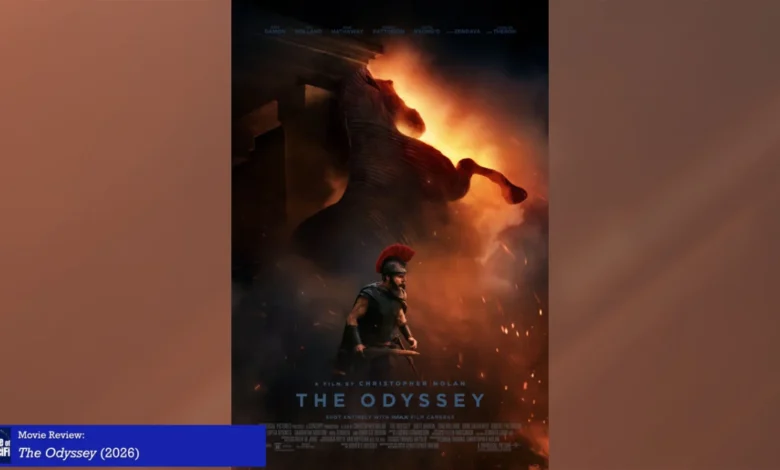
Christopher Nolan’s ambitious cinematic adaptation of Homer’s ancient Greek epic poem, "The Odyssey," has arrived, fulfilling its considerable hype and solidifying its place as a masterclass in both filmmaking and storytelling. The film, a monumental undertaking that transcends mere adaptation, positions Nolan as a preeminent modern auteur, grappling with timeless themes that resonate profoundly with contemporary audiences. At its core, "The Odyssey" is a searing examination of the profound price of war and the often-devastating cost of abandoning one’s principles, themes that are not only paramount to the narrative but are explored with a visceral intensity rarely seen in blockbuster cinema.
While Homer’s "Odyssey" has endured for approximately 2,700 years, the question of spoilers in a film adaptation of such a foundational text is rendered moot. Any perceived revelations, if they exist, lie not in the plot’s ancient trajectory but in Nolan’s distinctive directorial choices and his unique handling of iconic scenes. The film eschews the need for a literal plot summary, implicitly trusting its audience to engage with the narrative’s inherent power, or to seek external resources such as literary analyses or AI-generated synopses for plot exposition. This approach underscores Nolan’s confidence in the cinematic experience itself to convey the epic’s emotional and thematic weight.
A fascinating parallel emerges between the ancient oral and written traditions of Homeric storytelling and the contemporary medium of cinema. The enduring power of Homer’s work, its survival across millennia, is a testament to its compelling narrative and thematic depth. Nolan’s adaptation, by venturing to such a primeval source, highlights cinema’s capacity to reanimate these foundational stories for a new generation, offering a unique lens through which to experience the genesis of Western literature. This endeavor is amplified by the script’s remarkable faithfulness to the Homeric original, a commitment evident in the meticulously recreated sets, costumes, and weaponry. The production design eschews the superficial gloss of earlier historical epics, such as the 1963 "Cleopatra," opting instead for an earthy, gritty realism that immerses the viewer in the harsh realities of the ancient world.
Nolan’s directorial vision is particularly striking in his portrayal of pivotal moments, such as the construction and deployment of the Trojan Horse. The film’s emphasis on the claustrophobic, disorienting experience of being enclosed within the belly of this colossal wooden beast offers a dramatically different, and arguably more harrowing, perspective than traditional interpretations. This scene, more than any other, encapsulates the film’s commitment to visceral authenticity and psychological depth.
The meticulous attention to detail extends to the depiction of sea vessels, which are rendered with an impressive historical accuracy. From the formidable warships to the humble raft upon which Odysseus navigates treacherous waters, these elements contribute to the film’s immersive quality, grounding the fantastical elements in a tangible, believable reality.
In a departure from a strictly chronological narrative, Nolan cleverly frames Odysseus’s (Matt Damon) recounted experiences as memories shared with the nymph Calypso (Charlize Theron) during his prolonged stay on her island, a narrative device that imbues the unfolding story with a sense of retrospective contemplation and personal reflection. This structural choice, while differing from the original text’s direct narration, allows for a more intimate exploration of Odysseus’s psychological state and his enduring longing for home.
The film opens with the evocative tagline, "A time of apparent magic." As Odysseus recounts the terrifying ordeals faced by his now-deceased crewmates, the audience is confronted with creatures and phenomena that, by modern standards, would be considered monstrous. The presence of the Cyclops, the enchantress Circe, the alluring Sirens, and the perilous whirlpool of Charybdis are presented not as fantastical embellishments but as integral, unquestioned elements of Odysseus’s world. Nolan wisely refrains from offering scientific or rational explanations for their existence, allowing their mythical power to remain undiluted. The visual effects employed to render these beings and their environments are, by all accounts, top-notch, seamlessly integrating the fantastical into the film’s otherwise grounded aesthetic.
More unsettling, perhaps, are the Laestrygonians, a race of giants with a penchant for devouring humans. While their imposing uniforms were prominently featured in pre-release publicity, leading some to speculate they represented Greek or Trojan soldiers, their true, terrifying nature is revealed within the film itself, adding another layer of dread to Odysseus’s perilous journey.
The scenes depicting Odysseus and his crew summoning the dead from the underworld are profoundly eerie and masterfully executed. The ritualistic sacrifice of two goats, their blood serving as a beacon for departed souls, creates an atmosphere thick with dread. The appearance of Tiresias (James Remar), the blind prophet, is particularly chilling, his pronouncements laced with both prophecy and an unsettling ambiguity. The frantic escape of the shipmates from the encroaching spirits back to their vessel is a moment of palpable terror, a testament to the film’s ability to evoke primal fear.
The sack of Troy, depicted in the latter half of the film, serves as a stark reminder of the brutal consequences of war. Odysseus himself observes that ten years of accumulated rage were unleashed upon the Trojans by the Greeks, resulting in wanton bloodshed and a violation of the established rules of warfare, an act that profoundly offends the very gods. This sequence is not merely a historical reenactment but a powerful indictment of the destructive potential of unchecked aggression.
One of the film’s most compelling thematic explorations is the suggestion that Odysseus’s extended sojourn on Calypso’s island is, in part, a manifestation of post-traumatic stress disorder (PTSD). He grapples with the knowledge that the ethical fabric of his civilization has been irrevocably tarnished, and that the concept of "home" he yearns for may no longer exist as he remembers it. The psychological toll of the bloodshed at Troy, coupled with the devastating loss of his entire crew, weighs heavily upon him, shaping his protracted journey of self-discovery and healing.
The scenes featuring the suitors in Ithaca mirror the original text with remarkable fidelity, and Anne Hathaway’s portrayal of Penelope is nothing short of captivating. She perfectly embodies the complex emotional state of a woman who is a widow, yet uncertain of her husband’s fate. After twenty years of absence – ten at Troy and ten on his arduous voyage – Penelope’s enduring loyalty is tested. Her infamous act of weaving by day and unraveling by night, a symbol of her protracted grief and resistance, is rendered with poignant sensitivity. The film includes a tender scene depicting the love shared between Penelope and Odysseus before his departure for the war, a brief moment of profound connection that underscores the immense personal sacrifice involved. Most impressively, Hathaway conveys Penelope’s unwavering strength of will and resilience in the face of immense pressure to remarry, a testament to her character’s enduring spirit.
The acting performances across the board are superb, elevating the material and imbuing each character with depth and authenticity. Matt Damon delivers a powerful performance as Odysseus, masterfully conveying his character’s pragmatism, ingenuity, and formidable physical strength. His climactic slaying of the suitors is depicted with the ferocity of a Viking berserker, a cathartic release of pent-up aggression and a display of his primal warrior instincts. Damon’s nuanced performance is particularly evident in his interactions with Charlize Theron, where the complexities of their relationship are explored with subtle emotional precision.
Charlize Theron, though her role as Calypso is relatively contained, appearing primarily in dialogue with Odysseus, commands each scene with effortless grace. She portrays a conflicted immortal, torn between her desire for Odysseus to remain with her and her understanding of his profound need to confront his past and reclaim his identity. Theron’s performance is a masterclass in understated emotional power.
Tom Holland’s portrayal of Telemachus is surprisingly effective. Despite appearing physically slight in comparison to the imposing suitors and his own father, Holland imbues Telemachus with a resolute determination, portraying him as a developing warrior whose loyalty to his mother is unwavering. The film effectively depicts Telemachus’s journey to seek news of his father from Menelaus (Jon Bernthal), a quest that solidifies his burgeoning maturity. Lupita Nyong’o’s brief but impactful appearances as Helen of Troy are also noteworthy, capturing the iconic figure’s enigmatic allure.
Perhaps the most astonishing performance comes from John Leguizamo as Eumaeus, the loyal, blind swineherd. Leguizamo delivers an effortlessly brilliant and transformative portrayal, so utterly absorbed in his character that he is initially unrecognizable. His performance is imbued with a profound sense of familiarity and empathy, drawing the audience into the humble world of the swineherd with remarkable skill.
Samantha Morton shines as the witch Circe, delivering a performance that is both captivating and unsettling. Her character is portrayed with a seductive coyness intertwined with a palpable ruthlessness. Her pronouncements, such as the observation that "all men are pigs," feel earned and insightful, reflecting a hard-won understanding of the human condition.
Clocking in at three hours, "The Odyssey" is a testament to Nolan’s ability to maintain audience engagement. The film moves at a riveting pace, drawing viewers into its epic narrative and refusing to let go. It is a superbly adapted, captivating cinematic achievement, bolstered by exceptional acting performances that linger long after the credits roll.
Five out of five stars
Film Overview:
"The Odyssey" is a cinematic adaptation of Homer’s seminal ancient Greek epic poem. The narrative chronicles the arduous journey of Odysseus as he navigates a perilous voyage back to his homeland of Ithaca following the devastating Trojan War. Along his protracted path, he encounters a pantheon of mythical creatures and formidable challenges, including the one-eyed Cyclops Polyphemus, the enchanting Sirens, and the formidable nymph Calypso.
Key Cast and Crew:
- Starring: Matt Damon, Tom Holland, Anne Hathaway, Robert Pattinson, Lupita Nyong’o, Zendaya, and Charlize Theron.
- Written and Directed by: Christopher Nolan.
Critical Analysis: A Triumph of Vision and Craft
"The Odyssey" stands as a monumental achievement in contemporary filmmaking, a testament to Christopher Nolan’s unparalleled vision and his mastery of cinematic storytelling. The film not only fulfills the immense expectations surrounding its release but surpasses them, offering a profound and immersive experience that redefines epic cinema. Nolan’s bold decision to adapt Homer’s foundational text for the modern screen is a calculated risk that pays dividends, establishing him as a director capable of translating ancient narratives into resonant, visceral experiences. The film’s exploration of themes such as the psychological toll of war and the moral compromises inherent in survival is handled with a maturity and depth that distinguishes it from typical Hollywood blockbusters.
Nolan’s Auteurial Stamp: Beyond Adaptation
Christopher Nolan’s directorial signature is evident throughout "The Odyssey." His penchant for complex narratives, his meticulous attention to detail in production design, and his ability to blend grand spectacle with intimate character study are all on full display. The film is not merely a retelling of Homer’s epic; it is a reinterpretation, filtered through Nolan’s distinct lens. This is particularly apparent in his handling of the psychological dimensions of Odysseus’s journey, suggesting that his prolonged exile is a consequence of trauma as much as divine intervention. This modern psychological layering adds a compelling new dimension to the ancient hero, making him relatable to contemporary audiences grappling with issues of mental health and the enduring impact of conflict.
Thematic Resonance: War, Principles, and Identity
The thematic core of "The Odyssey" revolves around the devastating consequences of war and the erosion of principles in the face of adversity. The film unflinchingly portrays the brutality of the Trojan War and its lingering effects on the soldiers who fought it. Odysseus’s struggle to reconcile his heroic deeds with the moral compromises he was forced to make, and the immense loss he endures, forms the emotional backbone of the narrative. The film suggests that the true cost of war extends far beyond the battlefield, impacting the psyche and the very identity of those who experience it. The prolonged period Odysseus spends stranded on Calypso’s island can be interpreted as a manifestation of his inability to return to a world he no longer fully recognizes, or perhaps, a world that no longer fully recognizes him, haunted by the ghosts of his past.
Bridging Ancient and Modern Storytelling
The adaptation of "The Odyssey" highlights the enduring power of narrative across millennia and across mediums. Homer’s epic, born from oral tradition, has survived through its compelling characters, dramatic conflicts, and profound human insights. Nolan’s cinematic approach bridges this gap, translating the power of Homer’s verse into a visually stunning and emotionally charged experience. The film’s faithfulness to the source material, particularly in its detailed recreation of ancient settings and artifacts, serves to anchor the fantastical elements in a tangible reality, making the mythical world feel both alien and familiar. This approach underscores the timelessness of the human experiences depicted in the epic, from love and loss to courage and despair.
A Chronology of Odysseus’s Perilous Journey (as depicted in the film)
While the film employs a non-chronological structure, the narrative unfolds through Odysseus’s recollections, providing a framework for his epic voyage:
- The Trojan War (Ten Years): The film alludes to the brutal decade-long conflict that preceded Odysseus’s return journey. The devastating sack of Troy is depicted as a pivotal, morally compromising event.
- The Cicones: Early in his journey home, Odysseus and his men encounter and plunder the land of the Cicones, a raid that results in significant Greek casualties due to their overindulgence and the Cicones’ organized defense.
- The Land of the Lotus-Eaters: Odysseus’s crew is tempted by the alluring lotus fruit, which induces forgetfulness and a desire to abandon their journey home. Odysseus must forcibly retrieve his men.
- The Land of the Cyclopes: A harrowing encounter with the one-eyed giant Polyphemus, son of Poseidon. Odysseus blinds the Cyclops, earning the wrath of the sea god and setting in motion many of his subsequent trials.
- Aeolus and the Bag of Winds: The king of the winds, Aeolus, gifts Odysseus a bag containing all the unfavorable winds, intending to allow a swift journey home. However, his crew’s curiosity leads them to open the bag, scattering the winds and forcing them back.
- The Laestrygonians: A race of cannibalistic giants who destroy most of Odysseus’s fleet, leaving him with only one ship.
- Circe’s Island: The sorceress Circe transforms Odysseus’s men into pigs. Odysseus, aided by Hermes, resists her magic and eventually persuades her to restore his men, staying with her for a year.
- Journey to the Underworld: Circe instructs Odysseus to consult the prophet Tiresias in the land of the dead. Here, he receives prophecies about his future and speaks with the shades of fallen heroes and his mother.
- The Sirens: Odysseus navigates past the deadly Sirens, whose enchanting songs lure sailors to their doom. He orders his men to plug their ears with wax and has himself bound to the mast to hear their song without succumbing.
- Scylla and Charybdis: Odysseus must choose between passing through the narrow strait guarded by the six-headed monster Scylla and the deadly whirlpool of Charybdis. He sacrifices six of his men to Scylla to save the rest from Charybdis.
- The Cattle of Helios: Despite warnings, Odysseus’s starving crew slaughters and eats the sacred cattle of the sun god Helios. As punishment, Zeus destroys their ship, leaving Odysseus as the sole survivor.
- Calypso’s Island: Stranded for seven years on the island of the nymph Calypso, who falls in love with him and offers him immortality. Odysseus pines for home, and it is here, in his memories recounted to Calypso, that much of the film’s narrative unfolds.
- The Phaeacians: After leaving Calypso’s island, Odysseus washes ashore on Scheria, the land of the Phaeacians, where he is aided by Princess Nausicaa and eventually recounts his full story to King Alcinous.
- Return to Ithaca and the Suitors: Odysseus finally reaches Ithaca, disguised as a beggar, and with the help of his son Telemachus and loyal servants, slays the suitors who have been vying for Penelope’s hand and squandering his estate.
Supporting Data and Production Insights
The film’s production involved extensive research into ancient Greek warfare, shipbuilding, and daily life. The commitment to authenticity in sets, costumes, and weaponry involved collaborations with historical consultants and artisans. For instance, the design of the Trojan Horse would have likely considered the practical engineering capabilities of the Bronze Age, while the depiction of seafaring vessels reflects archaeological findings and textual descriptions. The budget for a film of this scale, undertaking such detailed historical reconstruction, would naturally be substantial, likely in the hundreds of millions of dollars, enabling the creation of the epic scope and immersive environments. The film’s runtime of three hours is indicative of the expansive nature of the source material and Nolan’s desire to delve deeply into its narrative and thematic complexities.
Broader Impact and Implications
"The Odyssey" is more than just a film; it is a cultural event that reignites interest in one of literature’s most enduring epics. Its success could pave the way for further ambitious adaptations of classical works, demonstrating that audiences are receptive to complex, thematically rich storytelling. The film’s exploration of PTSD and the psychological toll of war also offers a timely commentary on the enduring impact of conflict, resonating with contemporary societal discussions. By reintroducing Homer’s foundational narrative to a global audience, Nolan’s "The Odyssey" solidifies its place as a significant cinematic achievement, offering both entertainment and profound reflection on the human condition. The film’s critical acclaim and commercial success will undoubtedly be analyzed for years to come, influencing future cinematic endeavors and solidifying its legacy as a masterclass in filmmaking.