Star Trek: Strange New Worlds Cast Tease Season 4 Mysteries and Future Possibilities

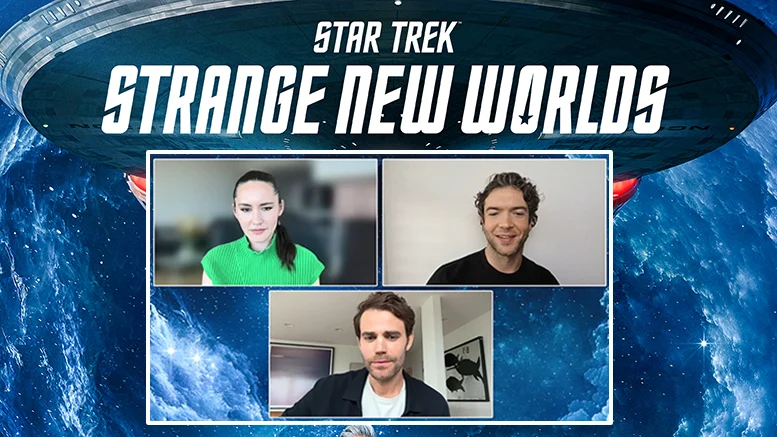
The highly anticipated fourth season of Star Trek: Strange New Worlds is poised to deliver more of the genre-bending narratives and character-driven explorations that have captivated fans since its 2022 debut. Ahead of the season’s premiere, members of the core cast engaged in a roundtable discussion with journalists, offering tantalizing glimpses into the upcoming storylines and reflecting on the show’s evolving narrative trajectory. Ethan Peck (Spock), Paul Wesley (James T. Kirk), and Christina Chong (La’an Noonien-Singh) shared insights into their characters’ journeys, the creative challenges of the series, and the enduring appeal of the Star Trek universe.
Uncharted Territories: Aspirations for New Worlds and Experiences
The inherent spirit of exploration is central to Star Trek: Strange New Worlds, a theme that resonated deeply with the cast when asked about hypothetical worlds or experiences they wished to explore. Christina Chong, who portrays the formidable La’an Noonien-Singh, revealed a long-held desire to venture into an aquatic environment. "I wanted to visit some kind of underwater world," Chong stated. "I thought that would be cool. I kind of pitched that, but it didn’t happen. So, but the idea was that we would get to scuba dive and learn how to scuba dive and film underwater." This aspiration highlights the cast’s proactive engagement with the creative process and their eagerness to push the boundaries of visual storytelling within the established Star Trek canon.
Ethan Peck, who embodies the iconic Vulcan Spock, offered a more whimsical, albeit unlikely, aspiration. "I keep joking," Peck admitted, "I was joking for a while, just this very stupid joke that we’re gonna go to a RoboCop world just because RoboCop’s one of my all-time favorite movies, and like let’s do RoboCop crossover, which is like not a possibility and doesn’t happen. There’s no spoiler there, but that’s my dream, RoboCop world." While a direct crossover with the dystopian future of RoboCop remains firmly in the realm of fan fantasy, Peck’s playful suggestion underscores the diverse influences and imaginative landscape that Strange New Worlds embraces.

Paul Wesley, bringing his unique interpretation to the young James T. Kirk, found a sense of fulfillment in the show’s ability to revisit and reimagine classic Star Trek narratives. He pointed to the episode "Tomorrow and Tomorrow and Tomorrow" (Season 2, Episode 3) as a personal highlight, drawing a direct parallel to one of his favorite episodes from Star Trek: The Original Series. "My favorite episode of TOS is I always butcher the title – ‘City on the Edge of Forever,’ that was always my favorite episode, and we got to do our version of that with Chrissy and I with ‘Tomorrow and Tomorrow and Tomorrow.’ That was always what I was hoping we would do, and we did. So it’s kind of a bad answer, but yeah, that’s my answer." This statement reflects the show’s success in honoring its legacy while forging its own distinct identity, resonating with long-time fans and introducing new generations to the foundational stories of Starfleet.
Navigating the Shadows: The Psychological Thriller of "The Griffin Incident"
The discussion then turned to specific episodes from the upcoming season, with a particular focus on "The Griffin Incident" (Season 4, Episode 2), an installment that delves into the realm of psychological horror. Christina Chong described the filming experience as both challenging and rewarding. "I enjoyed stabbing Paul," she quipped, drawing laughter from the assembled journalists. More seriously, Chong elaborated on the unique demands of the episode. "It was a challenge because it was hard to find the right rhythm at first. Because although it’s Star Trek, we almost had to approach it in a completely different way because of the tension and the suspense of it all, and felt a bit unnatural. Took us a while to find our feet, so I enjoyed that challenge of that episode."
Paul Wesley echoed Chong’s sentiments, emphasizing the episode’s classification as psychological horror rather than overt terror. "Yeah, and you know, there’s horror, and then there’s psychological horror, and to me, this was very much psychological horror," Wesley explained. He highlighted the importance of imagination on set, even within the context of Star Trek’s reliance on visual effects. "We have to consistently use our imaginations on Star Trek. But the ship, the Griffin, was an actual character, and the character resembled something different for each one of us. And as actors, we got to really sort of use our imaginations, and what did it represent for me? The noises that Kirk hears throughout the the episode that haunt him, these are all… We’re consistently having to use our imagination, as I mentioned, because you’re always looking at a blue screen or a green screen, and you’re imagining something in outer space. But this was much more contained. It felt like we were doing a small indie horror film, and it was great. And the three of us have discussed this, the pacing was so unique. We had to really adapt to a slower, moodier pace." The deliberate shift in pacing and tone for "The Griffin Incident" suggests a deliberate effort by the creative team to explore the genre’s potential within the Star Trek framework, a move that could broaden the show’s appeal and artistic scope.
The actors also touched upon the post-production process, particularly Additional Dialogue Recording (ADR), and how it contributed to the episode’s atmosphere. Chong recalled reviewing her performance during ADR sessions, noting the subtle adjustments made to enhance suspense. "Yeah, and also just remembered in ADR, additional dialog recording when you can go back and fill lines/sound in that haven’t been picked up during production very well. And I remember watching some back and thinking, ‘Oh, I should should have been quieter when I said that line. Can I redo that line because it fits the mood better? It feels more suspenseful if it’s quiet.’" This detail underscores the meticulous craftsmanship involved in bringing such atmospheric episodes to life, where even the smallest vocal nuance can contribute significantly to the overall emotional impact.

Charting Kirk’s Evolution: Family, Vulnerability, and the Path to Command
For Paul Wesley, portraying James T. Kirk has offered a unique opportunity to explore the formative years of a character already etched into pop culture history. When asked about questions regarding Kirk that the show has answered for him, Wesley pointed to the profound influence of family dynamics. "Yes, his relationship with his father and his relationship with his son, and some of the stuff you guys haven’t seen yet," Wesley revealed. "But to me, the your relationship with your father is very important to who you become as a man, and Kirk had to go through some things in order to understand why he is who he is and why he becomes who he is."
Wesley elaborated on how Strange New Worlds provides crucial context that The Original Series did not, given its later placement in Kirk’s timeline. "So yes, what’s great about Strange New Worlds is that obviously we have this wealth of Trek, it’s now the 60th anniversary, we have so many spin-offs, etc. But TOS, we just meet Kirk and he is who he is, right, he’s this sure-footed kind of man who’s in command, and being able to explore some of those vulnerabilities with his family, I think for me and hopefully for the viewer, provided a lot of information and context as to why he becomes who he is." This exploration of Kirk’s vulnerabilities and familial relationships adds a layer of depth and complexity to the character, humanizing the legendary captain and offering a compelling narrative arc for viewers.
The Budding Friendship: Kirk and Spock’s Journey Towards Canon
The evolving relationship between James T. Kirk and Spock has been a significant focus in Strange New Worlds, and the cast confirmed that this deepening connection is a deliberate narrative choice, paving the way for their iconic dynamic in The Original Series. Ethan Peck discussed the subtle directives he received regarding Spock’s initial interactions with Kirk. "To address the second part, I think we’d we’d be really excited to to continue our relationship on the Enterprise and to portray these amazing characters," Peck stated, referring to the potential for future seasons and spin-offs. "I think the way they’ve developed the relationship between Kirk and Spock has been so interesting because there were several times that I got notes while we were filming on the day to not be so, you know… this might be too reductive of a term, but friendly with Kirk as Spock, because he respects and admires him, but doesn’t quite maybe like him yet. And so I’ve had to kind of hold back because I really think Paul’s wonderful, and and we get to bring a lot of that chemistry into our work on set, and and so having to hold some of that back has been interesting as as they grow closer. And I think there’s a lot more suspicion on Spock’s side."
Paul Wesley corroborated Peck’s account, highlighting the deliberate restraint required to portray a friendship in its nascent stages. "Yeah, I mean, I’m suspicious of you in real life, but on screen…" Wesley joked. He further elaborated, "No, I echo that. I really appreciate, like, for example, the shore leave episode where Spock conveys his vulnerabilities to Kirk. I really appreciate that. That has now become canon, and that sort of experience that they had is one of the reasons why perhaps they have some sort of connection to one another. But yeah, on set, as Ethan mentioned, I joke that like Ethan and I have a bit of a Kirk-Spock vibe going in real life, and so to be able to bring that onscreen is great. And I agree, like sometimes, perhaps we’re a little too friendly with with one another because we don’t know what the future holds."

Wesley also shared a poignant anecdote about the initial meeting between Kirk and Spock, emphasizing the director’s guidance in shaping the scene. "And I remember the first time Spock and Kirk met, I made this whole big thing out of it, and I was all panicked. And I was like, ‘How do I do this? What do I do? Where they’re just they’re meeting for the first time, and this is such a big deal.’ And the director said, ‘Hey, it’s not a big deal yet. Like it’s a big deal because of what will come.’ And so I have to remember that, and it’s something that I had to always remind myself is like, okay, they’re still getting to know each other." This deliberate pacing in their relationship development underscores the show’s commitment to canonical accuracy while enriching the established lore.
The Future of Star Trek: Year One and the Enduring Appeal of Physical Media
The conversation naturally drifted to the future of the Star Trek franchise, particularly the much-discussed potential spin-off Star Trek: Year One, which would explore the earliest days of Captain Kirk’s command. Both Peck and Wesley expressed enthusiasm for the possibility. "To answer the second part of your question… Year One, yeah, it was something that… Firstly, I mean, we all organically would talk about it, like, ‘Hey, we’re leading to TOS, how is this going to end, is this going to continue?’" Wesley explained. "And so the conversations were very organic, and we all want it to happen. And if it does happen, great. And you know, if it doesn’t, that’s fine. And we created something beautiful. Our goal is, when people watch the series finale in season five, that people are like, ‘Wow, I wish there was more of this.’ Even if there isn’t, but you still want to leave them wanting more." This sentiment reflects a shared passion among the cast and crew to create a compelling narrative that leaves a lasting impression, regardless of future franchise expansion.
In a broader discussion about the changing landscape of media consumption, the cast addressed the potential decline of physical media and its implications for bonus content. Ethan Peck, a proponent of physical media, expressed his concern. "Well, I probably am the only one of the three of us that that buys physical media," Peck admitted. "I feel like that world is kind of having a renaissance, but I might be wrong. I’m not sure. You know, I think for for the most part, everything is trending towards digital and a lack of special features and sort of bonus content, which I think is so unfortunate because I love to know how things are made. I love interviews with directors and cast and production designers and set designers, but I would be really heartbroken and disappointed if physical media ceased to exist and we stopped getting these these wonderful special features." The desire for behind-the-scenes access and supplementary material highlights the value fans place on understanding the creative process, a sentiment echoed by many dedicated viewers of long-running franchises.
Embracing Versatility: Unexpected Skills and the Core of Star Trek
Star Trek: Strange New Worlds has consistently demonstrated its ability to weave a multitude of genres into its narrative tapestry, from horror and courtroom dramas to comedies and character studies. The cast members reflected on the unexpected skills and experiences they’ve gained through their roles. Christina Chong cited ballroom and Latin dancing as a particularly surprising and enjoyable development. "For me, would be the ballroom and Latin dancing. I was a dancer, but I’d never done ballroom or Latin, and that’s the last thing I would have expected La’an to do."

Ethan Peck’s most unexpected experience was "acting with puppets," a nod to the show’s willingness to embrace unconventional storytelling devices. Paul Wesley, however, found profound satisfaction in the sheer breadth of his portrayal of Captain Kirk. "I got to play alternate versions of of Kirk and alternate versions of these fun characters that in in the sort of big swing fantasy episodes, and when I embarked on this role. I never thought I would be able to flex my range so much. I never thought I would have so much color to play with. It’s just been such a joy as an actor to be able to play one singular role in so many variations. I’ve never experienced that before. It’s usually quite contained, and this show is the exact opposite of that." Wesley’s remarks underscore the unique creative freedom afforded by Strange New Worlds, allowing actors to explore multifaceted interpretations of beloved characters.
When asked to identify the single, unchanging ingredient that ensures Strange New Worlds always feels intrinsically like Star Trek, regardless of genre, the cast offered insightful perspectives. Paul Wesley emphasized a consistent "sense of mission and a sense of purpose." He elaborated, "I’m not in every episode like these guys, but from what I can tell, even when we explore a world that is like, ‘Well, how’s this going to fit into Trek?’ At the end of the day, these guys, they’re always committed to a sense of exploration with imagination and the the purpose of, I guess, curiosity. And to me, that’s the thing that connects our show and all of our episodes that may seem like they’re off track, but at the end of the day, there is a sense of curiosity and mission to every episode, no matter what the genre is."
Christina Chong added a crucial element to this definition: "Yeah, I think that may be the hope as well, a sprinkle of hope on top of everything Paul just said." This addition of hope aligns with Star Trek’s optimistic vision of the future and its enduring belief in humanity’s potential for progress and understanding.
Ethan Peck attributed the show’s consistent tone to the people involved, highlighting the embodiment of Gene Roddenberry’s original vision. "I gotta say, I think it’s kind of in the casting and in the the people involved," Peck concluded. "I think that all of us embody some of the aspects of Star Trek and of Gene Roddenberry’s original vision, and I think we all in our performance, and the writers, the the set designers, they all keep us attached to that sort of core feeling of Star Trek. It’s just a kind of a recipe that they got right with with the cast and crew."

The insights shared by Peck, Wesley, and Chong offer a compelling preview of Star Trek: Strange New Worlds season 4, promising a season rich in character development, genre exploration, and a deep reverence for the franchise’s foundational principles. As the USS Enterprise continues its mission, the cast’s dedication to exploring the "strange new worlds" of both the galaxy and the human (and Vulcan) spirit promises another thrilling chapter in the ongoing saga of Starfleet.