The world of high fantasy and strategic card gaming is buzzing with excitement as Magic: The Gathering (MTG) continues its ambitious "Universes Beyond" initiative. Following the successful integration of Warhammer 40,000 and the highly anticipated Star Trek crossover, Wizards of the Coast has now fully unveiled its latest venture: a comprehensive set inspired by J.R.R. Tolkien’s seminal work, The Hobbit. This expansion, which builds upon the success of the Lord of the Rings: Tales of Middle-earth set, promises to immerse players in the beloved lore of Middle-earth with a collection of new cards and unique play experiences, including intricately designed scene boxes.

The announcement, initially made at MagicCon in May, has been further elaborated upon with a detailed first look at the cards and thematic elements that will comprise The Hobbit set. This move signifies a strategic push by Wizards of the Coast to tap into established, passionate fanbases of iconic intellectual properties, leveraging the already impressive sales performance of its Lord of the Rings Universes Beyond set, which ranks as its second-best-selling in this category, trailing only Final Fantasy. The release of The Hobbit set is slated for August 14, and the initial reveals suggest a rich and engaging experience for both dedicated MTG players and fans of Tolkien’s literary universe.

A Legacy Reimagined: The Hobbit’s Enduring Appeal
J.R.R. Tolkien’s The Hobbit, first published in 1937, predates The Lord of the Rings trilogy by nearly two decades and serves as its charming prelude. The narrative centers on Bilbo Baggins, a comfort-loving Hobbit whose predictable life is upended by the arrival of the wizard Gandalf and a company of thirteen dwarves. Their quest: to reclaim the Lonely Mountain and its vast treasure from the fearsome dragon, Smaug. This journey not only sees Bilbo forge unlikely friendships and acquire the infamous One Ring but also inadvertently sets the stage for the monumental conflicts that would later unfold in The Lord of the Rings.

Tolkien’s literary contributions have profoundly shaped the fantasy genre, establishing archetypes and narrative structures that continue to influence countless works of fiction. The enduring popularity of Middle-earth, both through its original literary form and its cinematic adaptations, underscores its cultural significance. The decision by Magic: The Gathering to bring this world into its own multiverse is a testament to the franchise’s broad appeal and its ability to resonate with diverse fan communities.

Unveiling the Mechanics: Scene Boxes and Card Previews
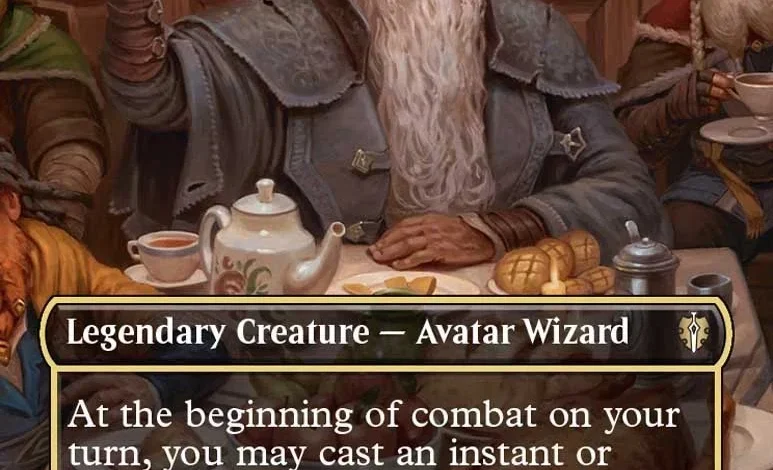
The Magic: The Gathering The Hobbit assortment is set to feature an array of new cards, with a particular highlight being two distinct "scene boxes." These collectible products are designed to offer a more immersive storytelling experience, presenting a collection of playable cards that, when arranged correctly, recreate iconic moments from the source material. This innovative approach aims to bridge the gap between gameplay and narrative, allowing players to physically assemble a visual tableau of key scenes.

The first of these scene boxes, titled "Crack the Plates," focuses on an early, pivotal moment in The Hobbit. This collection of cards is designed to depict the unexpected gathering at Bilbo Baggins’ home, Bag End, where Gandalf and the dwarves converge, setting the adventure in motion. The visual representation of this scene on the cards aims to capture the initial conviviality and the burgeoning sense of adventure that permeates the early stages of the story.

Cards revealed for the "Crack the Plates" scene box include:

- Fili and Kili, Joyous: These cards likely represent two of the younger, more adventurous dwarves, possibly highlighting their camaraderie and enthusiasm for the quest.
- Gandalf, Party Guest: A representation of the wise wizard, Gandalf, orchestrating the events and bringing the company together. His presence is crucial to initiating Bilbo’s reluctant journey.
- Thorin, King of Durin’s Folk: The proud leader of the dwarves, Thorin Oakenshield, whose determination to reclaim his ancestral home drives the narrative.
- Bilbo, Fellow Conspirator: This card likely depicts Bilbo in his early stages of involvement, still grappling with his newfound role as a burglar and adventurer.
- Bag End Banquet: This card presumably captures the essence of the dwarves’ boisterous gathering, complete with food and merriment, at Bilbo’s hobbit-hole.
- Ori, Plate Stacker: Representing one of the dwarves, this card might focus on a specific, perhaps humorous, interaction during the feast.
The second scene box, named "The Desolation of Smaug," draws its inspiration from the second film in the movie trilogy, focusing on Bilbo’s perilous encounters within the dragon’s lair. This collection of cards is designed to evoke the tension and danger of Bilbo’s confrontation with the formidable dragon.

Cards revealed for "The Desolation of Smaug" scene box include:

- Long-Lost Lances: This card may represent weapons or artifacts relevant to the ongoing conflict or the history of the Lonely Mountain.
- Dragon-Cursed Halls: This card likely symbolizes the perilous environment of Smaug’s treasure hoard, reflecting the dangers and the dragon’s oppressive presence.
- Smaug, the Impenetrable: The centerpiece of this scene, this card will undoubtedly embody the might and terror of the great dragon Smaug, a formidable antagonist.
- Bilbo’s Burglaring: This card focuses on Bilbo’s stealth and courage as he attempts to navigate Smaug’s domain and perhaps steal a piece of the treasure.
- Dragon’s Desire: This card could represent Smaug’s insatiable greed for his hoard or perhaps a specific item within it that holds particular significance.
- Necklace of Girion: This card may refer to a specific artifact or treasure within Smaug’s hoard, potentially connected to the history of Dale.
Beyond these curated scene boxes, the The Hobbit set also introduces other key characters and elements from the story. Notable among these are cards like "The Eagles Are Coming," "Thorin Oakenshield," "The Queen of Dale," "The Chief Warg," "Supper for Spiders," "The Lonely Mountain," "Bard the Bowman," and "Thranduil, the Elvenking." These individual cards promise to bring a wide array of iconic figures and moments from The Hobbit into the Magic: The Gathering gameplay experience.

The Infamous One Ring and its Controversies
A significant talking point surrounding Magic: The Gathering‘s Universes Beyond expansions has been the introduction of unique, high-value cards tied to the source material. In 2023, the Lord of the Rings: Tales of Middle-earth set featured a singular, foil-etched "The One Ring" card, printed in the Black Speech of Mordor. This card achieved unprecedented collector’s item status, ultimately being purchased by musician Post Malone for a staggering $2 million, making it the most expensive Magic: The Gathering card ever sold.

With the release of The Hobbit set, Wizards of the Coast has introduced new "One Ring" box-topper cards. However, the reveal of the artwork for these new iterations sparked considerable controversy. Fans and critics quickly pointed out striking similarities between the newly revealed artwork and the original "The One Ring" card from the 2023 set, accusing the artist, Dan Frazier, of plagiarism. This controversy led to public apologies from both Wizards of the Coast and Frazier, though no new iteration of the card was immediately announced or released in response to the outcry. This incident highlights the delicate balance Wizards of the Coast must strike when integrating beloved, visually distinct properties into its existing card art style.

Dwarvish Language and Other Unique Cards
Adding another layer of thematic depth, the The Hobbit set will include five cards featuring Dwarvish language. One such card, "Arcane Signet," has been previewed, showcasing the integration of Tolkien’s constructed languages into the game’s mechanics and aesthetics. This is complemented by other cards like "Dwarven Warriors," "Mox Amber" (a nod to a powerful artifact in MTG lore, recontextualized for Middle-earth), "The Reaver Cleaver," and "Treasure Vault," further enriching the set’s connection to the Dwarves and their lore.

The broader implications of the The Hobbit set extend beyond its immediate release. The continued success of the Universes Beyond initiative demonstrates a clear demand for crossovers that honor their source material while offering engaging gameplay. This strategy not only attracts new players from existing fan communities but also deepens the engagement of current Magic: The Gathering players by introducing fresh thematic elements and gameplay possibilities. The ability to wield iconic characters and relive legendary moments within the strategic framework of Magic: The Gathering provides a unique value proposition that resonates strongly with collectors and players alike.

As the release date of August 14 approaches, the anticipation for Magic: The Gathering‘s The Hobbit set continues to build. The combination of beloved characters, iconic storylines, innovative scene box mechanics, and the ongoing dialogue surrounding card art and design promises to make this a significant and memorable addition to the Magic: The Gathering multiverse. The set’s performance will undoubtedly be closely watched as Wizards of the Coast continues to explore new frontiers in its Universes Beyond program, potentially paving the way for further integrations of popular culture into the ever-expanding world of Magic: The Gathering.