The question of what happened to Katie, a young girl who vanished years prior, served as the central, driving force behind the marketing campaign for Lee Cronin’s latest cinematic endeavor, The Mummy. This reimagining of the classic Universal monster franchise aimed to tap into primal fears and curiosity, promising supernatural horror intertwined with a compelling mystery. While the film does eventually provide an answer to Katie’s fate, this resolution arrives late in its substantial 133-minute runtime, after audiences have been subjected to nearly two hours of visceral and often disturbing imagery.
However, this protracted build-up to the mystery’s unveiling may, in fact, be a blessing in disguise. While Cronin, known for his visceral work on 2023’s Evil Dead Rise, delivers the same brand of gleeful gore and grotesque scenarios, the core elements of the mystery – the Egyptian setting, Katie’s disappearance, and indeed, the very nature of the Mummy itself – feel largely superfluous to the film’s true horror. The narrative appears to strain under the weight of its inherited mythology, ultimately functioning as a less effective vessel for Cronin’s signature brand of intense, body-horror driven terror.
The Mummy, Unwrapped: A Family’s Descent into Darkness
At its heart, Lee Cronin’s The Mummy centers on the Cannon family: father Charlie (Jack Reynor), mother Larissa (Laia Costa), and their three children. The narrative kicks off eight years after their eldest daughter, Katie (portrayed as a child by Emily Mitchell and as a teenager by Natalie Grace), disappeared during a family trip to Egypt. The family is shattered by the news that Katie has been discovered, miraculously alive but trapped within a sarcophagus. Their relief is short-lived as they bring her back to their New Mexico home, hoping for a reunion and recovery with their other children, Sebastián (Shylo Molina) and Maud (Billie Roy), and Larissa’s mother, Carmen (Verónica Falcón). Instead of healing, Katie deteriorates, and a pervasive sense of rot begins to spread through the household, infecting the other children and unleashing a cascade of horrifying events.
Charlie, a television reporter, grapples with his daughter’s return and subsequent decline by delving into the mystery surrounding the sarcophagus and the ancient markings found on her bandages. His investigation leads him to Professor Bixler (Mark Mitchinson), an expert who identifies the symbols as belonging to the Nasmaranian, an ancient Egyptian demon reputed to be a destroyer of families.
This pursuit of knowledge also brings Charlie back into contact with Detective Dalia Zaki (May Calamawy, known for her role in Moon Knight), who had originally investigated Katie’s disappearance in Cairo eight years prior. A desperate, cryptic Morse code message from Katie, momentarily breaking free from the Nasmaranian’s influence, provides Detective Zaki with a crucial clue. This leads her to Layla Khalil (May Elghety), a woman with ties to a shadowy cult led by a figure known only as the Magician (Hayat Kamille).
Layla provides Zaki with a chilling VHS tape, documenting a disturbing ritual. The footage reveals the Magician orchestrating a ceremony where masked individuals lower a screaming Katie onto a bandaged figure. In a grotesque act, the figure spits a concoction into Katie’s mouth. The Magician’s pronouncement clarifies the ritual’s purpose: to bind the Nasmaranian, utilizing an innocent, young body as a more potent vessel than an older host.
Evil Dead in Disguise: Cronin’s True Allegiance
As the intricate plot points surrounding the Nasmaranian and its ancient origins unfold, it becomes increasingly apparent that director Lee Cronin has a tenuous grasp on, or perhaps a deliberate disinterest in, these elements. Despite a compelling performance from Calamawy and some visually striking sequences within the Egyptian lore, these segments feel like a drag on the film’s overall momentum. It’s plausible that the Nasmaranian plot was conceived purely as a narrative justification for the film’s title and its inclusion in Universal’s burgeoning monster franchise, which began with Leigh Whannell’s The Invisible Man and continued with Wolf Man. This strategic placement within a larger cinematic universe, alongside films like Doctor Strange in the Multiverse of Madness, suggests a desire to leverage established brand recognition.
Cronin’s directorial flair is evident in his approach to these scenes, employing techniques like split diopters and Dutch angles, and a muted color palette that evokes a sense of decay. However, these stylistic choices fail to inject the necessary energy into the Egyptian mystery. The scenes lack the visceral punch that characterizes the film’s more successful moments, giving the impression that Cronin is merely paying lip service to the traditional Mummy tropes while actually crafting a film that diverges significantly from the iconic portrayals by Boris Karloff, Brendan Fraser, and even Tom Cruise.
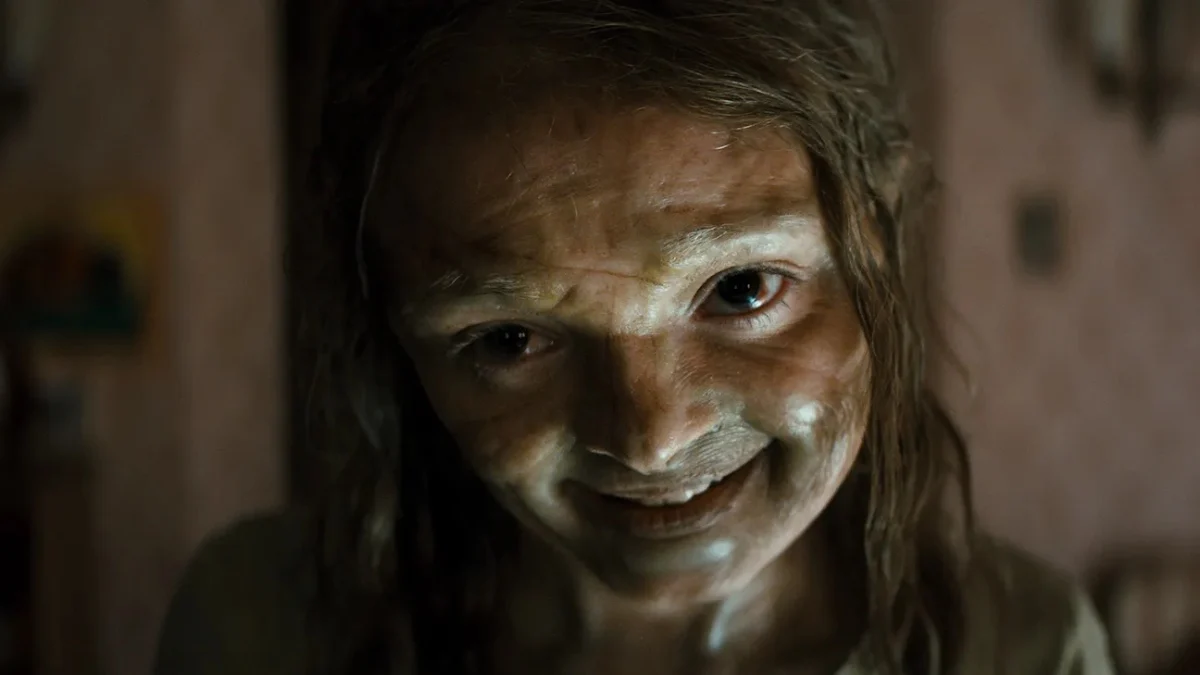
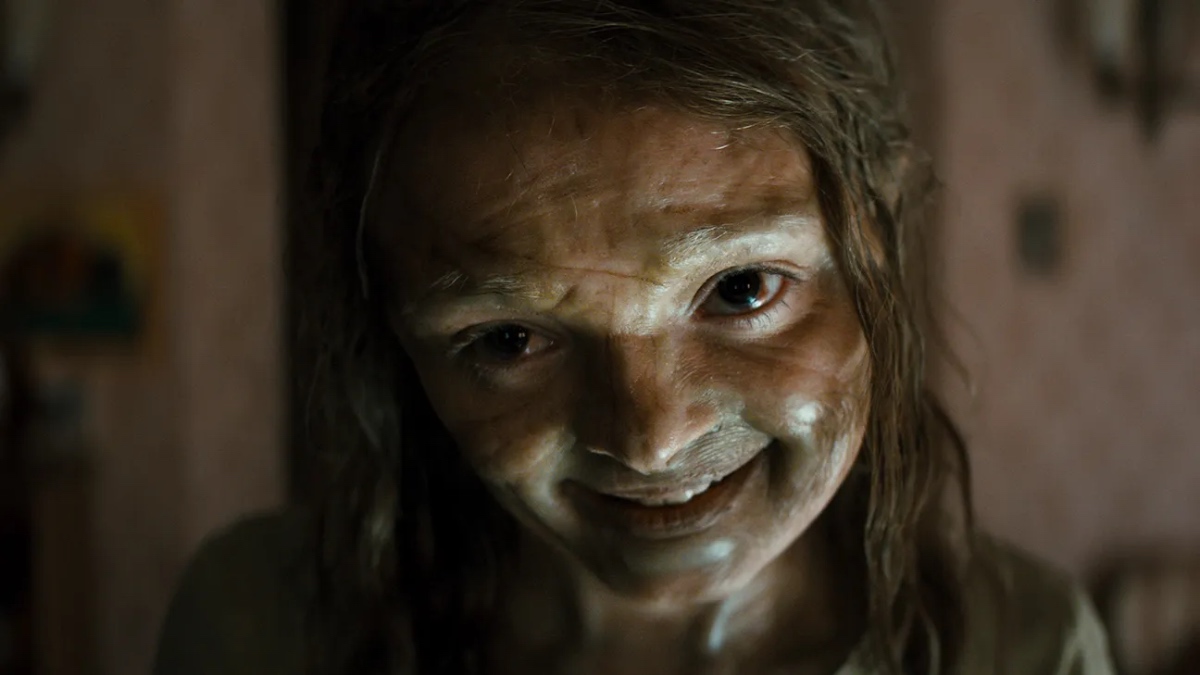
The film that Cronin seems truly invested in is a spiritual successor to Evil Dead. When the narrative deviates from the convoluted Nasmaranian lore and focuses on the escalating, visceral horror within the Cannon household, the film electrifies. The scene where young Maud, under the Nasmaranian’s influence via Katie, extracts her own teeth and then climbs into her deceased grandmother’s coffin, is a prime example of Cronin’s genuine thematic interests. The chilling image of Maud flashing a blood-soaked smile, her grandmother’s dentures in place of her own teeth, carries far more impact and horror than any of the protracted exposition regarding ancient Egyptian demons. This sequence embodies the raw, unadulterated terror that defines Cronin’s directorial voice, a stark contrast to the underdeveloped supernatural elements.
The Curse of Compromise: Studio Interference and Bloated Pacing
This unsettling scene, and indeed the most effective parts of Lee Cronin’s The Mummy, feel directly inspired by the work of Sam Raimi. However, one element that deviates from Raimi’s typical style is the film’s runtime. Clocking in at 133 minutes, it significantly exceeds the roughly 90-minute sweet spot favored by Raimi, placing it closer to the lengthy durations of films like Oz, The Great and Powerful (130 minutes) and Spider-Man 3 (139 minutes).
This extended runtime, coupled with certain narrative choices, suggests the potential for studio interference. The resolution of the Egyptian mystery, including a tacked-on "happy" ending where Larissa and Detective Zaki enlist a Nasmaranian-infected Charlie to seek revenge on the Magician, feels like a concession to conventional storytelling expectations. These elements, while perhaps intended to provide closure, ultimately bloat the film, diluting the impact of the more potent, disturbing sequences that showcase Cronin’s unique horror sensibilities.
Ultimately, the question of "What happened to Katie?" becomes secondary. The film’s true strength lies not in unraveling ancient curses but in depicting the horrifying consequences of their manifestation. The narrative shifts focus from the "what" to the "what next," exploring the visceral terror that ensues when the supernatural infiltrates the mundane, particularly within the confines of a family unit. The film’s core conflict, the descent into madness and physical decay, is far more compelling than the thinly veiled Egyptian mythology used to frame it. The true intrigue of Lee Cronin’s The Mummy lies not in its mystery, but in the sheer, unbridled horror that erupts when the supernatural truly takes hold.
Related posts: