Kingdom Come Chapter Two: A 2026 Retrospective on Power, Authority, and the Perilous Path to Order

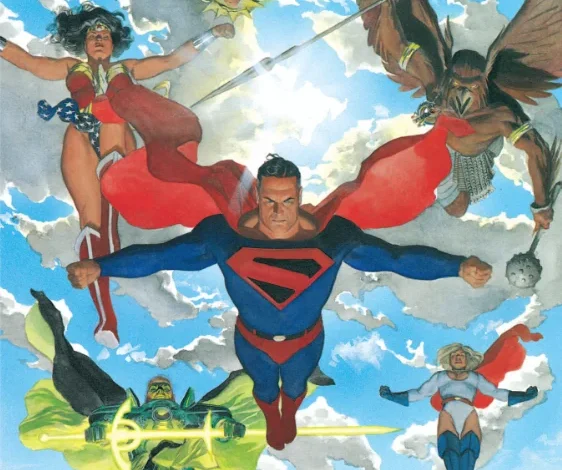
The second chapter of Kingdom Come, originally published in 1996 and now revisited in 2026, intensifies the narrative’s exploration of power dynamics, governmental authority, and the inherent conflicts arising from a world saturated with metahuman influence. This installment thrusts readers into a complex global landscape where traditional governance structures are dissolving, replaced by the unilateral actions of both established heroes and emergent vigilantes. The events of Chapter Two serve as a stark reminder of the enduring questions posed by the original work regarding accountability, liberty, and the true cost of order in an increasingly chaotic world, resonating with contemporary societal concerns three decades after its initial release.
The Re-Emergence of the Justice League Amidst Global Unrest
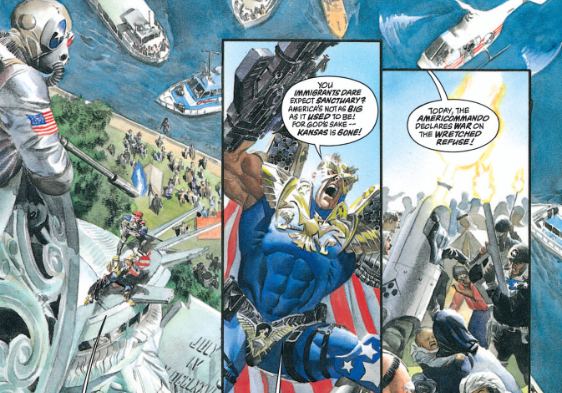
Chapter Two commences with a vivid depiction of escalating global instability, immediately drawing parallels to ongoing geopolitical tensions. The Statue of Liberty, a symbol of American ideals, becomes the backdrop for a violent confrontation on Earth-22 (or 96, depending on multiversal designation) concerning immigration. Americommando, a nationalist metahuman adorned in patriotic regalia, and his "Minutemen" declare war on newly arrived immigrants, asserting their self-appointed right to defend the nation’s borders against perceived "insidious menaces." This scene rapidly devolves into a destructive conflict as another faction of robotic vigilantes, also claiming patriotic duty, engages Americommando, trapping civilians in a crossfire of projectiles and flames.
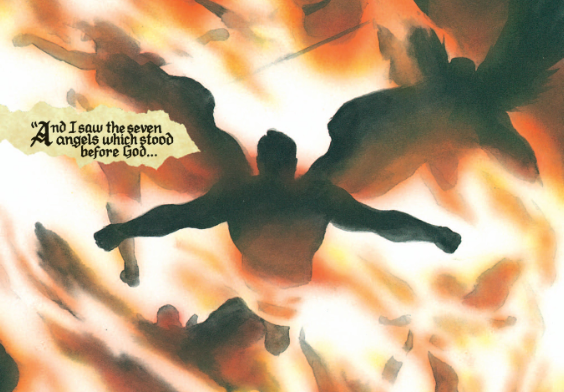
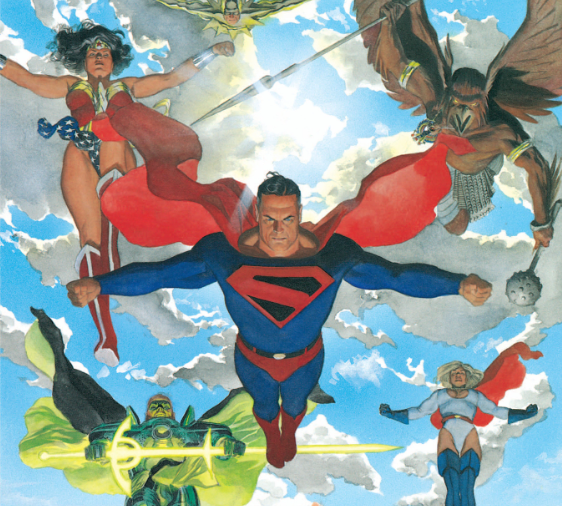
The chaos is abruptly quelled by the dramatic return of the Justice League, spearheaded by Superman. Their intervention is swift and decisive; Superman disarms Americommando, while Green Lantern and other League members rescue civilians. This display of immense power immediately positions the League as saviors, yet it simultaneously underscores their role as self-appointed arbiters of justice. The immediate perception shifts from "angels" to "gods," highlighting the profound distinction between divinely guided righteousness and the autonomous will of immensely powerful individuals. This distinction is critical, as the narrative suggests that the League, despite their benevolent intentions, operates under the same self-appointed authority as the disruptive metahumans they confront.
Unseen Manipulations and the Unanswered Questions
During the initial skirmish, two figures, later identified as the "Brain Trust," are observed remotely controlling the robotic vigilantes. Their panic upon losing their mental link with the robots suggests a calculated orchestration behind some of the metahuman conflicts. The timely intervention of Red Robin (Dick Grayson) in neutralizing these manipulators provides the first hint that the rampant metahuman anarchy is not entirely random; elements of it are strategically engineered, serving clandestine objectives yet to be fully revealed. This layer of manipulation introduces a deeper level of complexity to the unfolding crisis, suggesting that the "chaos" itself is a tool in a larger power struggle.
The League’s swift resolution of the crisis draws immediate media attention, with reporters pressing Superman on the League’s decade-long absence. This public scrutiny sets the stage for a critical examination of the League’s mandate and accountability.
Superman’s Mandate and the United Nations’ Apprehension
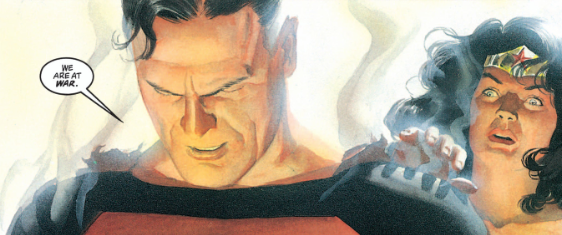
In response to public and governmental pressure, Superman holds a press conference at the United Nations. He declares the Justice League’s previous withdrawal a mistake and vows to teach the new generation of metahumans "the meaning of truth and justice," clarifying that these ends will be met, "if necessary, with force." While his stated aim is to "make things right again," his plan remains notably vague, offering little in the way of structured legal process or collaboration with established governmental bodies.
This unilateral declaration deeply troubles the leaders of the U.N. Their concerns are not merely about the League’s power, but about their authority. The League, composed of unelected individuals, is effectively seizing control of global security without consultation or oversight from political or legal institutions. This creates a critical flaw in their principles: they possess the power to act, but lack the legal mandate derived from democratic or established judicial processes. While Superman may exhibit more deference to law than the newer metahumans, his actions in 2026 expose the fragile nature of that deference, demonstrating its capacity to be overridden at will. For the U.N. and ordinary citizens, this resurgence represents not a return to order, but a transfer of control to another unelected, immensely powerful entity, further eroding human agency in global affairs. Official statements from various U.N. member states, though not explicitly detailed, can be inferred to express deep concern over the precedent set by such extra-governmental action, potentially leading to calls for international protocols to regulate metahuman activity.
Batman’s Surveillance State: A Counter-Narrative of Control
Meanwhile, in the dilapidated remnants of Wayne Manor, Bruce Wayne operates from a waterlogged Bat-Cave, surrounded by advanced technology. His exchange with Superman reveals a stark philosophical divergence regarding the unfolding crisis. Batman dismisses the League’s "punch now, ask questions later" approach, advocating for "finesse and meticulous, careful planning" in a world where metahumans have exponentially grown in number and influence.
Batman’s solution manifests as a high-tech surveillance state within Gotham, where robotic agents enforce order through constant monitoring and fear. He views this system, which extends beyond Gotham into Star City, as a human-centered approach that returns control to non-powered individuals by keeping metahumans in check. However, Superman criticizes this as a "police state," highlighting the inherent costs to privacy and personal freedom. Batman, seemingly oblivious to the problematic nature of a privately operated surveillance network, dismisses the Justice League as "totalitarian."
This clash highlights a central tension: both heroes, in their pursuit of order, arrive at solutions that compromise fundamental liberties. Batman’s allies, including Dinah Lance (Black Canary), Oliver Queen (Green Arrow), and Ted Kord (Blue Beetle), align with his view, agreeing that the Justice League’s methods will cause more harm than good and revealing their own contingency plans involving a distinct metahuman team. The complex relationship between Superman and Batman, once defined by a shared commitment to justice, is now characterized by deep ideological fissures, blurring the lines between allies and adversaries.
The League’s Escalating Methods and Internal Fractures
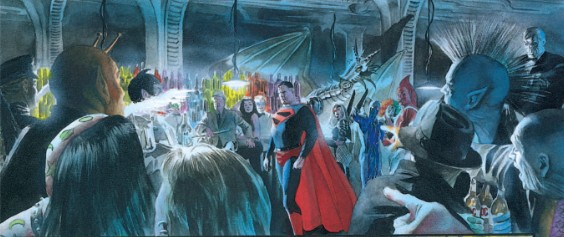
As days progress, the Justice League attempts to restore order, alternating between negotiation and force. Their methods, however, become increasingly militant. An incident in a metahuman nightclub, where the League needlessly destroys property before coercing attendees to join, illustrates their growing authoritarianism. Their global reach, while initially seen as hopeful, is increasingly perceived as a form of military occupation rather than diplomatic intervention.
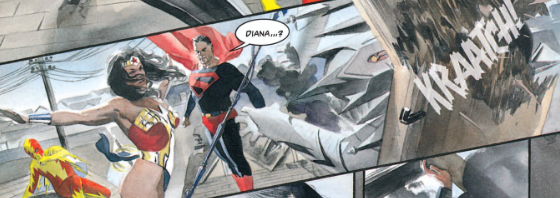
The internal strain within the League becomes evident, particularly in Wonder Woman’s escalating frustration. Her enraged response to an untrained metahuman’s "unwanted assistance" – hurling them through the sky – underscores her breaking point. Weary of cleaning up constant messes and witnessing untrained individuals "play at war," her impatience clashes with Superman’s more measured approach, particularly his emphasis on the "sacred nature of human life." This quiet but significant fracture in their long-standing friendship signals the growing instability within the League’s leadership, further jeopardizing any perceived balance they might restore.
Lex Luthor’s Strategic Exploitation: The Mankind Liberation Front
Amidst the metahuman chaos, Lex Luthor resurfaces as the architect of the "Mankind Liberation Front," a coalition of former supervillains including figures like Catwoman (Selina Kyle) and The Riddler (Edward Nigma). Exploiting the chaos of Superman’s absence, Luthor has expanded his influence, seemingly dedicating efforts to relief for victims of the "Kansas disaster." However, this altruism serves as a smokescreen for his true agenda: manipulating the escalating metahuman conflict for his own gain.
Luthor’s audacious plan involves recruiting and rebranding metahuman survivors from destroyed prisons like Arkham and Belle Reve, transforming them into new "superheroes." While these manipulated vigilantes account for only a small percentage (8%) of the new metahuman population, they are instrumental in escalating conflicts and further eroding public trust in all superheroes. Luthor’s ultimate goal is to incite humanity to rise up and oust all super-powered beings, consolidating power for himself. The Justice League’s return is an unexpected hurdle, but Luthor reveals his trump card: Billy Batson, also known as Captain Marvel, a metahuman of immense power whom Luthor intends to leverage.
The Magog Confrontation and Superman’s Moral Dilemma
The narrative fast-forwards to a near future where America has somewhat stabilized, and the League’s focus shifts to international metahuman issues. Superman’s lack of diplomatic training becomes a liability, as his attempts to forge alliances with figures like Arthur Curry (Aquaman) and Orion prove fruitless. The increasing totalitarianism of their methods further strains his relationship with Wonder Woman.
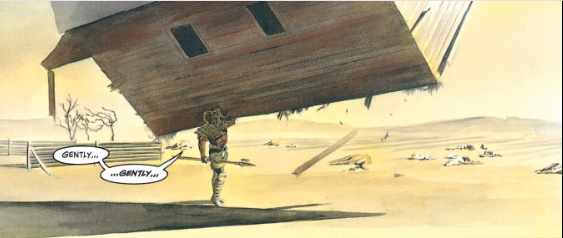
The long-awaited confrontation with Magog finally occurs in the desolate landscape of what was once Kansas. Magog, attempting to rebuild amidst the wreckage, remains defiant. A crucial flashback reveals the catalyst for Superman’s decade-long retirement: ten years prior, after the Joker murdered the staff of the Daily Planet, including Lois Lane, Magog executed the Joker in the street. Superman, committed to upholding the law, brought Magog to trial. Magog was acquitted, and public sentiment sided with him, believing he had the courage to act decisively where Superman adhered to a flawed legal system that repeatedly failed to contain the Joker. Superman, disillusioned and unwilling to compromise his principles, retreated from the world, inadvertently leaving humanity vulnerable to those who idolized Magog’s brutal form of justice. Magog asserts that Superman abandoned humanity out of fear of the future Magog represented, a future embodied by the wasteland around them, before attacking Superman.
Superman ultimately subdues Magog, who, broken and haunted by "a million ghosts," begs for death. This encounter forces Superman to confront the question of how to handle metahumans who refuse to align with the League or have crossed unforgivable lines. His solution: a "Big prison." While seemingly practical, this concept immediately raises concerns. A prison controlled solely by the Justice League bypasses standard protocols for arrest, sentencing, and human rights, effectively stripping ordinary humans of any agency in the judicial process concerning metahumans. Furthermore, the notion of concentrating volatile super-powered individuals under one roof presents a monumental security risk, an existential "ticking time bomb."
The Unthinkable Alliance: Batman and Lex Luthor
Chapter Two concludes with a shocking development: the formation of an alliance between Bruce Wayne and Lex Luthor. Batman, now aware of the Justice League’s super-prison, views this unchecked authority as an intolerable overreach. His profound disdain for Superman’s methods, which he perceives as sliding into totalitarianism, now outweighs decades of animosity between himself and Luthor, as well as many of Luthor’s cohort who were once part of Batman’s own rogues gallery.
By establishing a prison where they act as judge, jury, and potentially executioner, the Justice League has inadvertently created the conditions for this unprecedented alliance. Batman’s fear that the League’s unchecked liberties will extend to lethal action drives him to unite with his sworn enemies. This "alliance of nightmares" fundamentally alters the power landscape, pitting two factions, both operating outside traditional legal frameworks, against the self-appointed authority of the Justice League.
Broader Implications and the 2026 Perspective
The events of Kingdom Come Chapter Two, when viewed through the lens of 2026, offer a prescient commentary on several critical societal discussions.
Power Without Authority and the Erosion of Governance: The central conflict revolves around the Justice League’s exercise of immense power without legitimate authority. In 2026, the discussion around unelected entities holding significant sway, whether through technological dominance or sheer force, remains highly relevant. The narrative’s depiction of the U.N.’s powerlessness and the League’s unilateral decision-making mirrors contemporary concerns about the erosion of democratic processes and the influence of non-state actors on global events. The idea that individuals, however well-intentioned, can seize the reins of society without constitutional checks and balances poses a fundamental threat to self-governance.
The Surveillance Paradox and Private Control: Batman’s high-tech surveillance state in Gotham, once a speculative element of comic book fiction, now resonates with contemporary realities. The proliferation of advanced technology in 2026, including AI-driven monitoring, facial recognition, and pervasive data collection by private corporations and governmental bodies, makes Batman’s methods chillingly familiar. The narrative forces a confrontation with the trade-off between perceived safety and fundamental rights to privacy and personal freedom. The question of who controls this information, how it is used, and the lack of accountability for its collection and deployment, remains a paramount concern. The idea of a single, unelected tech billionaire wielding such pervasive control over a populace, even with benevolent intentions, highlights the inherent dangers of concentrated power in the digital age.
Defining Justice in a Metahuman World: The inadequacy of traditional legal frameworks to address metahuman conflicts is a recurring theme. Magog’s acquittal, despite his clear act of murder, underscores the public’s disillusionment with a system perceived as incapable of delivering justice in an era of super-powered threats. This leads to the acceptance, even idolization, of vigilante justice. The Justice League’s super-prison, while an attempt to manage this problem, simply replaces one form of extra-legal action with another, concentrating volatile power without due process. This raises profound questions about the future of law enforcement, jurisprudence, and the very definition of "justice" when conventional systems are overwhelmed.
The Fragility of Alliances and the Nature of Ideology: The ideological fractures between Superman and Batman, and within the Justice League itself, highlight how even shared noble intentions can lead to divergent, potentially authoritarian, paths. Both heroes seek order and protection, yet their methods lead them to diametrically opposed positions, ultimately forcing Batman into an unthinkable alliance with his greatest foes. This underscores the fragility of alliances and how extreme circumstances can compel individuals to compromise long-held principles in pursuit of what they believe is the greater good. The narrative suggests that even the most revered heroes, when unchecked, can inadvertently become the architects of the very problems they seek to solve.
In 2026, Kingdom Come Chapter Two stands not just as a compelling comic book narrative, but as a prophetic text. It challenges readers to critically assess the implications of unchecked power, the seductive allure of absolute order at the expense of liberty, and the societal dangers inherent in outsourcing governance to unelected entities, whether they be super-powered saviors or technologically dominant magnates. The story serves as a potent warning against the concentration of power, regardless of its source or intention, and its capacity to lead humanity down a tragically unstable path fraught with injustice.