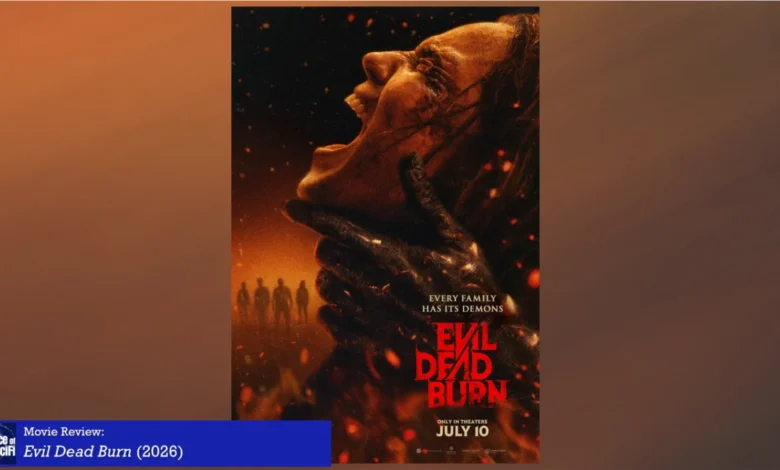
The evolution of the horror genre has long been defined by a pendulum swing between high-concept artistic dread and unadulterated, popcorn-munching thrills. For decades, the cinematic landscape has debated where the boundary lies between entertaining gore and exhausting nihilism. The latest casualty in this ongoing ideological tug-of-war is the iconic horror franchise birthed by Sam Raimi in 1981. With the release of Evil Dead Burn, directed by Sébastien Vaniček and co-written by Vaniček and Florent Bernard, the long-standing cinematic universe takes a grim detour. Rather than embracing the tongue-in-cheek playfulness and chaotic energy that characterized earlier entries, the nearly two-hour feature abandons its pulp roots in favor of relentless, unyielding brutality, leaving audiences and franchise loyalists questioning the future direction of the property.
A Historical Overview of the Evil Dead Legacy
To understand the weight of the departure represented by Evil Dead Burn, one must examine the origins of the franchise. In the post-World War II era, horror cinema largely functioned as a sandbox for youthful escapism. B-movies of the 1950s and 1960s prioritized fast-paced entertainment over psychological torment. As censorship frameworks like the Hays Code dissolved and special effects grew more sophisticated, the 1980s ushered in a wave of filmmakers who merged nostalgic pulp storytelling with extreme practical effects.
Sam Raimi’s original 1981 masterpiece, Evil Dead, became the benchmark for this subgenre. It successfully blended slapstick physical comedy, Grand Guignol-style excess, and sheer terror. Even when the franchise received a visceral modernization under Fede Alvarez in the 2013 reboot, and later with Lee Cronin’s critically acclaimed 2023 installment Evil Dead Rise, the core DNA remained intact. These films retained a sense of suspense, character arcs, and a carnival-esque joy in cinematic bloodshed. Evil Dead Burn, however, marks a stark pivot away from this formula, trading the franchise’s trademark rollercoaster ride for an exhausting endurance test.
Chronology and Narrative Premise of Evil Dead Burn
The narrative of Evil Dead Burn centers on a grieving widow who, following the sudden loss of her husband, seeks emotional refuge with her estranged in-laws in a secluded family homestead. What begins as a mourning period quickly devolves into chaos as family members are systematically possessed, transforming a standard familial gathering into a relentless nightmare. The premise relies on a dark thematic exploration of marital vows—suggesting that a commitment made in life might extend even into the realm of the undead.
Despite an intriguing premise, the execution falters in its pacing and character construction. The film stars an ensemble cast including Souheila Yacoub, Tandi Wright, Hunter Doohan, Luciane Buchanan, Errol Shand, and Maude Davey. Unfortunately, critics note that the character development is largely sidelined to make room for uninterrupted sequences of violence. The protagonists make consistently illogical decisions, preventing the audience from forming any meaningful emotional attachment to their survival. Consequently, the nearly two-hour runtime feels stretched, shifting the viewing experience from thrilling to grueling.
The Modern Horror Landscape: Art-House Dread Versus Torture Porn
The creative direction of Evil Dead Burn does not happen in a vacuum; it reflects a broader macro-trend within contemporary horror cinema. Over the past fifteen years, the genre has bifurcated. On one hand, production houses like A24 have popularized elevated horror and art-house cinema, focusing on atmospheric dread and trauma rather than conventional jump scares. On the other hand, the emergence of hyper-violent subgenres—often colloquially termed "torture porn"—has normalized extended, unmotivated sequences of physical suffering.
While previous Evil Dead films managed to navigate this modern landscape by pairing high-impact visuals with self-aware levity, Evil Dead Burn leans heavily into the latter trend. Rather than operating as a traditional horror-comedy or a suspenseful supernatural thriller, the film frequently mimics the cadence of a relentless action movie designed purely to provoke a visceral, nauseated reaction. This tonal shift has left franchise purists bewildered, particularly given that original creators Sam Raimi and Bruce Campbell remain attached to the project in producer roles.
Critical Reception and Comparative Analysis
Upon its release, Evil Dead Burn received a polarized reception from critics and long-time fans, ultimately earning a modest rating of 1.5 out of 5 stars. Reviewers have drawn direct comparisons between Vaniček’s directorial approach and the stylistic choices seen in 2023’s Evil Dead Rise. While the latter was undeniably bloody, it retained traditional narrative breathing room, balancing terror with suspense and entertainment value.
In contrast, Evil Dead Burn has been characterized as a near-constant sensory bombardment. Analysts point out that by stripping away the inherent fun and stylistic panache of the brand, the film risks alienating the core demographic that built the franchise’s multi-decade legacy. Rather than celebrating the kinetic energy of practical effects-driven horror, the film adopts a humorless, dour disposition that sits uncomfortably alongside classics like Army of Darkness and Evil Dead II.
Broader Implications for the Franchise and Genre
The commercial and critical trajectory of Evil Dead Burn raises important questions about intellectual property management and creative reinvention in modern Hollywood. When long-running horror franchises are handed over to visionary international directors—such as Sébastien Vaniček, who previously gained attention for his work on the French creature feature Infested—studios often weigh the benefits of stylistic innovation against brand consistency.
While risk-taking is essential for preventing cinematic stagnation, an absolute divorce from foundational identity can alienate established fan bases. For a brand historically synonymous with inventive dark humor and high-energy splatter, Evil Dead Burn serves as a cautionary tale regarding the limits of relentless brutality. As the horror genre continues to evolve through shifting audience demands and production trends, future installments in the Evil Dead universe will face immense pressure to re-evaluate whether sacrificing fun for bleakness is a sustainable path forward for the beloved deadite mythos.