The Science Fiction Event That Could Have Changed Everything: Andy Weir’s Star Wars and Star Trek Crossover Proposal

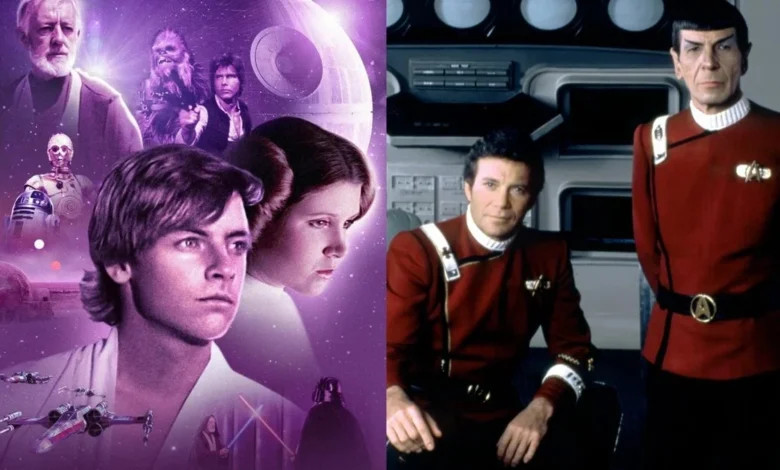
The history of pop culture is punctuated by monumental crossovers that have redefined fan expectations and pushed the boundaries of intellectual property management. From the cinematic spectacle of Godzilla facing Kong to the inter-company synergy seen in the Marvel and DC Comics collaborations, the concept of a shared multiverse has become a cornerstone of modern entertainment. However, two of the most significant pillars of science fiction, Star Wars and Star Trek, have remained distinct, separated by their vastly different internal logics, thematic focuses, and corporate ownership. Despite this, acclaimed science fiction author Andy Weir, best known for his novels The Martian and Project Hail Mary, has articulated a detailed, albeit unofficial, vision for a bridge between these two disparate galaxies.
The Conceptual Foundation of the Crossover
Weir’s proposal hinges on the intersection of two critical moments in science fiction history: the destruction of the Death Star in George Lucas’s 1977 film Star Wars: A New Hope and the activation of the Genesis Device in Nicholas Meyer’s 1982 masterpiece Star Trek II: The Wrath of Khan.
In Weir’s hypothetical narrative, the immense release of energy from the Death Star’s detonation acts as a catalyst, tearing a hole in the fabric of spacetime. Simultaneously, the detonation of the Genesis Device—a terraforming technology designed to create life from nothing—creates a corresponding rift. Weir suggests that these two events effectively synchronize, resulting in the creation of the "Yavin/Mutara wormhole." This spatial anomaly serves as the narrative gateway that allows the USS Enterprise to traverse from the Federation’s jurisdiction into the war-torn galaxy of the Star Wars universe.
Character Trajectories and Narrative Divergence
The logistical implications of such a crossover, as outlined by Weir, would result in immediate, drastic deviations from the established canon of both franchises. According to the author’s vision, the primary point of contact occurs when the Enterprise discovers drifting wreckage following the Battle of Yavin.
Among the salvaged remains, the crew of the Enterprise encounters Darth Vader. In this scenario, the Federation’s medical capabilities, spearheaded by Dr. Leonard "Bones" McCoy, become the pivot point for the character’s redemption. Upon discovering the extent of Vader’s injuries and the cybernetic life-support systems required for his survival, the Enterprise crew performs a comprehensive restoration. By repairing the physical trauma sustained by Anakin Skywalker, the narrative potentially strips away the necessity for the villainous persona maintained by the Dark Lord of the Sith, effectively reverting the character to his former self.
Simultaneously, the crossover would force an integration of the metaphysical systems of both universes. Weir posits that, following the transit into the Star Wars galaxy, the Enterprise crew would be subject to the influence of the Force. Most notably, he suggests that Spock, having perished in the climax of The Wrath of Khan, would transition into a "Force ghost," bridging the gap between Trek’s scientific rationalism and the mystical elements of Lucas’s saga. Furthermore, Weir imagines Hikaru Sulu developing latent Jedi abilities, suggesting that the Force is not merely a biological byproduct of the Star Wars universe but a universal constant that can be accessed by individuals from the Star Trek continuum.
The Legal and Corporate Landscape of Intellectual Property
To understand why such a project remains confined to the realm of fan-fiction proposals rather than active development, one must examine the corporate barriers involved. Lucasfilm, now a subsidiary of The Walt Disney Company, and Paramount Global, the current steward of the Star Trek franchise, hold some of the most guarded intellectual property in Hollywood.
Historically, inter-company crossovers have been rare and difficult to negotiate. The most famous example, 1996’s DC vs. Marvel Comics, required years of negotiation and the eventual establishment of the "Amalgam Comics" imprint to facilitate a temporary merger of characters. In the modern era, the complexity of these legal arrangements has increased, as both Star Wars and Star Trek are the cornerstones of multi-billion dollar streaming platforms—Disney+ and Paramount+ respectively. The potential for brand dilution, conflicting creative mandates, and the difficulty of integrating two distinct "bibles" of lore makes a direct cinematic crossover a logistical nightmare that neither studio has expressed interest in pursuing.
Precedents and the Comic Book Medium
While the prospect of a live-action crossover remains remote, the precedent for such genre-bending experiments exists primarily in the medium of comic books. Publishers such as IDW, Dark Horse, and Marvel have previously engaged in "crossover events" that allow for narrative experimentation without impacting the official canon of the primary film or television franchises.
Examples such as the Star Trek/Planet of the Apes crossover demonstrate that even the most disparate franchises can be successfully synthesized in a graphic format. These projects often succeed because they exist in a "what if" space, where the creative team is not beholden to the rigid continuity of the source material. For a Star Wars/Star Trek crossover, the comic book format would allow for the exploration of the complex physics of the Yavin/Mutara wormhole and the interaction between Starfleet technology and the Force, without the risk of alienating the core fanbases of either series.
Critical Analysis of the "Weir Theory"
From a narrative standpoint, Andy Weir’s proposal is a fascinating study in character motivation. By placing the Enterprise crew in a position of authority over a vulnerable Anakin Skywalker, the story shifts from a galactic war epic to a character-driven study of redemption and medical ethics.
However, there are significant obstacles in the internal logic of such a merger. The Star Trek universe is built upon the "Prime Directive," a policy of non-interference in the development of other civilizations. An encounter with the Galactic Empire would present a significant ethical challenge for Captain Kirk and his crew. Furthermore, the technological gap between the two universes—the hyperdrive technology of Star Wars versus the warp drive of the Federation—would require significant exposition to justify the interaction.
The Role of Fan Culture and Speculation
The popularity of Weir’s idea underscores a growing trend in digital media: the democratization of "what if" scenarios. Through interviews and social media, creators are increasingly sharing their own fan-fiction-adjacent ideas, which are then analyzed by a global audience of enthusiasts.
The reaction to Weir’s comments highlights a divide between those who view the franchises as sacrosanct and those who embrace the "multiverse" model, which has become a staple of modern storytelling in films like Spider-Man: Into the Spider-Verse and Everything Everywhere All at Once. As audiences become more accustomed to the idea of fragmented timelines and parallel dimensions, the taboo surrounding the mixing of major intellectual properties may diminish.
Future Implications for Franchise Synergy
Should studios ever reconsider the possibility of a cross-brand event, the path forward would likely be paved with small, iterative collaborations. Before any major cinematic crossover, fans might expect to see collaborative merchandise, cross-promotional events in digital gaming environments, or shared comic book narratives.
Ultimately, while the prospect of an Enterprise-versus-Empire narrative remains a fantasy, the discourse surrounding such ideas serves as a reminder of the enduring cultural footprint of these two universes. Whether through the lens of physics, philosophy, or simple storytelling, the urge to reconcile the two greatest space-faring sagas in history remains a testament to the power of science fiction to inspire the imagination, even when the stars themselves remain firmly in their own respective galaxies.