Revisiting Ecstatica: How a 1994 Cult Horror Pioneer Blended Ellipsoidal Innovation, Unorthodox Design, and Ahead-of-Its-Time Stalker Mechanics

Main Facts
The video game industry has long observed various idiosyncratic development metrics, ranging from engine compilation speeds to user-interface response times. Among the more lighthearted metrics is the conceptual measurement known as "time-to-penis," which tracks how rapidly players utilize new customization suites or rendering tools to construct phallic shapes. However, historical milestones in software engineering demonstrate that developers themselves have occasionally succumbed to the intoxicating novelty of fresh technological capabilities. A prime historical example is Ecstatica, an action-adventure survival horror title originally released in late 1994 for MS-DOS-compatible personal computers.
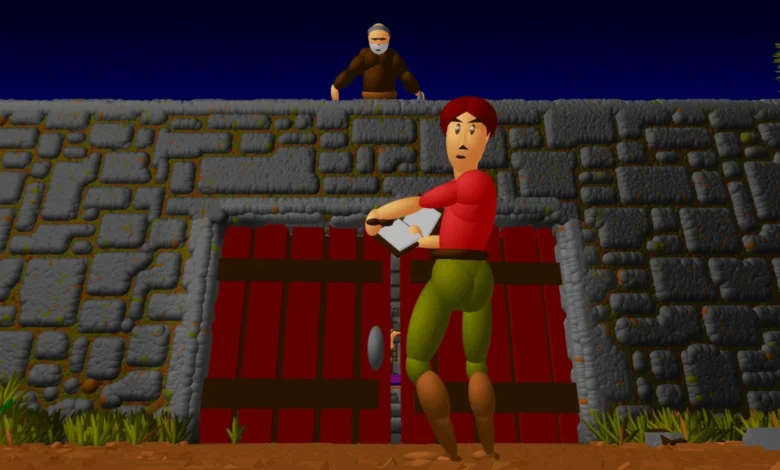
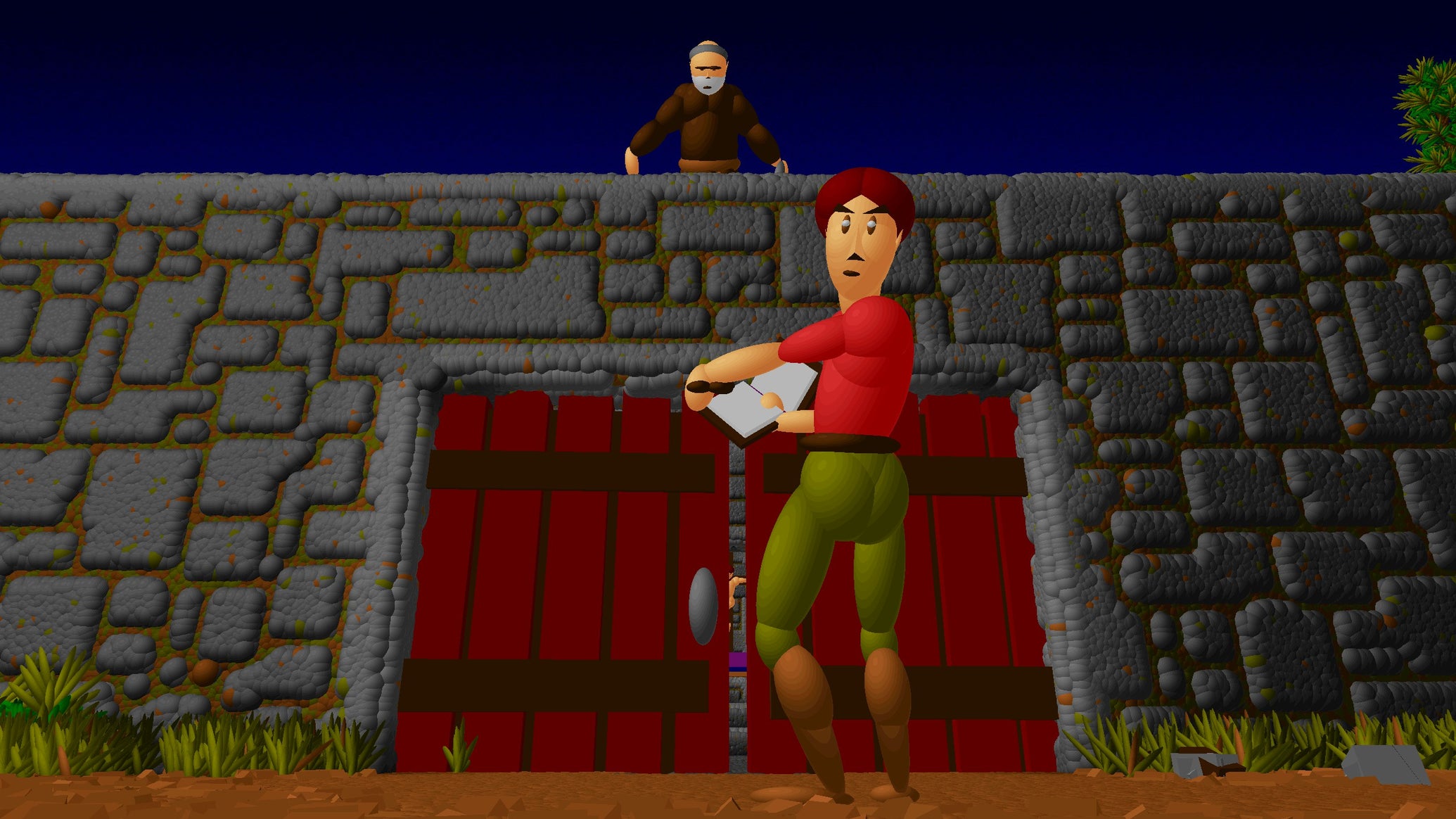
Developed by British studio Andrew Spencer Studios and published by the now-defunct Psygnosis—a label renowned for its distinct artistic direction and technological ambition—Ecstatica immediately distinguished itself through its visual composition. Rather than relying on traditional polygonal geometry, which was computationally expensive and visually harsh during the early-to-mid 1990s, the development team elected to construct characters and environmental assets almost entirely out of mathematically generated ellipsoids and spheres. This design choice yielded a soft, organic, and exceptionally unique aesthetic that set the game apart from contemporaries like Infogrames’ Alone in the Dark.
Decades after its initial launch, publisher SNEG—an organization established by veterans of the digital distribution platform GOG with a stated mission to restore and re-release lost or delisted gaming classics—has introduced a modern remaster of Ecstatica alongside its 1997 sequel, timed intentionally for the Halloween season. This revival has provided critics, historians, and modern audiences with an opportunity to re-examine a title frequently remembered for its idiosyncratic anatomical exaggerations rather than its substantial mechanical innovations within the survival horror genre.
Chronology and Development Background
The genesis of Ecstatica dates back to the early 1990s, an era of rapid transition in computer entertainment as developers shifted from two-dimensional sprite-based graphics to three-dimensional environments. The project’s timeline reflects the experimental nature of the period:
- 1992–1994 (Development Phase): Andrew Spencer Studios conceptualizes a horror-adventure game centered around a traveler stranded in a demon-infested medieval European village named Tirih. Recognizing the limitations of early 3D polygons—which often resulted in blocky, low-resolution character models—developer Andrew Spencer pioneers an ellipsoidal rendering engine.
- Late 1994 (Original Release): Published by Psygnosis, Ecstatica debuts on MS-DOS. The game receives critical attention for its fixed-camera angles, cinematic presentation, and distinctive spherical visual style, though its sales remain modest compared to subsequent juggernauts like Capcom’s Resident Evil (1996).
- 1997 (Sequel Release): Ecstatica II: The Adventurers launches, refining the engine, expanding the narrative scope, and incorporating dual protagonists while maintaining the signature ellipsoidal visual philosophy.
- 2024 (Remaster and Re-release): Publisher SNEG secures rights to the intellectual property, updating the classic titles for modern operating systems and hardware configurations, thereby introducing the pioneering survival horror games to a contemporary audience.
Technical Innovation and Visual Design
The defining characteristic of Ecstatica remains its unprecedented use of ellipsoidal graphics. In an era when hardware accelerators were virtually nonexistent in home personal computers and central processing units struggled to render complex 3D polygons in real-time, Andrew Spencer Studios bypassed traditional polygonal modeling. By utilizing interconnected spheres, ellipses, and volumetric primitives, the development team achieved smooth, rounded character animations and undulating environments that captured light and shadow in a wholly unconventional manner.
This technical framework applied not only to inanimate architecture and environmental props, but also to the character models themselves. The protagonist—an unnamed medieval traveler—alongside non-player characters, monstrous adversaries, and local wildlife, were all composed of bulbous, malleable shapes. This computational approach lent the village of Tirih a surreal, dreamlike quality.
However, the expressive freedom afforded by the ellipsoidal rendering system also resulted in striking character designs. Without the polygon-count constraints that forced other developers to simplify anatomical features, the studio rendered characters with pronounced, exaggerated physical attributes. From the protagonist’s prominent anterior proportions to stylized muscular adversaries and fauna, the game embraced a distinctively bawdy visual vernacular that contrasted sharply with the grim, gothic horror of its narrative atmosphere.

Gameplay Mechanics and Genre Contributions
Beneath its whimsical aesthetic exterior, Ecstatica introduced and executed several sophisticated gameplay mechanics that prefigured major conventions of the modern survival horror genre. While contemporaneous titles relied primarily on static combat loops and fixed item placements, Ecstatica incorporated dynamic artificial intelligence and persistent threats.
Most notably, the game featured an unkillable werewolf adversary that acted as a direct precursor to modern "stalker" enemies, such as Resident Evil 2‘s Mr. X or the titular antagonist in Alien: Isolation. Rather than remaining confined to designated combat arenas or trigger zones, this recurring enemy patrolled the environment, utilized verticality to launch surprise rooftop attacks, and actively pursued the player across multiple screen transitions. To survive encounters with the stalker, players were forced to utilize rudimentary stealth mechanics, exploit environmental hiding spots such as cupboards, or inflict sufficient temporary damage to secure a brief window for escape.
Furthermore, the title integrated interactive physics and environmental puzzles that required lateral thinking. Players interacted with objects ranging from sacred texts dropped by hanging ecclesiastical figures to flying broomsticks necessary for navigating trapped subterranean complexes. Combat, while widely noted by contemporary and retrospective reviewers as mechanically unwieldy and reliant on rigid tank controls, was complemented by dynamic slapstick interactions—such as the ability to trip over terrain features, don cumbersome suits of armor that severely restricted movement, or physically interact with non-player characters in unorthodox ways.
Industry Reception and Retrospective Analysis
Upon its initial release in 1994, Ecstatica was largely received as an ambitious, technically fascinating curio. Critics praised its atmospheric blend of dark fantasy and slapstick comedy, noting that the juxtaposition of gruesome horrors—such as demonic destruction, ritualistic sacrifice, and environmental decay—with lighthearted British whimsy created an unusually compelling tonal balance.

Data compiled by gaming historians indicates that while the title failed to achieve the mainstream commercial penetration of subsequent survival horror franchises, it retained a dedicated cult following. The game’s inventory management system, which required physical item placement in the game world due to carrying-capacity limitations, highlighted the genre’s early struggles to balance realism with player accessibility.
The release of SNEG’s modern remaster has prompted renewed critical analysis of the title’s historical significance. Industry analysts note that Ecstatica represents a crucial transitional phase in video game development—a period when independent creators experimented boldly with proprietary rendering technologies before industry-standard engines and polygonal pipelines homogenized visual standards.
Broader Impact and Implications
The revival of Ecstatica via modern digital storefronts underscores a broader commercial and cultural trend within the interactive entertainment industry: the preservation and re-evaluation of lost or neglected software heritage. As historical gaps emerge between classic MS-DOS software and contemporary operating systems, preservation-focused publishers play a vital role in maintaining interactive media history.
Furthermore, Ecstatica serves as a case study in early genre evolution. Elements that modern players take for granted—such as persistent spatial threats, environmental storytelling through abandoned objects, and dynamic camera direction—were actively being formulated and tested by developers like Andrew Spencer Studios during the mid-1990s. By bridging the gap between primitive 3D experimentation and structured narrative horror, Ecstatica occupies a unique, enduring place in the developmental chronology of computer role-playing and survival horror games.