Honoring West Coast Hip-Hop Legacy: Kalan.FrFr Headines Historic Celebration at Long Beach VIP Records Presented by FX

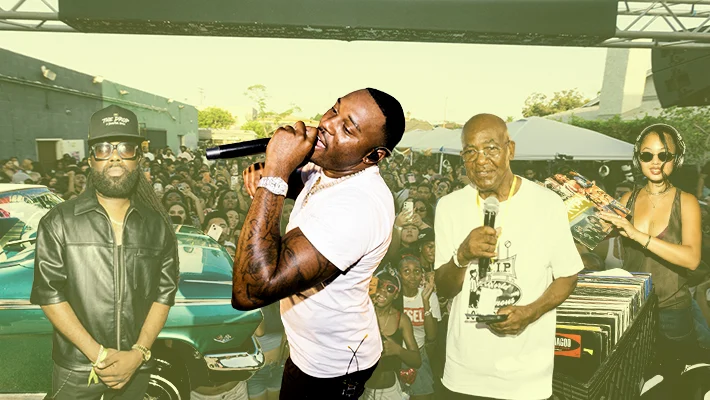
The intersection of West Coast hip-hop history and modern cultural preservation was on full display this past weekend as recording artist Kalan.FrFr delivered a high-profile headlining performance at the legendary World Famous VIP Records in Long Beach, California. Presented by FX in conjunction with The Drop: A Snowfall Saga, the event served as both a celebration of regional musical heritage and a contemporary showcase for one of the genre’s most prominent current standard-bearers.
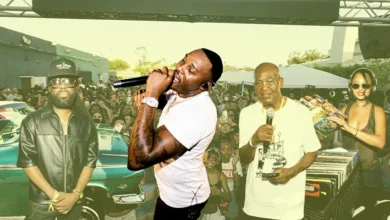
The gathering transformed a historic neighborhood intersection into a vibrant festival of Southern California music culture. Block-long queues formed hours before doors opened, surrounded by a classic car exhibition featuring meticulously restored, candy-painted lowriders lining the curbs. Inside the storied storefront, attendees browsed an archival photography exhibition curated by legendary lensman Mike Miller, whose vintage shots documented the golden era of West Coast rap. Culinary offerings were anchored by regional institutions, including Woody’s BBQ and Glizzy Street Dogs, reinforcing the event’s deep community roots.
For cultural historians and dedicated fans of the genre, the choice of venue held profound significance. World Famous VIP Records is far more than a defunct retail outlet; it functions as a cornerstone of modern American music history. During the late 1980s and early 1990s, store owner Kelvin Anderson recognized the socioeconomic challenges facing local youth and converted the establishment’s backroom into an impromptu recording studio and creative safe haven.
Within these modest confines, a generation of future superstars honed their craft. Most notably, the legendary trio 213—consisting of Snoop Dogg, Warren G, and the late Nate Dogg—cut their foundational first demo tapes inside the VIP Records studio space. Hosting Kalan.FrFr’s performance at the exact location where these hip-hop icons first recorded provided a poignant, full-circle moment for Long Beach residents, who turned out in large numbers to honor their local heritage.
Chronology and Event Highlights
The afternoon and evening unfolded through a carefully curated sequence of musical performances and cultural acknowledgments, overseen by prominent industry figures.
The festivities commenced in the late afternoon as crowds gathered outside the storefront on Atlantic Avenue. Master of ceremonies duties were handled by renowned West Coast DJ Hed, whose curated set traced the evolution of the region’s sonic footprint from early electro-funk and G-Funk to contemporary trap and melodic rap. DJ Hed’s sequencing maintained high energy throughout the venue, bridging generational divides among the diverse audience.
As dusk settled, the musical programming shifted to live instrumentation and guest appearances. Andre Troutman, recognized for his work as Kanye West’s creative director, took to the stage to demonstrate his mastery of the talk box—an essential textural element of classic West Coast production. Troutman’s performance culminated in an evocative, crowd-pleasing rendition of Tupac Shakur and Dr. Dre’s anthemic 1995 single “California Love,” drawing an enthusiastic response from the assembled fans and setting the stage for the evening’s main attraction.
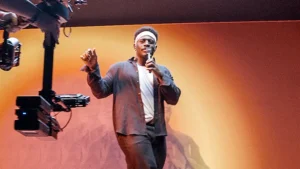
When Kalan.FrFr finally stepped into the spotlight, the atmosphere reached a crescendo. Emerging to rapturous applause, the artist delivered a dynamic set that explicitly paid homage to the past, present, and future of the regional movement. Rather than merely performing his own catalog, Kalan.FrFr wove classic regional cadence into his contemporary hits, acknowledging the foundational figures who walked the same Long Beach streets decades prior. The performance underscored his status as a vital modern torchbearer for a specific lineage of West Coast lyricism and performance.
Historical Background and Cultural Context
To fully understand the cultural weight of the event at VIP Records, one must examine the socio-musical ecosystem of Los Angeles and Long Beach during the late twentieth century. In the late 1980s, the emergence of gangsta rap and G-Funk fundamentally altered the trajectory of popular music in the United States. Artists from South Los Angeles, Compton, Long Beach, and Inglewood began documenting the realities of urban life, police relations, and systemic neglect under the Reagan administration.
Amid this turbulent backdrop, community hubs like VIP Records served as vital institutional anchors. Kelvin Anderson’s decision to open his backroom as a makeshift studio was an act of grassroots mentorship. Long before major label A&R representatives scouted the region, Anderson provided access to recording equipment, tape decks, and a constructive environment for neighborhood youth.
The resulting output from that backroom changed global popular culture. Snoop Dogg’s distinct drawl, Warren G’s melodic basslines, and Nate Dogg’s peerless vocal harmonies were all refined in the physical space that hosted Kalan.FrFr’s performance. Over subsequent decades, however, the shifting retail landscape, economic pressures, and urban redevelopment threatened the physical remnants of these historical sites. The preservation and celebration of VIP Records stand as a testament to the ongoing effort to secure the physical landmarks of Black American musical history against the forces of gentrification and erasure.
Industry Implications and Corporate Partnerships
The partnership between FX and the cultural event highlights a broader industry trend: the symbiotic relationship between prestige television marketing and grassroots music curation. By framing the concert around The Drop: A Snowfall Saga, FX aligned its brand with the authentic historical narrative of Los Angeles drug culture and community resilience explored in the network’s acclaimed programming.
Snowfall, which chronicled the crack cocaine epidemic in Los Angeles during the 1980s, shares a temporal and geographic overlap with the rise of VIP Records and the genesis of G-Funk. By supporting cultural activations that honor this specific era, media companies can engage consumers through experiential marketing that feels additive to the community rather than purely commercial.
Industry analysts note that brands increasingly rely on localized cultural authenticity to capture consumer attention in a fragmented media landscape. Events like the VIP Records showcase demonstrate that modern promotional campaigns achieve higher engagement when they invest in local economies, support community staples, and collaborate with respected figures within specific regional subcultures.
Analysis of Kalan.FrFr’s Artistic Trajectory
Kalan.FrFr’s positioning as the central figure of the event reflects his strategic importance in contemporary West Coast hip-hop. Emerging from the vibrant Los Angeles independent scene, the artist has steadily built a reputation for blending melodic sensibilities with the hard-earned realism characteristic of his predecessors.
His inclusion in cultural documentaries such as How LA Found Its Sound—produced in conjunction with related promotional efforts—cements his role as an active historian and participant in the evolution of California audio aesthetics. By examining how earlier generations forged a distinct sonic identity, Kalan.FrFr and his contemporaries are able to innovate while respecting the strict formal traditions of West Coast rap production, which relies heavily on heavy bass, synthesizer leads, and funk samples.
The performance at VIP Records serves as a case study in how modern artists can leverage their platforms to bridge generational divides. For older residents who remember buying vinyl records at the shop in 1988, seeing a contemporary star command the space validates their lived history. For younger fans, the event acts as an educational touchpoint, connecting current streaming favorites to the physical brick-and-mortar origins of the genre.
Broader Impact on Community Preservation
Beyond its immediate promotional objectives, the weekend’s celebration has stimulated ongoing discussions regarding the preservation of West Coast hip-hop landmarks. Unlike the music scenes of New York, Detroit, or Nashville—which have seen various state and municipal efforts to landmark historic studios and neighborhood hangouts—Southern California has historically been slower to institutionalize its physical hip-hop heritage.
Advocates, community organizers, and local stakeholders have increasingly pushed for official recognition and protection of sites associated with the development of G-Funk and West Coast gangsta rap. Events hosted at historical locations like VIP Records generate public awareness and economic viability, proving that these sites can remain active centers of community life rather than silent monuments to the past.
As the documentation of hip-hop’s first fifty years continues to mature into a formalized academic and archival discipline, the preservation of spaces like the VIP Records backroom remains paramount. These locations offer tangible evidence of the ingenuity required by young artists who transformed limited resources into a dominant global cultural force.
Conclusion and Future Outlook
The headlining performance by Kalan.FrFr at Long Beach’s World Famous VIP Records successfully merged historical reverence with contemporary artistic achievement. Through a combination of archival displays, community-focused culinary offerings, and landmark musical performances, the event underscored the enduring vitality of West Coast hip-hop culture.
As viewers continue to engage with related media projects, including How LA Found Its Sound and FX’s The Drop: A Snowfall Saga, the cultural imprint of Los Angeles and Long Beach remains as influential as ever. The full-circle moment achieved at VIP Records ensures that the foundational history of the region’s musical pioneers will continue to inspire the next generation of artists shaping the future of American music.