In the vast and sprawling landscape of comic book adaptations, few cinematic anomalies rival the strange genesis of 1992’s Doctor Mordrid. Directed by Charles and Albert Band under their B-movie banner Full Moon Entertainment, the film stands as a fascinating artifact of pre-Marvel Cinematic Universe Hollywood. At its core, Doctor Mordrid is a textbook example of copyright arbitrage: a high-concept genre picture born from a lapsed licensing agreement, substituting legal vulnerability with low-budget resourcefulness to deliver an unexpected cult classic.
The Genesis of a Mystic Alternative
To understand the existence of Doctor Mordrid, one must examine the complex history of Marvel Comics’ intellectual property adaptations during the late 20th century. Long before the era of interconnected cinematic universes and billion-dollar box office returns, comic book publishers struggled to successfully translate their two-dimensional heroes to the silver screen. In the early 1960s, Marvel architect Stan Lee actively cultivated Hollywood connections, attempting to bridge the gap between pulp publishing and mainstream cinema.
However, despite early television successes with characters like Spider-Man and the Hulk, feature-film breakthroughs remained elusive. The disastrous 1986 release of Howard the Duck dealt a severe blow to Marvel’s cinematic ambitions, relegating subsequent properties to direct-to-video obscurity, such as 1989’s The Punisher and 1990’s Captain America. Compounding these creative struggles, the devastating collapse of the comic book speculator market in the mid-1990s drove Marvel into Chapter 11 bankruptcy. To generate immediate capital and stay afloat, the publisher engaged in a fire sale of its most valuable film distribution rights—a maneuver that decades later required massive corporate buyouts, such as Disney’s acquisition of 21st Century Fox, to reclaim core properties like the X-Men and the Fantastic Four.
It was against this volatile backdrop of corporate instability that the Band brothers sought to bring Marvel’s Master of the Mystic Arts to the screen. Charles and Albert Band, renowned for operating Full Moon Features on tight budgets and high-concept premises, maintained friendly industry relations with Marvel icons Stan Lee and legendary artist Jack Kirby. Through these connections, the studio initially secured a legitimate license to produce an official Doctor Strange cinematic adaptation.
The Chronology of a Copyright Pivot
The production timeline of Doctor Mordrid reveals the precarious nature of independent filmmaking during the era. As principal photography and post-production dragged on, the strict operational windows of the licensing agreement expired. Consequently, the legal rights to the Doctor Strange character reverted entirely to Marvel Comics.
Faced with a completed or nearly completed film and zero legal right to release it under the Marvel banner, Full Moon Entertainment executed a swift and pragmatic pivot. Rather than shelving the project and absorbing a total financial loss, the filmmakers altered key character names, scrubbed direct textual references, and rebranded the protagonist. Thus, Doctor Strange transformed into Doctor Anton Mordrid.
Despite the obvious parallels—and the opening credits identifying the project as being "Based on an Original Idea by Charles Band"—members of the production team have offered varying accounts of the film’s origins. Screenwriter C. Courtney Joyner has historically maintained that the script was always intended as a loose homage rather than a direct, faithful adaptation. Regardless of the legal semantics, the finished product functioned undeniably as an alternate-reality cinematic sibling to the adventures of Stephen Strange.
Narrative Structure and Cast Realization
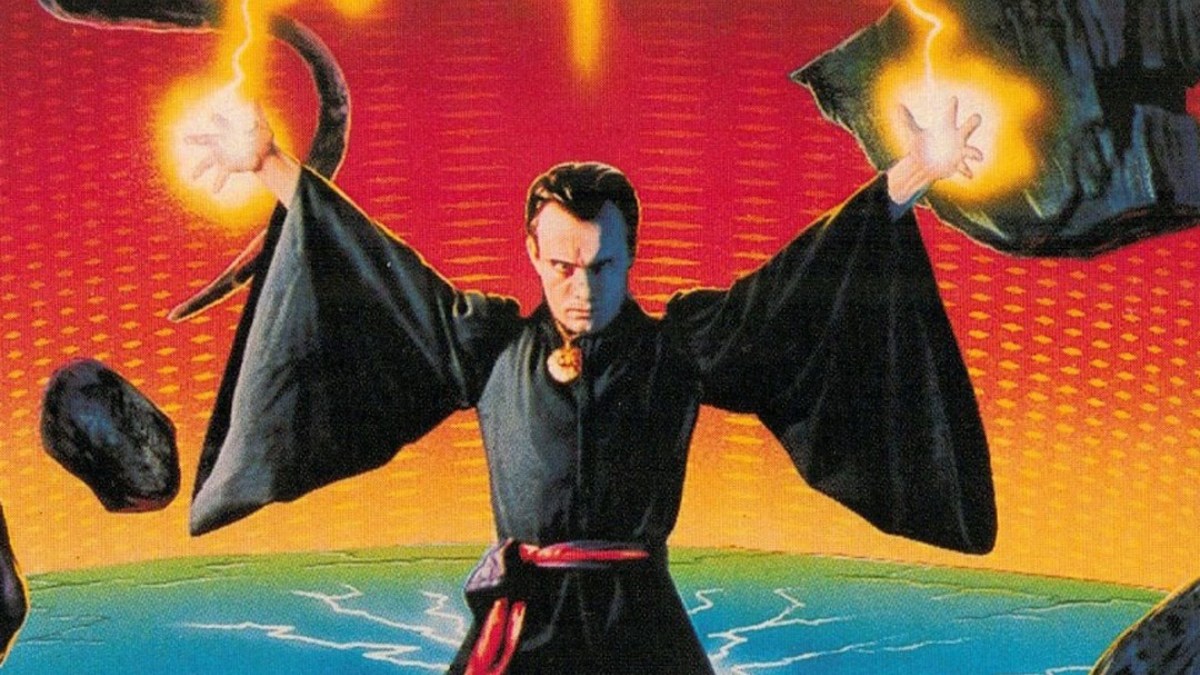
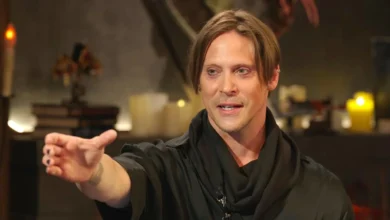
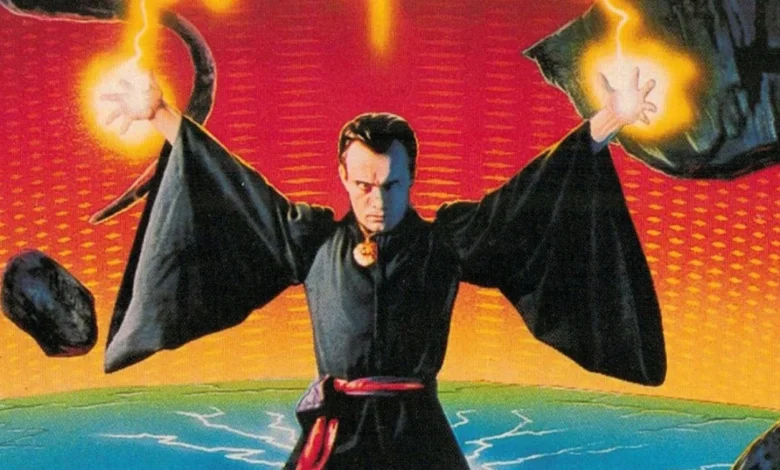
Clocking in at a brisk 74 minutes, Doctor Mordrid wastes little time establishing its mystical credentials. The film opens in a candle-lit, cavernous library scored by composer Richard Band, immediately introducing viewers to a world of esoteric danger. The narrative centers on Doctor Anton Mordrid, an ageless defender of Earth played by veteran character actor Jeffrey Combs.
Combs, celebrated for his memorably eccentric performances in cult horror staples like Re-Animator and From Beyond, as well as extensive contributions to the Star Trek franchise (including Weyoun in Deep Space Nine and Shran in Enterprise), brings a palpable gravitas to the role. Cast in a rare leading heroic capacity, Combs portrays Mordrid not as a relatable everyman, but as an aloof, otherworldly intellectual visibly burdened by the banalities of mortal society.
The plot thickens when Mordrid crosses paths with Samantha Hunt (Yvette Nipar), a supernatural crimes consultant, and Detective Tony Gaudio (Jay Acovone). Together, they investigate a string of ritualistic murders perpetrated by the film’s principal antagonist, the wizard Kabal (played by ubiquitous 1980s character actor Brian Thompson). Kabal systematically amasses artifacts of dark power, culminating in a climactic third-act showdown featuring astral projection, spontaneous lightning, and a remarkably ambitious battle involving resurrected dinosaur skeletons.
Comparative Analysis: Mordrid Versus the MCU
When evaluating Doctor Mordrid against modern iterations of the mystic arts—most notably Benedict Cumberbatch’s portrayals in the Marvel Cinematic Universe—the disparities in budget, tone, and artistic philosophy become starkly apparent.
In the contemporary MCU, characters like Stephen Strange are filtered through a polished, crowd-pleasing lens. Cumberbatch’s Doctor Strange often relies on sharp, quipping dialogue reminiscent of Robert Downey Jr.’s Tony Stark, designed to maximize mainstream demographic appeal. By contrast, Jeffrey Combs’s Doctor Mordrid leans into a distinct aura of genuine strangeness and unsettling distance.
Furthermore, the Full Moon pedigree infuses the production with a grit and macabre edge largely absent from modern corporate blockbusters. Elements such as explicit Satanic rituals and unvarnished practical effects preserve a sense of physical danger surrounding the supernatural—a stark reminder that early adaptations approached genre material with unbridled sincerity, even when hampered by financial constraints.
Broader Industry Implications and Legacy
While Doctor Mordrid cannot objectively compete with the technical polish, narrative cohesion, or box office dominance of Disney’s multi-billion-dollar Marvel franchise, dismissing it as a mere knock-off overlooks its historical value.
The film serves as a crucial barometer of how independent studios navigated intellectual property restrictions before the digital age standardized cinematic universes. It highlights an era when regional distributors, video store culture, and entrepreneurial filmmakers could exploit legal gray areas to produce original works inspired by major publishing titans.
Ultimately, Doctor Mordrid remains a testament to creative resilience. By transforming a bureaucratic hurdle into an independent cult release, Full Moon Entertainment secured a unique cinematic footnote. It stands proudly as a fascinating time capsule—a reminder of a different era in Hollywood, when magic on screen required nothing more than ambition, theatrical practical effects, and a healthy disregard for corporate boundaries.
Related posts: