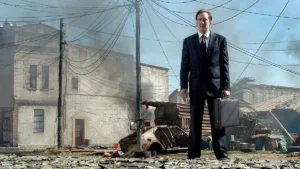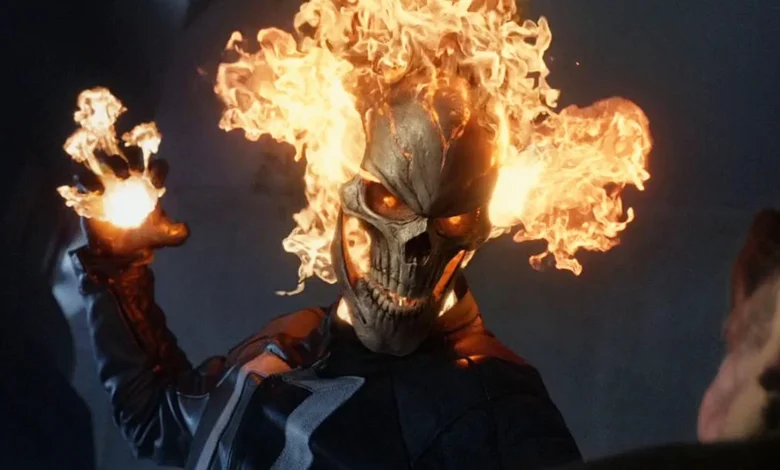
The upcoming iteration of the Ghost Rider franchise faces a uniquely crowded theatrical window, slated to premiere in the same competitive calendar year as a high-profile X-Men reboot and the final installment of Ryan Coogler’s critically acclaimed Black Panther trilogy. Beyond the sheer volume of competing blockbuster intellectual property, any new cinematic adaptation of the Spirit of Vengeance must contend with a strong legacy left by previous iterations on screen. Nicolas Cage famously portrayed the Johnny Blaze incarnation in 2007’s Ghost Rider and its 2011 sequel, Ghost Rider: Spirit of Vengeance, embracing an unhinged, high-energy performance style. Meanwhile, Gabriel Luna introduced audiences to Robbie Reyes in the fourth season of ABC’s Agents of S.H.I.E.L.D., bringing a grounded yet intense modern flair to the mantle. For star Ryan Gosling and director Shawn Levy, establishing a distinct identity for their upcoming Marvel Cinematic Universe project requires looking beyond the traditional Johnny Blaze narrative and tapping into a different era of comic book lore.
The path to differentiation lies directly with the third prominent character to assume the Ghost Rider mantle: Danny Ketch. Created by writer Howard Mackie and artist Javier Saltares, Danny Ketch made his debut in Ghost Rider #1, published in May 1990. The character’s origin story immediately established a darker, grittier tone compared to his predecessor. After criminal elements—specifically a gang led by the villain Deathwatch—severely wound his sister Barbara, Danny flees into a Brooklyn graveyard. There, he stumbles upon a derelict motorcycle adorned with a flaming skull emblem. Upon touching the gas cap, he is bonded with the Spirit of Vengeance, transforming into a sleek, leather-clad skeletal rider. This iteration quickly found himself embroiled in supernatural gang wars and cosmic conflicts, frequently battling Blackheart, the malevolent son of the demon lord Mephisto.
The Historical Impact of the 1990s Danny Ketch Era
During the late 1980s and early 1990s, the comic book industry underwent a massive cultural shift toward darker, morally ambiguous antiheroes. This era birthed franchises like Todd McFarlane’s Spawn and heavily influenced the aesthetic of mainstream publishers. Danny Ketch’s introduction capitalized perfectly on this zeitgeist. Javier Saltares provided a striking redesign for the character, outfitting the Hellcycle with aerodynamic, futuristic lines and equipping the rider with a spike-studded leather jacket, glowing blue or orange chain, and a formidable mystical arsenal.
This visual and thematic overhaul transformed Ghost Rider from a niche, horror-adjacent property into one of Marvel’s top-selling comic book titles of the decade. Unlike Johnny Blaze, whose struggles often centered on a traditional Faustian bargain with the devil, Danny Ketch’s narrative was rooted heavily in urban crime, familial protection, and the psychological burden of a power he neither asked for nor fully understood. This shift in perspective allowed the character to interact organically with the broader street-level and supernatural corners of the Marvel Universe.
Cross-Over Potential and Ensemble Opportunities in the MCU
One of the greatest narrative advantages of adapting the Danny Ketch era is the character’s extensive history of high-profile team-ups. While Johnny Blaze often operated as a solitary drifter traversing desolate highways, Danny Ketch was deeply integrated into the fabric of New York City’s supernatural and vigilante community. Early in his publication run, Ketch crossed paths with the Punisher, Wolverine, and various members of the X-Men. Furthermore, he served as a foundational member of the Midnight Sons, Marvel’s premier supernatural coalition dedicated to combating demonic and occult threats.

Perhaps most famously, Ketch participated in the iconic "New Fantastic Four" storyline spanning Fantastic Four #347 through #349, written by Walter Simonson with art by Arthur Adams. In this storyline, a temporary roster consisting of Danny Ketch’s Ghost Rider, Spider-Man, Wolverine, and the Hulk assembled to rescue the original team from the shape-shifting alien known as the Mole Man and subsequently confront the cosmic entity Galactus. Notably, Ketch delivered one of the most memorable moments of the era by utilizing the Penance Stare against Galactus. By leaning into the Danny Ketch mythology, Marvel Studios opens the door not only for a standalone supernatural franchise but also for lucrative ensemble crossovers that integrate the studio’s darker characters into the broader MCU narrative.
Character Dynamics, Tragedy, and Emotional Stakes
Shifting the cinematic focus to Danny Ketch also provides Ryan Gosling with a rich dramatic landscape that sets his performance apart from both Nicolas Cage and Gabriel Luna. The narrative stakes of Danny Ketch’s life are defined by relentless tragedy. Throughout his comic book tenure, Danny dies multiple times while serving as the Ghost Rider, and his sister Barbara ultimately falls victim to Blackheart, pushing the character into deeper realms of grief and vengeance.
Furthermore, comic book continuity establishes that Danny Ketch and Johnny Blaze are half-brothers, sharing a complex and emotionally turbulent bloodline. Introducing this familial connection in a cinematic adaptation could provide the franchise with profound emotional heft, bridging the gap between legacy iterations and the new MCU continuity. Rumors surrounding the casting of Heated Rivalry star Connor Storrie as Blackheart have further fueled fan speculation that Marvel Studios intends to explore deep-seated demonic rivalries, establishing a primary antagonist who poses an existential threat to the hero’s family.
Executive Backing and Studio Interest in the Property
The viability of the Danny Ketch era is not merely a fan-driven theory; it has also garnered internal support from key creative leadership within Marvel. Brad Winderbaum, head of Marvel Television, Animation, and Comics, explicitly highlighted the potential of this specific storyline during a media interview. Discussing the expansive future of the supernatural corner of the MCU, Winderbaum noted a specific preference for the era, stating directly, "I would wanna do the Danny Ketch era of Ghost Rider." This executive endorsement suggests that the creative direction being pursued by Gosling and director Shawn Levy aligns closely with the modern sensibilities of Marvel’s overarching transmedia strategy.
Implications for the Marvel Cinematic Universe
The introduction of Ryan Gosling as a distinct incarnation of the Spirit of Vengeance marks a critical milestone for the MCU’s ongoing expansion into horror and supernatural storytelling. Following the integration of supernatural elements through projects like Werewolf by Night, Doctor Strange in the Multiverse of Madness, and Blade, the studio requires a foundational anchor for its darker street-level and mystical narratives. By opting for Danny Ketch over a retread of Johnny Blaze, Marvel avoids direct comparisons to the 2000s cinematic style, offering audiences a fresh visual aesthetic and a more tragic, character-driven narrative. As production timelines advance toward the slated release window, the studio has a rare opportunity to redefine a legacy character for a modern audience, utilizing the distinct mythology of the 1990s comic book boom to forge a unique cinematic identity.
Related posts: