Long before the Marvel Cinematic Universe dominated the global box office, generating billions of dollars and redefining modern pop culture, the House of Ideas maintained a vastly different relationship with Hollywood. Today, terms like Marvel and movies are nearly synonymous, with audiences routinely flocking to theaters for superhero epics and even re-releases like Avengers: Endgame Encore topping box office charts. However, for decades, Marvel’s direct ventures onto the silver screen were exceedingly rare and largely catastrophic. Barring the critically panned 1986 live-action adaptation of Howard the Duck and a memorable cameo by a young Vincent D’Onofrio in Adventures in Babysitting—where his construction worker character is famously mistaken for Thor—Marvel Comics struggled for years to successfully translate its foundational intellectual property into viable cinematic features.
Despite these early hurdles on the big screen, the publishing giant was far from absent from the broader entertainment landscape. Throughout the 1970s, 1980s, and 1990s, Hollywood and the comic book industry frequently intersected through printed adaptations of major genre films. These publications functioned similarly to the official mass-market paperback novelizations that once lined bookstore shelves and grocery store checkout aisles. Yet, these comic books were far more than simple four-color reproductions of blockbuster scripts. On numerous occasions, these adaptations bridged the gap between Hollywood franchises and the established Marvel Universe, fundamentally altering public perception of the source material and leaving a permanent, albeit idiosyncratic, mark on comic book history.
Stan Lee and the Hollywood Ambition
To fully understand the origins of Marvel’s cinematic adaptations, it is essential to examine the multifaceted role of Stan Lee within the company. While popular culture often views Lee as the sole creative mastermind behind Marvel’s golden age, his actual day-to-day work primarily involved pitching high-level concepts and writing snappy dialogue over plots previously mapped out by legendary artists like Jack Kirby and Steve Ditko. More than a traditional writer, Lee functioned as Marvel’s chief figurehead and tireless pitchman, dedicated to selling the cultural legitimacy of comic books to the mainstream public. Long before his ubiquitous cinematic cameos in modern Marvel films, Lee was a recognizable media personality, frequently appearing on television talk shows and delivering lectures at universities to advocate for the artistic and cultural value of sequential art.
Lee possessed an enduring fascination with broader popular culture and harbored a strong ambition to transition comic characters into other media, particularly film. Over the decades, he drafted plans for movie collaborations with figures ranging from French auteur Alain Resnais to Troma Entertainment founder Lloyd Kauffman, while regularly cultivating relationships with public figures like Hugh Hefner. This ambition naturally manifested in efforts to pull prominent pop-culture phenomena into the pages of Marvel comic books. This strategy yielded surreal creative experiments, such as storylines in which the Avengers encountered media personalities like David Letterman, cast members from Saturday Night Live, and rock icons Kiss.
The Kiss collaboration materialized in 1977’s Marvel Comics Super Special #1, a magazine-format publication designed to broaden the publisher’s demographic reach. The oversized magazine format permitted more mature storytelling techniques and allowed the issues to be sold in non-traditional retail environments alongside more respectable literary fare. Consequently, the Marvel Comics Super Special line established an ideal vehicle for Marvel to formally welcome Hollywood studios onto the comic book page.
The Rise of the Marvel Comics Super Special
The creative credits for 1978’s Marvel Comics Super Special #3 read like a roster of industry royalty. The lead narrative was penned by Archie Goodwin, a titan of the medium who also co-created Luke Cage. Interior pencil work was supplied by Walter Simonson, renowned for his definitive runs on Thor and the Fantastic Four, while the inks were handled by Klaus Janson, a frequent collaborator of Frank Miller. The cover illustration featured a classic Marvel aesthetic: a man and a woman sprinting across a desert landscape toward a glowing flying saucer escaping a remote butte.
The twist for readers came upon discovering the publication’s official sub Close Encounters of the Fourth Kind: An All-New Illustrated Collector’s Edition of the Steven Spielberg Film. The issue presented Simonson’s stylized visual interpretations of Richard Dreyfuss’s Roy Neary and Melinda Dillon’s Jillian Guiler, chronicling their inexplicable compulsion to rendezvous with extraterrestrial visitors.
This cinematic venture was merely the beginning. Subsequent editions of the Super Special series adapted an eclectic mix of major motion pictures. Issue #6 offered a comic book rendition of Jaws 2, while later editions featured William Shatner and Leonard Nimoy on the cover for Star Trek: The Motion Picture in issue #15. Harrison Ford achieved a rare double-feature distinction, appearing as Han Solo in issue #16 (Star Wars: The Empire Strikes Back) and as Indiana Jones in issue #18 (Raiders of the Lost Ark). Curiously, this George Lucas-heavy run was briefly interrupted by an adaptation of Xanadu, the poorly received Olivia Newton-John disco musical.
The scope of the Super Special line extended far beyond traditional science fiction and fantasy. While the series naturally accommodated high-profile action properties like the James Bond films For Your Eyes Only and Octopussy, David Lynch’s surreal adaptation of Dune, and The Adventures of Buckaroo Banzai Across the 8th Dimension, it also ventured into unexpected genres. Family-friendly musicals and fantasy films such as Annie, The Muppets Take Manhattan, Labyrinth, and Santa Claus: The Movie all received the comic book treatment.
Marvel regularly assigned its premier creative talent—including industry legends like John Buscema, Bill Sienkiewicz, Marv Wolfman, and Dave Cockrum—to these projects. Despite the high caliber of talent involved, these adaptations were frequently marketed as commercial gimmicks and collector’s items designed to advertise and supplement the theatrical releases rather than stand as autonomous narrative works. However, this promotional mandate did not apply uniformly across all of Marvel’s cinematic endeavors.
Universe-Building and Continuity Chaos
For comic book historians and collectors, tracking down these adaptations can lead to either the magazine-format Super Specials or the traditional standard-size comic miniseries and ongoing titles that Marvel produced concurrently. Unlike the magazine specials, these monthly comic books adhered strictly to standard publishing formats. They featured the iconic Marvel logo, carried house advertisements for core titles like Spider-Man and The Incredible Hulk, and frequently included editorial commentary or introductions by Stan Lee. In many cases, these miniseries were simply serialized reprints of the Super Special material, resized and broken into multi-issue arcs.
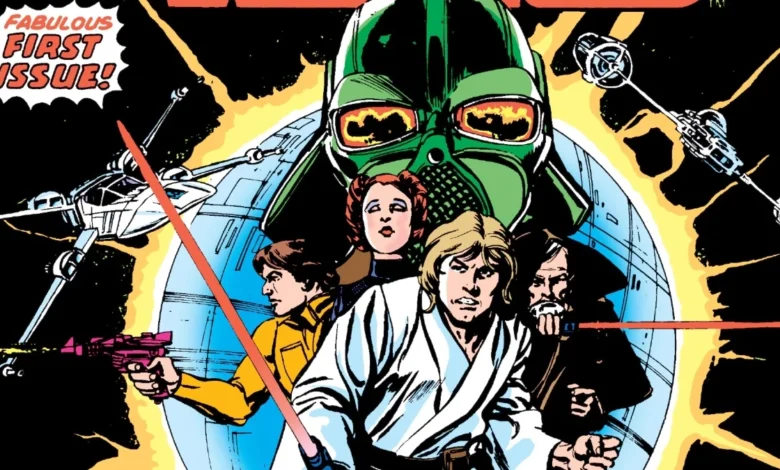
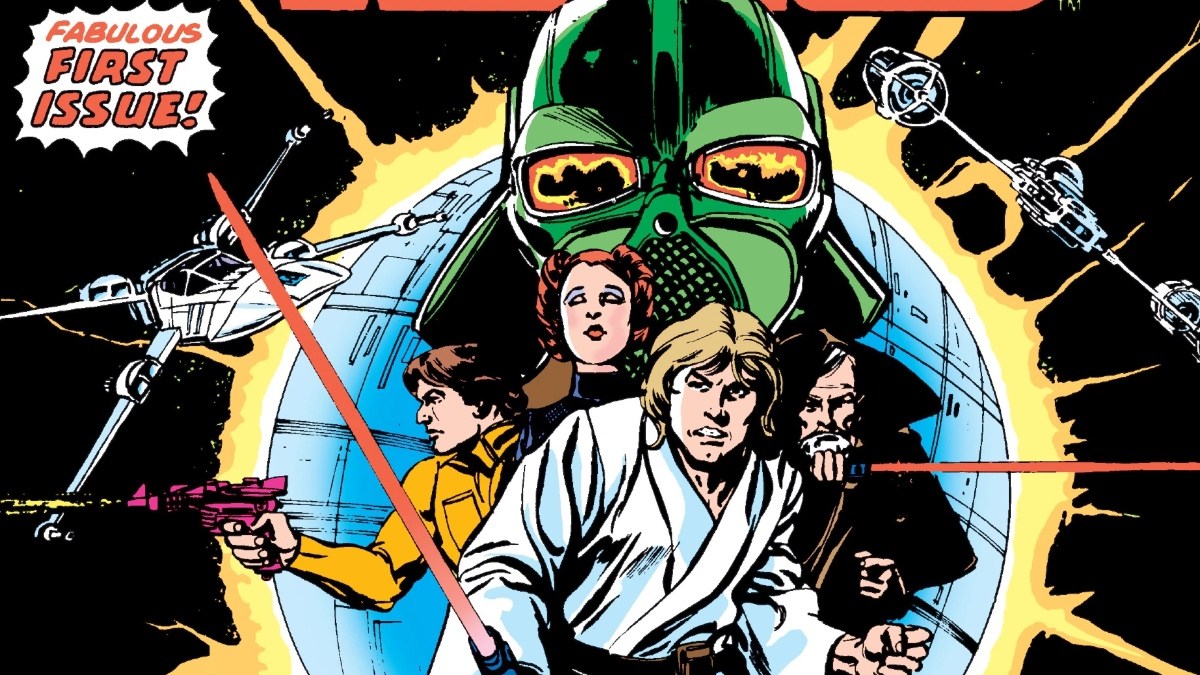
However, certain titles were engineered specifically to function as monthly periodicals within the strict parameters of the Marvel Universe, a creative choice that frequently introduced bizarre continuity implications. One notable example was Marvel’s Star Wars ongoing series, which launched in 1977 and notably hit store shelves before the film officially premiered in many theaters. While the initial issues closely followed George Lucas’s screenplay—occasionally incorporating deleted scenes, such as Darth Vader uttering the word "Sith" years before it was spoken on screen—writers Roy Thomas and Howard Chaykin soon began charting original narrative territory. Following the events of the first film, the creative team introduced idiosyncratic original characters, most famously Jaxxon, a towering, green-furred humanoid rabbit smuggler.
Jack Kirby’s adaptation of 2001: A Space Odyssey, which debuted at Marvel in 1976, pushed universe-integration even further. While Kirby respected the structural framework of Stanley Kubrick’s cinematic masterpiece and Arthur C. Clarke’s source novel, the legendary creator infused the narrative with his own cosmic mythos, tracing humanity’s interactions with the mysterious black monolith across vast stretches of time. These stories ultimately birthed X-51, a sentient android who later adopted the moniker Machine Man and transitioned into the mainstream Marvel Universe to fight alongside the Avengers.
Marvel’s Godzilla comic book series adopted an even more aggressive approach to corporate synergy. Rather than merely adapting the plots of existing Toho films, the series immediately deposited the King of the Monsters directly into the mainstream Marvel Universe, complete with a specialized military unit known as the S.H.I.E.L.D. Godzilla Squad. By issue #3, Marvel mainstays Thor and Hercules were prominently featured on the cover, locked in direct physical combat with the giant radioactive reptile.
Broader Impact and Industry Implications
While these crossover experiments provided immense creative freedom for writers and artists during the Bronze Age of comics, they created long-term logistical complications for continuity purists. In the modern era, corporate acquisitions—such as Disney’s ownership of both Marvel and the Star Wars franchise—allow legacy creations like Jaxxon to occasionally resurface in official reference materials. Similarly, licensing agreements between Toho and subsequent publishers have occasionally allowed nods to classic crossover eras. Yet, characters like Machine Man remain tied to narrative origins involving mysterious monoliths, unable to officially acknowledge their literary cousin, HAL 9000, due to complex copyright barriers.
These historical anomalies highlight a broader shift in the comic book industry. While Marvel has occasionally found ways to repurpose characters born from licensed adaptations—such as Death’s Head, who originated in UK-published Doctor Who and Transformers comics—the primary loss in the contemporary pop culture landscape is the comic book adaptation itself.
In an era defined by ubiquitous streaming platforms, digital video-on-demand services, and compressed theatrical windows, audiences can access visual blockbusters with unprecedented ease. Yet, the traditional comic book adaptation possessed a distinct artistic value. These publications served simultaneously as works of creative interpretation and heartfelt artistic homage. As the modern entertainment industry continues to consolidate around hyper-polished cinematic universes, the nuanced, hand-drawn cinematic adaptations of the past represent a unique era of cross-media translation that the contemporary pop culture landscape has largely left behind.
Related posts: