Freak War Reimagines the Trading Card Game Genre Through Accessible Party Play Mechanics

The landscape of tabletop gaming is currently undergoing a shift toward accessibility, moving away from the high-barrier-to-entry mechanics of traditional collectible card games (CCGs) toward streamlined, pick-up-and-play experiences. Standing at the forefront of this evolution is Freak War, a new project from designer and cartoonist Nate Galbraith, operating under the Sheltonshire Games label. By blending the monster-evolution tropes of the Pokémon Trading Card Game with the rapid-fire, high-chaos energy of party games like Exploding Kittens, Freak War seeks to capture a niche audience that enjoys tactical card play without the burden of complex rulebooks or the financial requirement of building custom competitive decks.
The Genesis of a Hybrid Concept
The conceptual framework for Freak War originated from a simple, real-world observation. Nate Galbraith, widely recognized in the illustration community as "sketchnate," observed children attempting to conduct makeshift Pokémon battles using standard playing cards. The children were essentially grafting their own narrative rules onto the classic game of War, an experience that highlighted a gap in the market: players crave the aesthetic and thematic engagement of monster-battling games but often prefer the simplicity and speed of traditional card games.
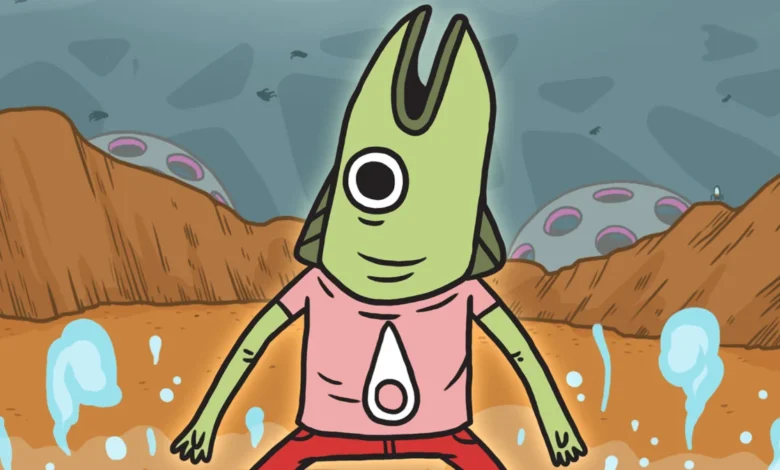
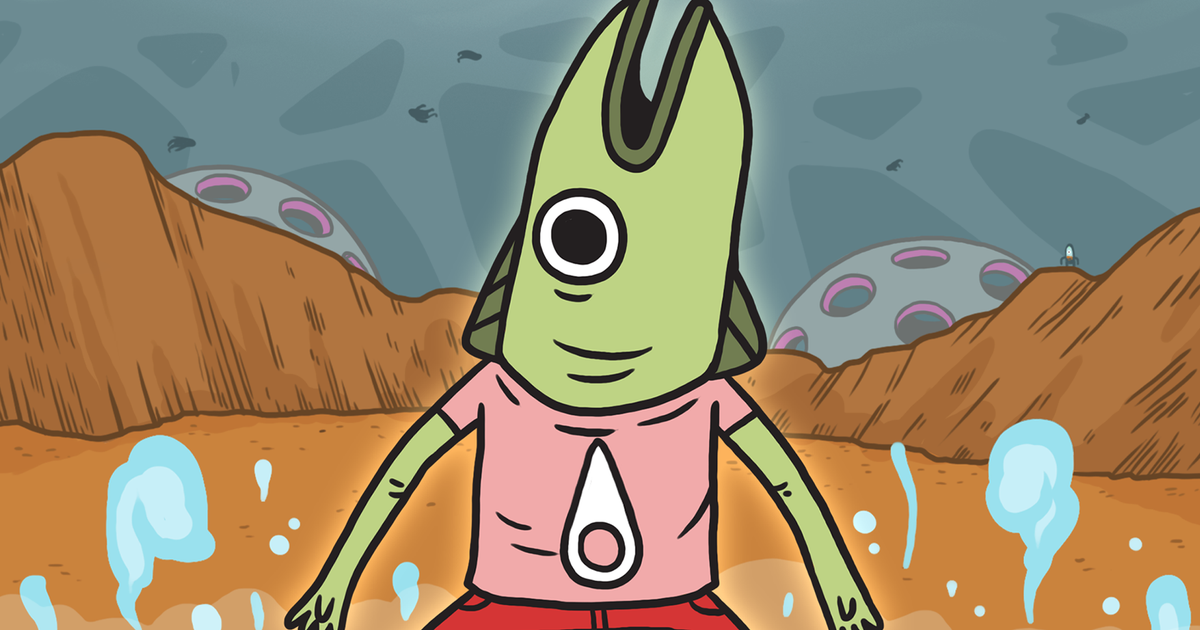
Galbraith leveraged his background in cartooning to develop a cast of characters that thrive on absurdity. The game’s lore posits that the emergence of a second sun in the sky caused mass mutation among ordinary creatures. Rabbits, foxes, and common household pests have been transformed into "freaks," ranging from muscled fish-people to time-traveling tigers and dapper platypuses. This thematic backdrop serves as the foundation for a game that prizes humor and accessibility over rigid, professional-level competitive integrity.
Mechanics and Gameplay Structure
At its core, Freak War is designed for groups of up to four players, though the modular nature of the deck allows for expansion. Unlike the rigid, head-to-head dueling structure found in games like Magic: The Gathering, Freak War functions as a multiplayer arena where every participant engages simultaneously.
The gameplay loop is built on the foundation of the classic game of War: players flip cards, and the highest attack value claims the pot. However, the game introduces several layers of complexity that elevate it beyond simple chance:
- Strategic Modes: Players can engage in "War" mode, which relies on the randomness of the deck, or "Battle" mode, which introduces strategic hand management.
- Modifier Integration: Similar to the item or trainer cards in established CCGs, Freak War utilizes modifiers. Players can equip items like the "Super Sword" or "Super Duper Sword" to their creatures, or deploy cards that allow for theft or hand-swapping, injecting a "take-that" element common in modern party games.
- Evolutionary Mechanics: The game mimics the growth patterns of Pokémon, allowing players to evolve their creatures during the fray to gain significant stat boosts.
- Meta-Game Interaction: In a nod to party-game tropes, some cards feature "meta" requirements. For instance, the "Fly Guy" character receives a statistical advantage if there is actual, uneaten food present on the gaming table. This breaks the "fourth wall" of the game, fostering a more social and interactive environment.
Supporting Data and Crowdfunding Trajectory
Freak War’s transition from a creative concept to a physical product is being facilitated by a Kickstarter campaign, a standard vehicle for independent tabletop publishers. The project set a modest funding goal of $10,000, a threshold it surpassed shortly after launch. This early financial validation suggests that the market for low-cost, high-engagement "filler" games remains robust.
The retail price point of $20 per deck positions the game in the "impulse buy" category of the tabletop market. For perspective, the average price for a starter deck in major TCGs often ranges from $20 to $40, but these decks usually require additional investment in "booster packs" to become competitive. By marketing itself as a self-contained experience—where the deck is the game itself—Freak War avoids the "pay-to-win" criticisms that often plague larger trading card franchises.
The campaign for Freak War is scheduled to conclude on June 13th, with fulfillment projected for June of the following year. This timeline is consistent with current manufacturing and shipping industry standards, which have seen lead times extend due to global logistics challenges and the increasing demand for independent print runs.
Market Context and Industry Implications
The rise of Freak War reflects a broader trend in the board game industry: the "de-complexification" of card games. As the hobby-gaming market expands to reach a wider demographic, developers are finding that successful titles must accommodate players who have limited time and a limited appetite for 50-page rulebooks.
In the last five years, the party game sector has grown significantly, driven by a rejection of the more aggressive or "edgy" humor associated with earlier titles like Cards Against Humanity. Games that prioritize goofy, imaginative, or "wholesome" chaos have seen higher engagement rates among younger demographics and families. Freak War fits this profile by offering a colorful, non-threatening aesthetic that appeals to children while retaining enough strategic depth to keep adults engaged during a short play session.
Furthermore, the "meta" design of the cards suggests that designers are increasingly aware of the social environment in which these games are played. By incorporating real-world elements into the game mechanics, Freak War transforms from a static card game into a social activity that encourages table talk, negotiation, and lighthearted conflict.

Potential Challenges and Future Outlook
While the initial reception has been positive, Freak War will face the inherent challenges of any independent card game: longevity and community building. Without the massive marketing budgets of industry giants like The Pokémon Company or Wizards of the Coast, the game relies heavily on its visual identity and word-of-mouth marketing.
The reliance on "take-that" mechanics—where players can actively sabotage one another—is a double-edged sword. While it keeps the game fast-paced and unpredictable, it can occasionally lead to player frustration if not balanced correctly. The developers at Sheltonshire Games have attempted to mitigate this through the inclusion of various game modes, such as "King of the Hill" and team-based rules, which allow groups to adjust the level of conflict to their preference.
Looking ahead, the success of the Kickstarter campaign indicates that there is a sustainable demand for this type of product. Should the game prove successful upon its release next June, it could serve as a case study for how independent creators can leverage niche design concepts to disrupt entrenched gaming genres. By stripping away the administrative overhead of traditional TCGs—deck construction, deck-building, meta-analysis, and rule mastery—Freak War positions itself not as a competitor to Pokémon, but as a gateway to it, or perhaps as a necessary, lighthearted antidote to the intensity of professional card play.
Conclusion: A New Standard for Accessible Play
Freak War represents a confluence of design philosophies. It captures the visual allure of monster-evolution games, the rapid pace of a deck of cards, and the social interaction of a modern party game. For the casual gamer, the attraction is clear: the ability to sit down, split a deck, and engage in a tactical battle without the barrier of entry that defines the current trading card market.
As the project moves toward its final production stages, the gaming community will be watching to see if this blend of "goofy" aesthetics and refined, light-weight mechanics can hold the attention of players beyond the initial novelty phase. If it succeeds, Freak War may well be remembered as a hallmark example of how modern tabletop design is prioritizing the player experience over complex, rigid systems, proving that sometimes, the most effective strategy is to simply have fun.
Related posts: