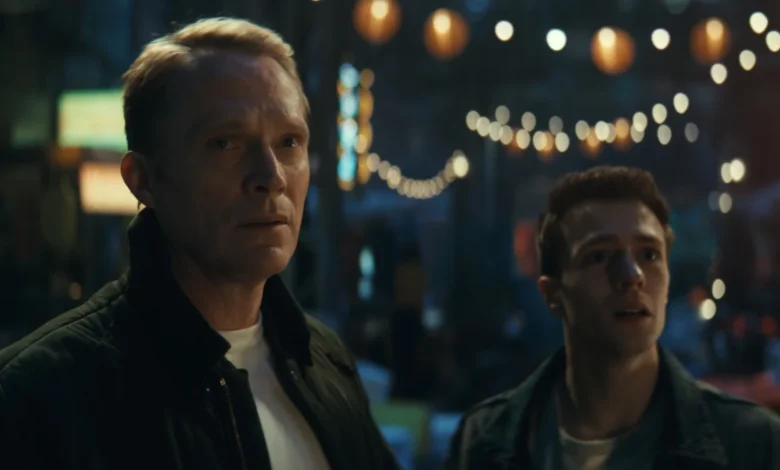
The shifting landscape of the Marvel Cinematic Universe continues to expand its sprawling roster of characters as preparations ramp up for future crossover events. Recent promotional material for upcoming streaming television projects has confirmed the formal introduction of yet another foundational member of the anticipated Young Avengers initiative. Following a series of strategic cinematic setups across multiple theatrical releases and streaming platforms, Marvel Studios has released official promotional art for the upcoming Disney+ series VisionQuest, offering audiences their first clear look at the live-action incarnation of Tommy Shepherd, also known as Speed.
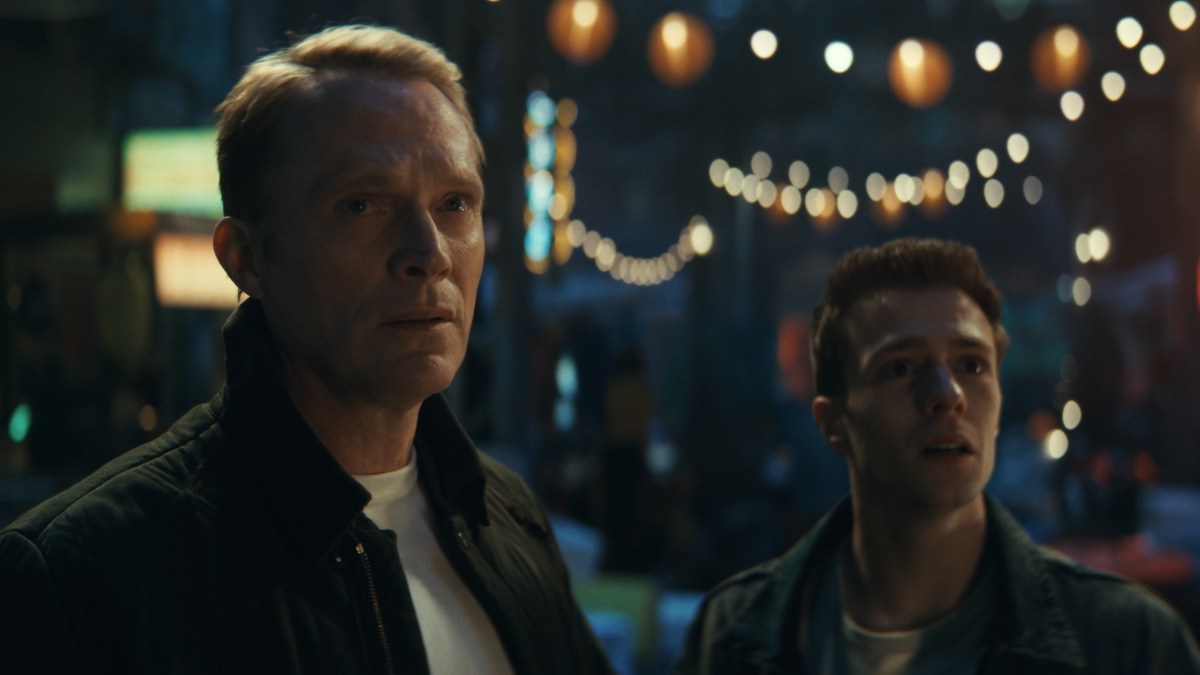
The newly unveiled marketing materials for VisionQuest, which is scheduled to premiere on Disney+ on October 14, 2026, highlight an ensemble that features Paul Bettany reprising his role as the synthezoid Vision, alongside a humanized interpretation of the robotic antagonist Ultron, portrayed by James Spader. However, the most significant revelation for continuity enthusiasts is the inclusion of actor Ruaridh Mollica as Tommy, the super-powered twin brother of Billy Kaplan. This development marks another critical milestone in the slow-burn assembly of the Young Avengers, a youthful coalition of heroes designed to inherit the legacy of Earth’s Mightiest Heroes amid escalating multiversal threats.
The Chronology of the Young Avengers Initiative
To understand the strategic importance of Tommy’s introduction in VisionQuest, one must examine the methodical assembly of the Young Avengers across the Multiverse Saga. Marvel Studios has deliberately peppered its Phase 4 and Phase 5 slates with next-generation heroes, establishing a foundation that spans both feature films and television series.
The groundwork for this youthful faction began in earnest with the post-credits sequence of 2023’s The Marvels, which featured Kamala Khan, also known as Ms. Marvel, initiating a recruitment effort by tracking down Kate Bishop, the successor to the Hawkeye mantle. This thread was further developed on the big screen in Ant-Man and the Wasp: Quantumania, which introduced Cassie Lang operating under her heroic moniker, Stature, utilizing Pym Particle technology to alter her size.
On the television front, the supernatural corner of the MCU made significant strides with the Disney+ series Agatha All Along. That program formally introduced Billy Kaplan, portrayed by Joe Locke, whose true identity as the reincarnation or spirit-inheritor of Billy Maximoff—one of the magical twins initially created by Wanda Maximoff in Westview—set the stage for the magical family dynamics that VisionQuest is now poised to explore. With Ruaridh Mollica’s casting as Tommy, the twin dynamic from the original comic book source material is now fully accounted for within the live-action continuity, solidifying the core membership of the upcoming youth team.
The Narrative Paradox of the Maximoff Twins
The reemergence of both Billy and Tommy in the contemporary MCU timeline brings to the forefront complex narrative questions regarding their original creation and subsequent erasure. Viewers of the 2021 streaming series WandaVision will recall that the children were manifested within a localized reality-altering hex cast by Wanda Maximoff over the town of Westview, New Jersey. When Monica Rambeau and Wanda eventually dismantled the barrier to free the townsfolk, the children ceased to exist, classified by the narrative as magical constructs rather than flesh-and-blood individuals.
This plotline carried heavy emotional consequences into subsequent projects, most notably in Doctor Strange in the Multiverse of Madness. In that 2022 feature film, a corrupted Wanda sought out alternate dimensions where her sons genuinely existed, driving home the notion that the twins had no physical anchoring on Earth-616.
However, the supernatural mechanics demonstrated in Agatha All Along provided a precedent for how these characters could bypass conventional biological limitations. In that series, the spiritual essence of Billy Maximoff—lost following the collapse of the Westview hex—bonded with the empty physical vessel of Billy Kaplan, a teenager who had recently perished in a vehicular collision. This reincarnation-style mechanism allowed the character to exist simultaneously as both the magical construct and the human teenager whose body he inhabited.
Industry analysts and continuity followers anticipate that VisionQuest will unveil a parallel origin story for Tommy Shepherd. It is widely expected that Tommy’s spiritual essence found a similar corporeal host at the moment of a mortal accident, laying the groundwork for his superhuman speed and his eventual reunion with his brother.
Comic Book Origins and Adaptation Precedents
The narrative complexities surrounding the Maximoff twins are deeply rooted in Marvel Comics history, where their existence has long been defined by convoluted magical interventions and cosmic retcons. Created by writer Steve Englehart and artist Richard Howell, the twins made their initial appearance as infants in the 1986 comic book miniseries The Vision and the Scarlet Witch #12. In the source material, the children were inadvertently brought to life using stray fragments of the demonic entity Mephisto’s soul.
This storyline reached a tragic conclusion in 1989’s Avengers West Coast #52, when Mephisto reclaimed the soul fragments, effectively erasing the children from existence and wiping the memory of them from Wanda Maximoff’s mind. For over a decade, the characters remained literary casualties of continuity.
The status quo shifted dramatically with the 2005 launch of the Young Avengers comic book series, created by Allan Heinberg and Jim Cheung. The title introduced a teenage hero initially known as Asgardian, who slowly realized he was the reincarnated soul of Billy Maximoff. By issue #10 in 2006, Billy was joined by Tommy Shepherd, a white-haired speedster who adopted the moniker Speed.
In the comics, the resurrection of the twins was orchestrated through the intervention of cosmic entities, including Immortus—a variant of Kang the Conqueror—and the M’kraan Crystal, a nexus of all-powerful energy linked to the Phoenix Force. These forces allowed the souls of the children to be reborn into different families as Billy Kaplan and Tommy Shepherd, who only later in life unlocked their latent superhuman abilities and recovered memories of their shared past. Adapting this intricate web of lore for the screen presents both a narrative challenge for Marvel Studios and an opportunity to connect disparate mystical and technological elements within the overarching franchise continuity.
Implications for the Broader Marvel Cinematic Universe
The formal introduction of Speed via the VisionQuest marketing campaign arrives at a critical juncture for the Marvel Cinematic Universe. With Phase 5 and Phase 6 charting a course toward massive multiversal confrontations, the structural integrity of Earth’s defense forces is fracturing.
Recent theatrical releases such as Captain America: Brave New World and Thunderbolts* have established a distinct ideological divide within the superhero community. The current geopolitical landscape of the MCU features two separate factions operating under the banner of Earth’s Mightiest Heroes—Sam Wilson’s official Avengers roster and the independent New Avengers initiative backed by governmental and private entities. These factions are currently positioned on a collision course, all but guaranteeing internal conflict in the upcoming feature film Avengers: Doomsday.
Against this backdrop of fractured leadership and political friction, the quiet assembly of the Young Avengers represents a grassroots contingency plan. While the senior heroes contend with global threats and ideological disputes, the next generation of operatives is coalescing through shared ties, familial bonds, and supernatural awakenings.
The inclusion of Tommy Shepherd alongside his brother Billy, the anticipated return of a reconstituted Vision, and the enigmatic presence of a humanized Ultron all point to a narrative in VisionQuest that explores the themes of legacy, identity, and artificial versus organic consciousness. Furthermore, as the franchise builds toward major confrontations involving formidable adversaries like Doctor Doom, the institutional readiness of these youthful defenders may ultimately prove decisive.
As promotional momentum builds ahead of its October 14 release on Disney+, VisionQuest is shaping up to be a pivotal television chapter that bridges the gap between historical MCU trauma and the forward-looking roster of the Multiverse Saga. Whether the on-screen adaptation of Speed will fully embrace his comic book lineage or forge an entirely distinct path within the established cinematic canon remains one of the most anticipated questions for the franchise’s dedicated following.