Analog Abattoir: Revisiting Jim Van Bebber’s Underground Street-Gang Masterpiece Deadbeat at Dawn

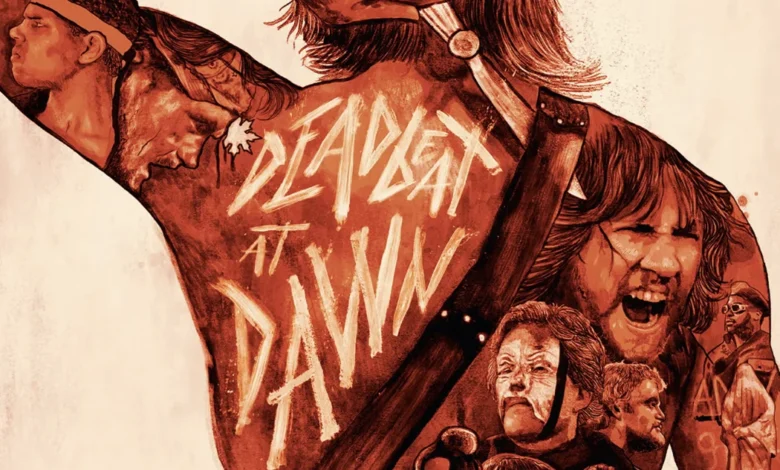
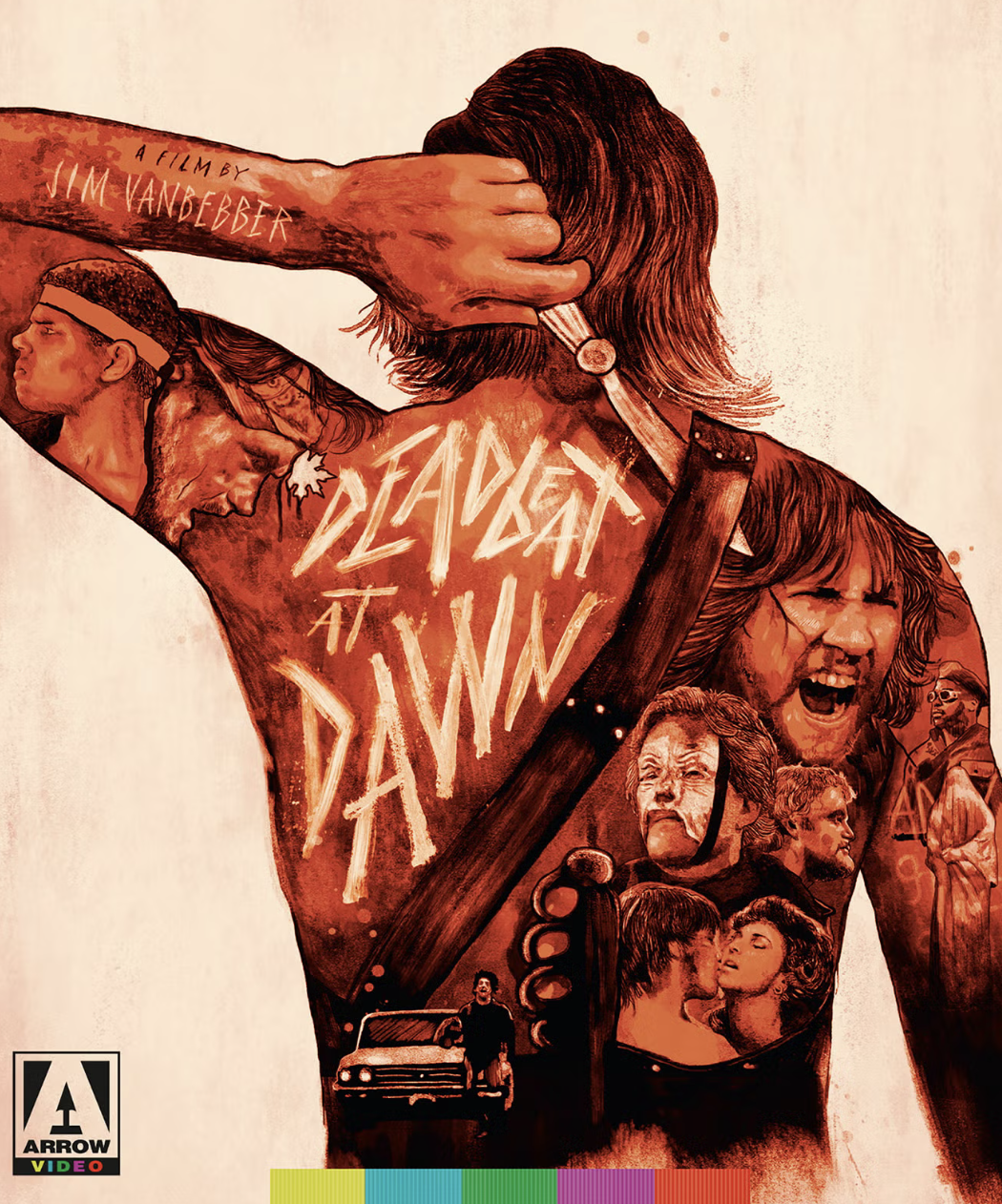
The landscape of independent American cinema is littered with ambitious projects that collapsed under the weight of their own budgetary limitations, but few works have achieved the ferocious, enduring cult status of Jim Van Bebber’s 1988 feature, Deadbeat at Dawn. Operating far outside the traditional studio system and financed largely through funds originally intended for student loans, Van Bebber’s Dayton, Ohio-set exploitation film stands as a masterclass in DIY filmmaking. Decades after its initial underground circulation, the film continues to captivate cinephiles, extreme-cinema enthusiasts, and scholars of transgressive art. Recently brought to a wider contemporary audience via a comprehensive Arrow Video Blu-ray release—which notably includes Van Bebber’s equally ruthless short film My Sweet Satan—Deadbeat at Dawn remains a towering benchmark of heavy-metal-infused street-gang cinema, offering a stark contrast to the stylized, theatrical romanticism found in mainstream genre predecessors.
Main Facts and Production Background
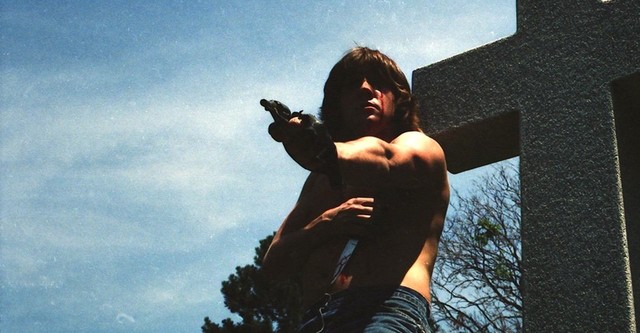
At its core, Deadbeat at Dawn is a gritty, unvarnished depiction of turf warfare set against the post-industrial decay of Dayton, Ohio. The narrative centers on Goose, played with a feral intensity by writer, director, and editor Jim Van Bebber. Goose is the leader of a violent local street gang known as the Ravens, who are locked in a vicious, escalating territorial war with a rival faction, the Spiders.
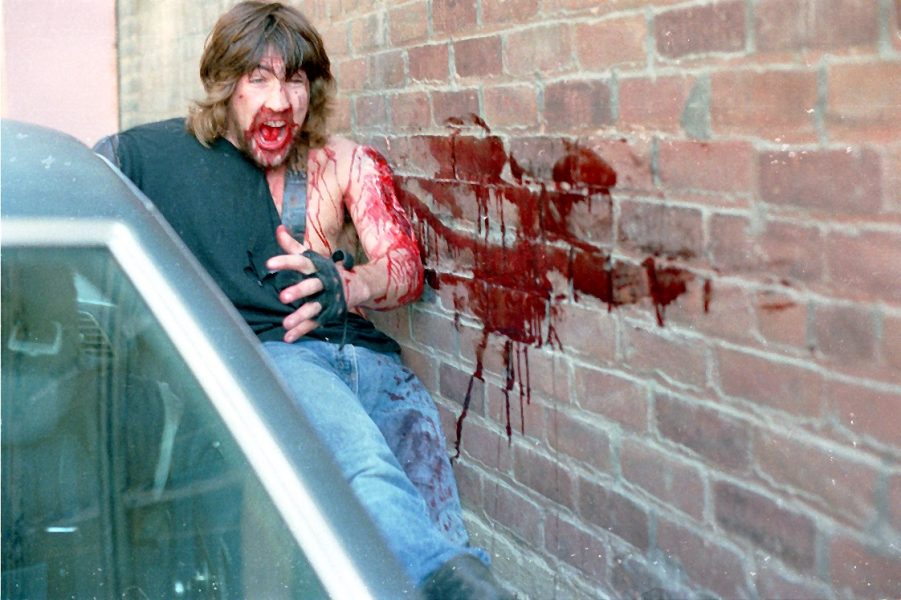
Unlike the polished choreography and comic-book aesthetics of Walter Hill’s 1979 classic The Warriors, Van Bebber’s vision strips away all romanticism. Where The Warriors operates in a stylized, neo-noir New York City that ultimately rewards a form of urban righteousness, Deadbeat at Dawn takes place in a slate-gray, poisoned environment where the only vibrant color is fresh blood. The film’s production reflects this brutal realism. Shot over several years on a shoestring budget, the crew relied on practical effects, genuine grit, and absolute physical commitment from its cast. Actors were frequently subjected to genuine physical hazards, dragging faces across concrete and executing high-impact stunt work without the safety nets of a major Hollywood production. The resulting texture is visceral: viewers can practically feel the gravel under the characters’ engineer boots and taste the cheap whiskey and adrenaline that fueled the shoot.
Chronology of the Narrative and Production Timeline
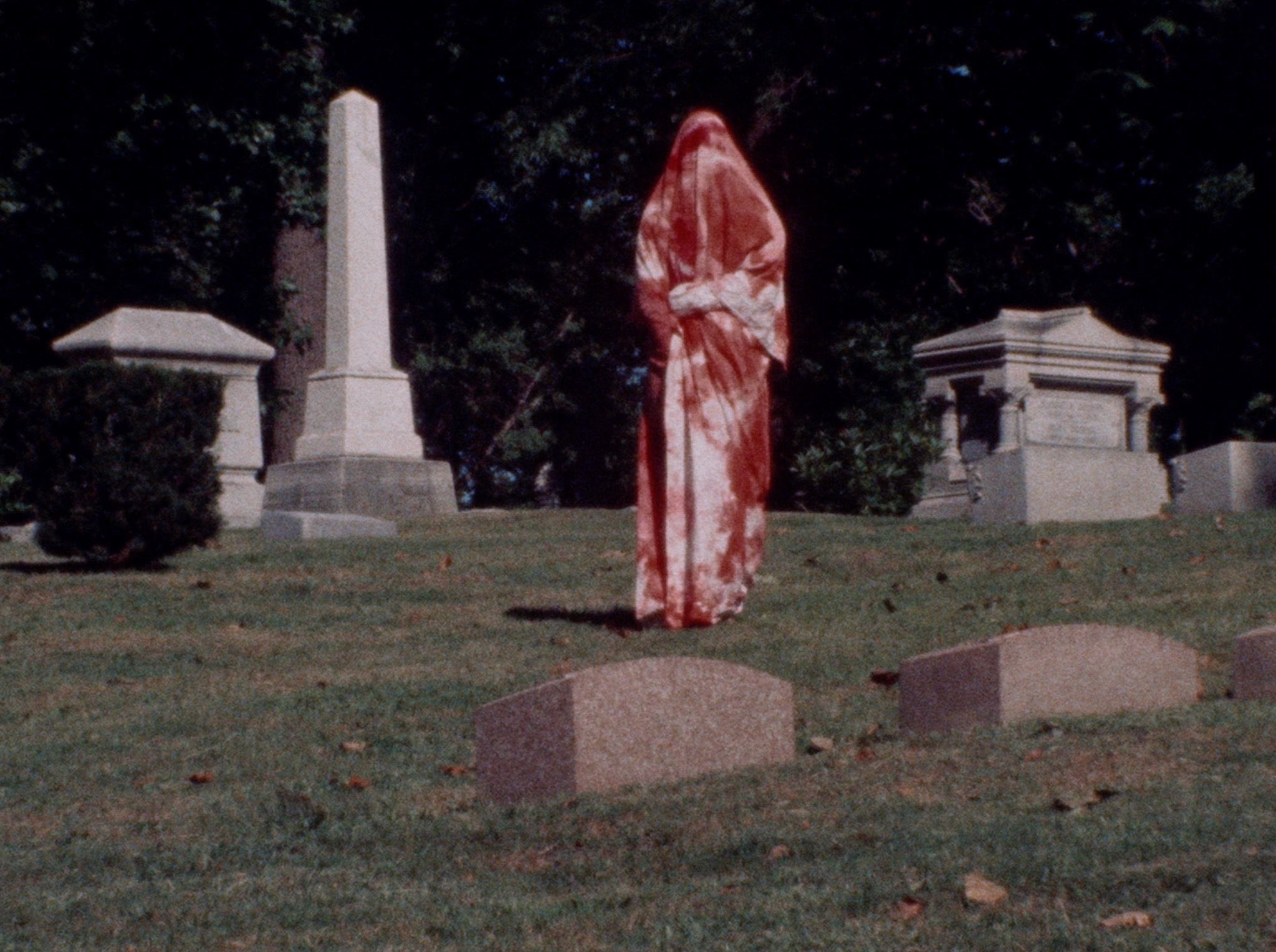
The production history of Deadbeat at Dawn is nearly as tumultuous as the fictional gang war it depicts. Conceived in the mid-1980s by Van Bebber during his time at Wright State University, the project evolved from a series of short-form experiments into a feature-length endurance test.
Chronologically, the production timeline unfolded across several arduous phases:
- 1983–1984: Van Bebber conceptualizes the project, drawing inspiration from grit-and-grime cinema such as Switchblade Sisters and Combat Shock, while assembling a local cast of non-professional actors and friends from the Dayton area.
- 1985–1987: Principal photography takes place intermittently over weekends and breaks, financed piecemeal through student loans, local jobs, and sheer financial resourcefulness. Delays are frequent due to equipment failures, cast turnover, and the physical injuries sustained during shooting.
- 1988: Post-production is completed, utilizing a heavy-metal and punk soundtrack to bridge the frantic narrative sequences. The film begins its initial festival and underground VHS circulation.
- Decades Later: The film achieves legendary status within underground horror and grindhouse communities, ultimately leading to restoration efforts and physical media distribution deals, culminating in the definitive Arrow Video Blu-ray release.
Within the narrative timeline of the film, the plot pivots on a classic noir ultimatum. Goose is confronted by his girlfriend, Christie, who demands that he choose between a future of domestic tranquility away from the violence or continued participation in the gang wars that threaten to consume them both. Goose ultimately chooses to walk away from the Ravens to build a life with Christie. However, this reprieve is brutally cut short when the rival Spiders murder Christie in a merciless act of retaliation.
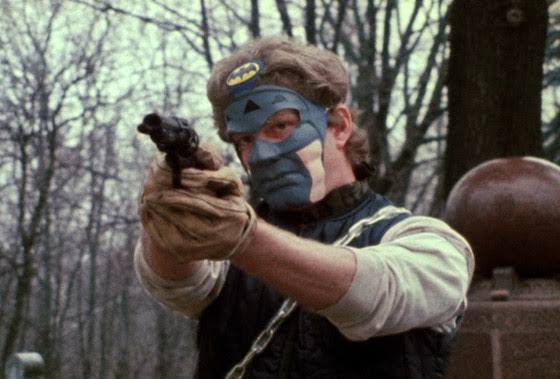
Following this tragedy, Goose’s grief transforms into an all-consuming religious zealotry centered entirely on reprisal. His pursuit of the Spiders is relentless, meticulous, and devoid of the Hollywood tropes where a solitary hero easily dismantles an entire criminal syndicate. Instead, Goose’s vendetta is a bloody, exhausting descent into mutual destruction, ending in an open alleyway where the line between victor and victim is entirely erased.
Supporting Data and Comparative Analysis
To understand the unique cultural placement of Deadbeat at Dawn, one must examine the broader ecosystem of 1980s independent exploitation and regional horror cinema. During this era, advancements in consumer-grade video equipment and the rise of the home video market allowed regional filmmakers outside of Los Angeles and New York to bypass traditional distribution gatekeepers.

Data regarding independent film financing from the mid-1980s indicates that micro-budget features operating on budgets under $50,000 rarely achieved national theatrical distribution. Instead, titles like Deadbeat at Dawn relied on regional drive-ins, midnight movie screenings, and direct-to-video tape trading networks. Van Bebber’s film stands out statistically and qualitatively within this bracket due to its exceptionally high technical proficiency in editing and sound design, despite its amateur cast.
Furthermore, film historians often categorize Deadbeat at Dawn alongside other regional underground milestones that pushed the boundaries of permissible violence on screen. While films like Henry: Portrait of Serial Killer (1986) explored the psychological abyss of Midwestern criminality, Van Bebber’s work focused explicitly on the sociological dynamics of disaffected youth in Rust Belt America. The economic decline of Dayton, Ohio—marked by factory closures and rising unemployment during the early 1980s—serves as the invisible antagonist of the film, providing a socio-economic backdrop that grounds the hyper-violent fiction in a harsh documentary-like reality.

Statements and Reactions from Contemporary Critics and Filmmakers
Over the years, Deadbeat at Dawn has garnered critical acclaim from notable figures within the horror and cult cinema communities, cementing its reputation as a vital piece of American counter-culture art.

Contemporary genre critics have frequently lauded the film’s uncompromising nihilism. Reviewers note that the performances, while raw, capture a level of genuine menace that polished Hollywood productions routinely fail to replicate. The film’s integration of classic exploitation tropes—such as the revenge-driven protagonist—is elevated by Van Bebber’s distinct visual style, which marries the pacing of music videos with the unflinching brutality of underground cinema.
Scholars of transgressive art have also highlighted the thematic resonance of Goose’s character arc. Rather than celebrating gang culture, Deadbeat at Dawn serves as a cautionary elegy for a generation with no economic future and no moral compass. The inclusion of Van Bebber’s short film My Sweet Satan on modern home video releases further contextualizes the director’s career-long fascination with ideological fanaticism, youthful alienation, and the tragic consequences of misplaced loyalty.
Broader Impact and Industry Implications
The legacy of Deadbeat at Dawn extends far beyond its initial cult following, offering profound implications for the evolution of modern independent horror and action cinema.
First, the film demonstrates the viability of regional filmmaking outside established industry hubs. By utilizing local environments, non-traditional casting methods, and guerrilla production techniques, Van Bebber proved that compelling, high-impact cinema could be forged anywhere with a camera, a vision, and sheer tenacity. This ethos heavily influenced the subsequent wave of 1990s and 2000s ultra-low-budget filmmakers who utilized digital technology to replicate the raw immediacy that Van Bebber achieved on 16mm film.
Second, Deadbeat at Dawn serves as an important bridge between the biker and gang exploitation films of the 1960s and 1970s and the modern school of uncompromising physical action. The fight choreography in the film—if it can be called choreography—is defined by its chaotic, panicky realism. Characters do not execute clean martial arts maneuvers; they brawl, bite, gouge, and struggle for survival in a manner that prefigures contemporary trends in gritty, hyper-realistic action cinema.
As physical media labels continue to unearth and restore neglected gems from the analog era, Jim Van Bebber’s masterwork stands protected against obscurity. Bolstered by comprehensive retrospective releases and critical re-evaluations, Deadbeat at Dawn remains an untouchable monument of American underground cinema—a ferocious, bleeding testament to a filmmaker who refused to compromise his vision for commercial palatability. For those daring enough to venture into its asphalt-scarred world, the film offers an experience that is as vital today as it was upon its initial release.