Bridging Eras of West Coast Hip-Hop: Kalan.FrFr Headlines Historic Celebration at Long Beach VIP Records Presented by FX

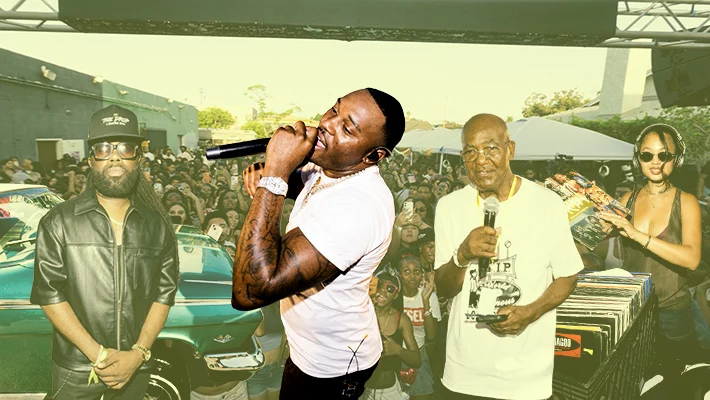
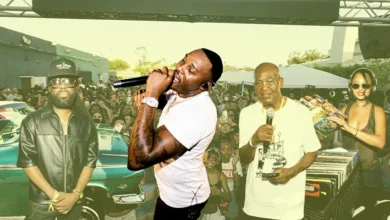
Long Beach, California — The historic intersection of Pacific Coast Highway and Martin Luther King Jr. Avenue in Long Beach buzzed with an electric energy this past weekend as hundreds of hip-hop enthusiasts, community members, and cultural preservationists gathered at the World Famous VIP Records. The landmark event, a headlining performance by contemporary West Coast hip-hop torchbearer Kalan.FrFr, served as a living monument to the enduring legacy of Pacific Standard rap culture. Presented by FX in conjunction with The Drop: A Snowfall Saga, the gathering successfully bridged the gap between the golden era of G-Funk and the vibrant sounds of modern West California rap.
For decades, the physical landscape of Los Angeles and Long Beach has served as both the backdrop and the catalyst for one of music’s most influential regional movements. By anchoring this high-profile cultural celebration inside the walls of VIP Records, organizers curated an authentic homage to the foundational architects of West Coast hip-hop, while simultaneously providing a platform for today’s leading voices to honor that lineage.
Historical Significance of VIP Records
To understand the cultural weight of the weekend’s festivities, one must examine the institutional history of VIP Records. Established in the late 1970s and later owned and operated by visionary entrepreneur Kelvin Anderson, the storefront transcended its commercial retail purpose to become an incubator for musical genius during the turbulent late 1980s and early 1990s.
During an era marked by systemic socioeconomic challenges and heightened inner-city volatility in Los Angeles County, Anderson transformed the backroom of VIP Records into an improvised recording studio and a sanctuary for local youth. This creative safe house kept adolescents off the streets and provided them with the rudimentary tools necessary to channel their lived experiences into artistic expression.
Most notably, this modest backroom served as the crucible where iconic trio 213—consisting of a young Snoop Dogg, Warren G, and the late Nate Dogg—cut their very first professional demo tapes. These foundational recordings captured the embryonic stages of G-Funk, a subgenre characterized by whining synthesizers, deep basslines, and soulful funk samples that would eventually come to dominate global music charts throughout the 1990s. Consequently, hosting a major contemporary hip-hop event at VIP Records represented a profound full-circle moment for a neighborhood that has historically fought for the preservation of its cultural landmarks.
Atmosphere, Curation, and Community Engagement
The logistical footprint of the weekend event mirrored the aesthetic and cultural markers of classic West California car culture and community block parties. Hours before the headlining performance, vehicular traffic along the surrounding corridors slowed as meticulously restored, candy-painted lowriders lined the curbs, their hydraulic systems paying tribute to the rich automotive traditions deeply intertwined with West Coast hip-hop lore.
Inside and outside the venue, attendees were visually immersed in the history of the genre. Walls were adorned with rare, vintage photographic prints captured by acclaimed documentary photographer Mike Miller, whose lens famously documented the ascent of West Coast rap royalty during its most formative years. The sensory experience was further grounded in local culinary traditions, with South Los Angeles and Long Beach neighborhood staples Woody’s BBQ and Glizzy Street Dogs providing provisions for the community.
The event’s programming reflected a meticulous curation of musical talent spanning multiple generations. Renowned turntablist and cultural ambassador DJ Hed commanded the turntables, maintaining a high-energy sonic landscape that educated younger attendees while satisfying purists. The evening reached a crescendo when Andre Troutman, creative director for Kanye West, took to the stage to showcase his mastery of the talk box—a signature sonic element of vintage G-Funk production. Troutman’s performance culminated in a stirring live rendition of the timeless anthem “California Love,” prompting a massive sing-along from the densely packed audience.
Kalan.FrFr and the Modern West Coast Renaissance
While the evening was steeped in nostalgia, the primary focus remained firmly fixed on the contemporary landscape of West Coast hip-hop, embodied by headliner Kalan.FrFr. As one of the region’s most prominent modern standard-bearers, Kalan.FrFr represents a new generation of artists who blend melodic sensibilities with traditional street narratives, carrying the torch lit by the pioneers who recorded yards away from the venue’s stage decades prior.
The crowd’s reaction upon his arrival underscored his rising stature within the industry. Stepping into the historic venue, Kalan.FrFr delivered a performance that explicitly acknowledged the continuum of West Coast music. His setlist served as an audible bridge, connecting the historical foundation laid by figures like Snoop Dogg and Nate Dogg with the genre’s current trajectory and future potential.
Industry analysts note that events of this scale are crucial for maintaining regional identity in an era dominated by hyper-digitized music consumption. By rooting digital-era promotion in physical, localized spaces, organizers foster authentic community engagement that algorithmic streaming platforms often struggle to replicate.
Corporate Partnership and Promotional Synergy
The event was brought to fruition through a strategic cultural partnership with FX, serving as a promotional activation for The Drop: A Snowfall Saga. The partnership reflects a growing trend in entertainment marketing where television networks and streaming platforms leverage grassroots hip-hop history and live cultural events to drive audience engagement for scripted content.
Snowfall, FX’s critically acclaimed drama series chronicling the crack cocaine epidemic and its systemic impact on Los Angeles during the 1980s and 1990s, shares a thematic timeline with the rise of VIP Records and the birth of G-Funk. By aligning the network’s promotional efforts with physical spaces that lived through those exact historical eras, FX established a credible narrative bridge between its fictionalized television universe and the real-world cultural history of South LA and Long Beach.
Furthermore, the collaboration extended beyond the physical event space. Attendees and digital audiences were directed toward complementary multimedia content, including the documentary How LA Found Its Sound, which explores the geographical and sociological factors that shaped the region’s distinct musical identity. Both the documentary and The Drop: A Snowfall Saga are currently streaming on Hulu, expanding the reach of the weekend’s localized celebration to a global subscriber base.
Broader Economic and Cultural Implications
The successful execution of the VIP Records event highlights several broader economic and sociological implications for historically underserved communities within Los Angeles County. Cultural tourism and placemaking initiatives centered around music history have increasingly become focal points for local development and community revitalization.
Urban planners and cultural historians have long argued that preserving physical institutions like VIP Records safeguards intangible cultural heritage. In rapidly gentrifying urban centers, commercial real estate pressures frequently threaten spaces of historical significance. Events that draw corporate investment and media attention to these independent landmarks help validate their ongoing economic and cultural viability.
Moreover, the involvement of modern artists like Kalan.FrFr ensures that historical preservation does not devolve into mere museology. Instead, it positions these historical spaces as active, functioning venues capable of generating contemporary commerce and artistic output. The infusion of foot traffic directly benefits local vendors, surrounding small businesses, and neighborhood infrastructure during the event lifecycle.
Fact-Based Analysis of Regional Music Economics
From an industry perspective, the West Coast hip-hop market has undergone significant structural evolution over the past thirty years. During the 1990s, the region enjoyed dominant commercial positioning, driven by major label investments in Death Row Records, Ruthless Records, and Priority Records. As the industry decentralized in the 2000s and 2010s, regional hubs experienced fluctuations in major label focus.
However, the late 2010s and 2020s have witnessed a localized renaissance characterized by independent distribution models, digital streaming optimization, and robust community-level support systems. Artists like Kalan.FrFr benefit from a hyper-connected global audience while remaining deeply tethered to the physical neighborhoods that birthed their stylistic influences.
Events like the VIP Records showcase demonstrate how brand-funded cultural activations can inject capital and resources back into foundational neighborhoods without compromising the authenticity of the art form. By respecting the historical lineage while platforming current talent, corporate entities and independent artists can establish symbiotic relationships that honor community history while driving modern entertainment consumption.
Conclusion and Future Outlook
As the sun set over Long Beach, casting shadows across the classic lowriders and vintage storefronts, the weekend’s events cemented VIP Records’ status as an enduring monument to American musical history. The seamless integration of past generations of G-Funk architects with modern standard-bearers like Kalan.FrFr proved that the lineage of West Coast hip-hop remains unbroken, dynamic, and culturally vital.
With the event successfully concluded, industry observers anticipate that similar place-based cultural activations will continue to grow in popularity, serving as vital connection points between historical preservation, corporate media promotion, and community empowerment. For the residents of Long Beach and South Los Angeles, the weekend was a powerful reminder that their neighborhood corners are not merely geographic coordinates, but sacred grounds where modern musical history was written, preserved, and boldly carried into the future.