Disney Hires Tangled Writer Dan Fogelman to Develop New Feature Film Centered on the Gorgon Medusa

The landscape of modern cinematic storytelling is undergoing a significant shift as major studios increasingly revisit classical mythology through contemporary lenses. Disney has officially entered this space by commissioning a feature-length screenplay focused on Medusa, one of the most recognizable figures from Greek mythology. According to industry reports, the studio has tapped writer Dan Fogelman, best known for his work on the hit animated feature Tangled, to pen the script. This project, which is currently in the early stages of development, will be produced under the banner of Seven Bucks Productions, the company co-founded by Dwayne Johnson and Dany Garcia.
While the project remains in its infancy with no director or lead cast currently attached, the involvement of high-profile creative talent suggests a substantial investment from Disney. The decision to center a narrative on a figure traditionally categorized as a monster highlights a broader industry trend of re-examining classic archetypes, moving away from purely antagonistic portrayals toward more nuanced, character-driven narratives.
A Legacy of Myth and Pop Culture
Medusa’s status as a cultural icon is well-established. Within the framework of Greek mythology, she was one of the three Gorgon sisters—daughters of the primordial sea deities Phorcys and Ceto. Unlike her sisters, Euryale and Stheno, who were immortal, Medusa was mortal. Her most distinct attributes—her hair of living, venomous snakes and her ability to turn onlookers into stone—have made her a primary subject for artists and writers for millennia.
Her legacy in modern media is vast. She has appeared as a recurring antagonist in Rick Riordan’s Percy Jackson literary and television franchise, served as a formidable foe for DC Comics’ Wonder Woman, and featured prominently in gaming titles like the God of War series. Beyond literature and film, her likeness has been co-opted into the global fashion industry, most notably serving as the primary logo for the Italian luxury house Versace, symbolizing beauty, art, and philosophy.
Chronology and Historical Representation
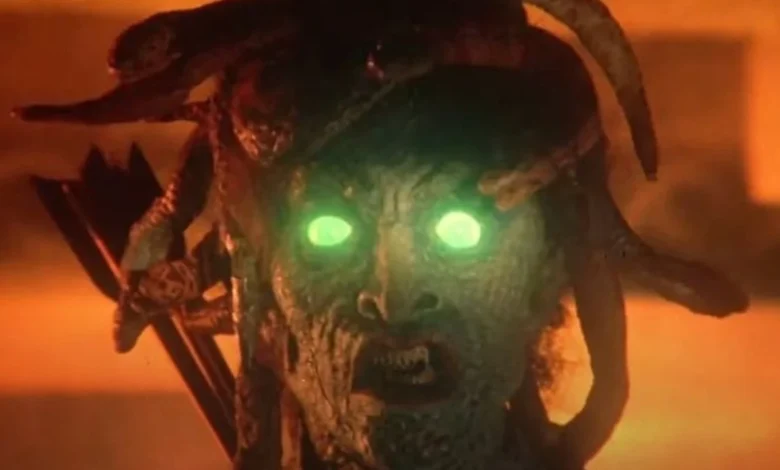
The portrayal of Medusa in cinema has seen a distinct evolution. For many, the definitive cinematic image of the Gorgon remains the 1981 version seen in Clash of the Titans. Utilizing Ray Harryhausen’s pioneering stop-motion animation, the sequence depicted a tense, atmospheric confrontation between the hero Perseus and the monster. The scene was noted at the time for its technical innovation and its lingering psychological impact on a generation of viewers.
The following timeline illustrates the shifting perception of the Medusa figure in mainstream media:
- Classical Antiquity: Medusa is primarily presented as a cautionary tale of hubris and divine punishment.
- 1981: The release of Clash of the Titans solidifies Medusa as a quintessential cinematic monster.
- 2000s–2010s: Medusa becomes a staple of high-fantasy gaming and young adult literature, moving into the realm of action-adventure set pieces.
- 2020s: The rise of the "sympathetic villain" trope leads to renewed interest in exploring the origin stories of historically maligned mythological figures.
Industry Context and Strategic Development
The timing of this announcement is not coincidental. Disney’s move follows a period of notable commercial success for projects rooted in Greek mythology. The Disney+ series Percy Jackson and the Olympians achieved significant viewership ratings, confirming a sustained appetite for Greek-inspired content among younger demographics. Furthermore, the global box office performance of recent adaptations of The Odyssey suggests that audiences are increasingly receptive to stories that weave ancient myth into modern blockbuster structures.
By partnering with Seven Bucks Productions, Disney is leveraging the production company’s track record of successful, audience-friendly storytelling. Dwayne Johnson, who has consistently demonstrated an ability to navigate both action and family-oriented genres, brings a strategic marketing edge to the project. While it is currently unknown whether Johnson will take an on-screen role, his presence as a producer indicates that the project is intended to be a major tentpole release rather than a niche character study.
The Rise of the Sympathetic Protagonist
A core element of the current film landscape is the "deconstructionist" approach to villains. Similar to the commercial and critical success seen in Disney’s Maleficent, the 2021 film Cruella, and the recent theatrical adaptation of the musical Wicked, there is a strong industry incentive to re-contextualize the lives of figures traditionally viewed as evil.
In the case of Medusa, the narrative potential is particularly rich. Classical interpretations often involve complex themes of trauma, divine injustice, and the transformation of the feminine. A film that centers on her perspective would likely explore the circumstances leading to her transformation, offering a critique of the power dynamics inherent in the original myths. This shift aligns with contemporary societal discussions regarding victimhood, agency, and the "villainous" label.
Financial and Market Implications
The financial implications of a Medusa-centric film are significant. By securing a writer with experience in successful animation and narrative-driven features like Dan Fogelman, Disney is positioning the project to bridge the gap between fantasy-action and character-focused drama.
Market data from the past five years indicates that intellectual property (IP) based on public domain mythology carries lower risk and higher global recognition than original concepts. Because the "Medusa" brand is already established, the marketing expenditure required to generate audience awareness is significantly lower than that of a new franchise. This efficiency, combined with the proven success of the "reimagined villain" genre, makes the project a high-probability asset for Disney’s future release slate.
Future Outlook and Next Steps
As of late 2026, the project remains in the "development" phase. The next steps for the studio will involve securing a director who can balance the required spectacle of a mythological epic with the intimate, character-driven arc implied by the hiring of a writer known for emotive storytelling.
Industry analysts expect that the studio will likely aim for a theatrical release rather than a direct-to-streaming model, given the potential for high-end visual effects and the current trend of reviving large-scale mythological spectacles. While fans of the original myths may debate the accuracy of such a portrayal, the historical precedent for "remixing" these stories is as old as the myths themselves. From Ovid’s own shifting accounts of Medusa to the modern interpretations of the 21st century, the Gorgon remains a figure that continues to evolve.
Whether this film will serve as a faithful adaptation or a radical departure from the source material remains to be seen. However, the combination of Disney’s production resources, the creative input of Dan Fogelman, and the producing expertise of Seven Bucks Productions signals a major milestone in the modern cinematic treatment of Greek mythology. As the project moves toward pre-production, the industry will be watching closely to see how the studio navigates the balance between classical reverence and modern narrative expectations.