Star Wars: Visions Presents – The Ninth Jedi Japanese Cast Revealed for Upcoming Limited Anime Series Spinoff

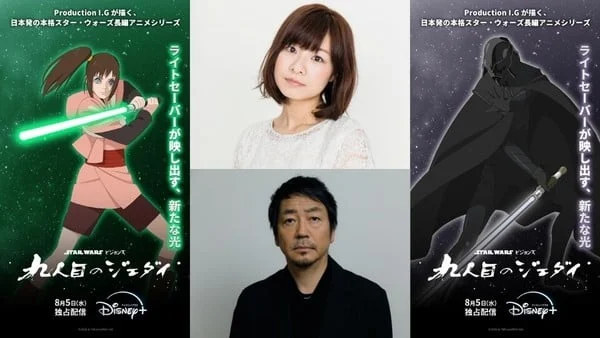
The production committee for the highly anticipated limited anime series Star Wars: Visions Presents – The Ninth Jedi officially unveiled the Japanese voice cast on Friday, marking a significant milestone in the expansion of the acclaimed Star Wars: Visions anthology. This spinoff, which builds upon the foundation of one of the most popular shorts from the original 2021 anthology, is scheduled to make its global debut on August 5, 2026. The series will be available exclusively for streaming on Disney+ and Hulu, continuing the collaborative relationship between Lucasfilm and premier Japanese animation houses.
This announcement follows the momentum generated during the Star Wars Celebration Japan 2025 event held in April, where Lucasfilm first confirmed that the Visions project would evolve beyond short-form storytelling. Under the new "Presents" banner, the franchise is shifting toward longer narratives, allowing creators to explore the complex worlds and characters introduced in the initial anthology with greater depth. The Ninth Jedi is the first narrative selected for this expanded treatment, a decision that reflects both critical acclaim and overwhelming fan demand for a continuation of its specific storyline.
Strategic Expansion of the Visions Universe
The transition from a single-episode short to a limited series represents a strategic pivot for Lucasfilm’s animation department. Since its inception, Star Wars: Visions has served as a laboratory for creative experimentation, inviting various international studios to interpret the Star Wars mythos through their unique cultural and stylistic lenses. However, "The Ninth Jedi" stood out in the first volume for its rich world-building, which many fans felt was ripe for a serialized format.
Set in a distant future where the Jedi Order has faded into myth and the art of lightsaber construction has been largely lost, "The Ninth Jedi" introduced a galaxy in desperate need of hope. By expanding this story into a limited series, Lucasfilm is effectively creating a "non-canon" or "canon-adjacent" alternative timeline that operates with its own internal logic, separate from the main Skywalker Saga. This freedom allows the creative team to take narrative risks that would be difficult within the constraints of the primary film continuity.
The August 5 premiere date positions the series as a centerpiece of Disney’s late-summer streaming lineup. By debuting simultaneously on Disney+ and Hulu, the series aims to capture a broad demographic, ranging from traditional Star Wars enthusiasts to dedicated anime fans who may not follow the live-action entries of the franchise.

Creative Leadership and Production Pedigree
The limited series sees the return of several key figures who were instrumental in the success of the original short. Kenji Kamiyama, a titan of the anime industry known for his work on Ghost in the Shell: Stand Alone Complex and Eden of the East, returns to the project. While Kamiyama directed the original short, he will now serve as the supervising director and series script supervisor. This role allows him to maintain the thematic integrity and overarching vision of the world he created while providing room for new directorial voices.
Directing the new series is Shunsuke Tada, an accomplished filmmaker whose resume includes high-profile projects such as Kuroko’s Basketball and the Legend of the Galactic Heroes: Die Neue These – Collision film. Tada’s involvement suggests a focus on dynamic action and intricate character drama, traits that have defined his previous successes. The production is being managed by Hitoshi Itō, who previously worked on the original Visions project and the blockbuster series Attack on Titan The Final Season.
Executive oversight remains in the hands of Lucasfilm’s Jacqui Lopez and Josh Rimes. Their involvement ensures that despite the stylistic departures inherent in anime, the series remains anchored in the core values of the Star Wars franchise. The collaboration between Production I.G and Lucasfilm is seen as a "best-of-both-worlds" scenario, combining the narrative scale of Western science fiction with the meticulous craft and visual flair of Japanese animation.
Casting and Character Dynamics
While specific character-actor pairings were the highlight of the Friday reveal, the announcement emphasized the return of the central figures who defined the original short. The story centers on Kara, the daughter of a legendary lightsaber smith, who finds herself thrust into a galactic conflict when she must deliver "sabers for the masterless" to a group of Jedi hopefuls summoned by the mysterious Margrave Juro.
The Japanese cast for the limited series includes seasoned veterans and rising stars, a combination often used in high-budget anime productions to ensure both vocal gravity and fresh energy. In the Japanese voice acting industry (seiyuu), casting is a critical component of marketing, and the inclusion of high-profile names is expected to drive significant engagement within the domestic Japanese market.
The series is expected to delve deeper into the origins of the "colorless" lightsabers—blades that change hue based on the user’s connection to the Force. This mechanic was a highlight of the original short and serves as a central metaphor for the series’ exploration of identity, morality, and the cyclical nature of the light and dark sides of the Force.

A Chronology of the Star Wars: Visions Project
The journey of Star Wars: Visions has been one of steady growth and international diversification. Understanding the timeline of the project provides context for why "The Ninth Jedi" was chosen for the first "Presents" expansion:
- September 2021: Volume 1 debuts on Disney+. It features nine shorts from legendary Japanese studios including Trigger, Production I.G, and Science SARU. "The Ninth Jedi" is immediately hailed as a standout for its cinematic quality.
- May 2023: Volume 2 premieres on Star Wars Day. The project expands globally, featuring studios from Ireland, Chile, South Africa, South Korea, and more. This volume demonstrates the universal appeal of the Star Wars mythos.
- April 2025: At Star Wars Celebration Japan, Lucasfilm announces the "Visions Presents" initiative and confirms a limited series for "The Ninth Jedi."
- October 2025: Volume 3 debuts, returning the focus to Japanese studios. This volume includes "The Ninth Jedi: Child of Hope," a short that serves as a prequel or parallel story to the main narrative, exploring the wars that preceded Kara’s birth.
- August 2026: The Ninth Jedi limited series is set to premiere, marking the first time a Visions story has been granted a multi-episode narrative arc.
Narrative Legacy and Lore Expansion
The Ninth Jedi occupies a unique space in the Star Wars universe. Unlike many other stories that are tethered to the era of the Empire or the High Republic, Kamiyama’s world is set so far into the future that the Jedi are a distant memory. This "post-everything" setting provides a blank canvas for storytelling.
The limited series will reportedly explore the political machinations of the Margrave Juro and the various factions vying for control of the galaxy’s dwindling resources. By expanding the runtime, the creators can flesh out the backstories of the "Masterless Jedi"—the individuals who answered Juro’s call but whose true intentions remained ambiguous in the original short.
Furthermore, the series is expected to address the technical and spiritual aspects of lightsaber smithing. In this era, lightsabers are not just weapons but symbols of a lost civilization. The process of creating them, and the danger involved in transporting them, adds a "ronin" or "samurai" aesthetic that pays homage to the original inspirations of George Lucas while reinterpreting them for a modern audience.
Industry Impact and Implications
The decision to develop Star Wars: Visions Presents – The Ninth Jedi reflects a broader trend in the entertainment industry where major Western franchises are increasingly leveraging anime to reach global audiences and revitalize their IP. Following the success of projects like Cyberpunk: Edgerunners and Arcane, studios have recognized that high-quality animation can provide a level of visual spectacle and emotional resonance that rivals live-action cinema.
For Lucasfilm, this move is a way to diversify the Star Wars brand. While live-action series like The Mandalorian and Ahsoka focus on maintaining a rigorous canon, Visions allows for "What If" scenarios that can appeal to fans who are looking for something different. The "Presents" format suggests that if The Ninth Jedi is successful, other popular shorts—such as "The Duel" or "The Village Bride"—could also receive limited series or feature-length expansions in the future.

Market analysts note that the anime industry is currently experiencing a "golden age" of international investment. By partnering with Production I.G, one of the most respected studios in Japan, Disney is ensuring that the production values of The Ninth Jedi meet the high expectations of both the Star Wars and anime fanbases. This collaboration also strengthens Disney’s foothold in the Japanese market, where Star Wars has historically enjoyed immense popularity.
Conclusion and Future Outlook
As the August 5, 2026, premiere date approaches, anticipation for Star Wars: Visions Presents – The Ninth Jedi continues to build. The reveal of the Japanese cast is just the first in a series of planned promotional events intended to showcase the scale and ambition of the project. With a creative team led by Kenji Kamiyama and Shunsuke Tada, and the backing of Lucasfilm’s extensive resources, the series is poised to be a landmark entry in the ever-expanding Star Wars library.
The project represents a bold step forward for the Visions initiative, moving from a collection of experimental vignettes to a robust platform for long-form storytelling. By returning to the world of Kara and the Masterless Jedi, Lucasfilm is not only honoring the fans who championed the original short but also opening a new chapter in the history of the Force—one defined by the artistic traditions of Japan and the limitless possibilities of animation.
Related posts: